
← Nose News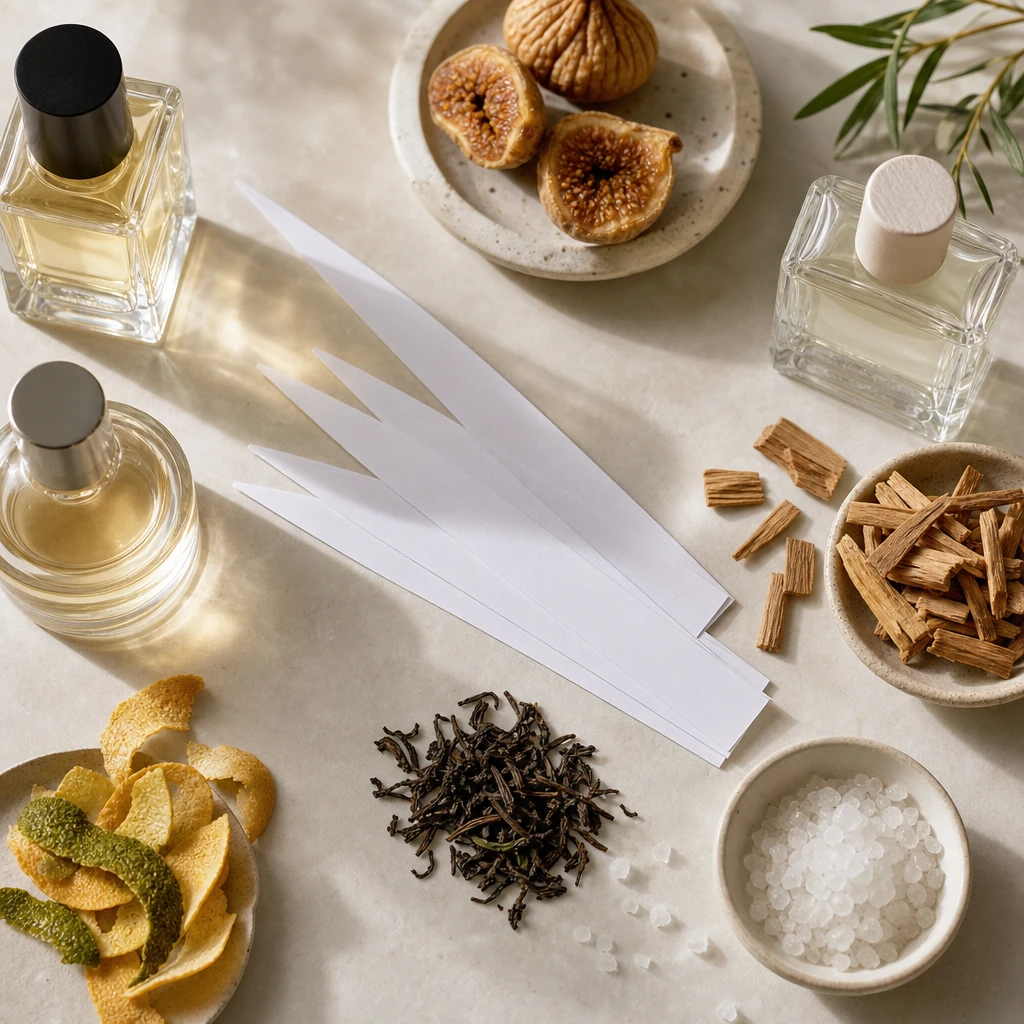
June 26, 2026
Find a Perfume by Notes (With AI): Turn “Fig + Sandalwood” Into Real Matches
June 26, 2026
## Why “find a perfume by notes” is harder than it sounds
If you’ve ever typed something like **“fig + sandalwood perfume”** and ended up with a random list that doesn’t match the vibe in your head, you’re not alone. Notes are helpful, but they’re not a perfect search language.
Here’s why it gets messy:
- **Notes aren’t ingredients lists.** A brand can describe the same scent in different ways (or highlight different notes for marketing).
- **The same note can smell wildly different.** “Tea” can mean matcha latte, airy green tea, smoky black tea, or sweet boba.
- **What you perceive depends on skin + climate.** Heat, humidity, and your skin chemistry can push certain facets forward.
That’s exactly where an **AI perfume finder by notes** can help—if you feed it the right inputs.
## Notes vs accords vs fragrance families (the quick translation guide)
When you’re trying to get accurate matches, it helps to convert what you want into three layers of scent language:
### Notes (the words you search)
Examples: **fig, sandalwood, bergamot, jasmine, salt, vanilla, tea**.
### Accords (the “overall effect”)
Accords are the impression a fragrance creates—often the best predictor of how it will feel to wear.
- “Creamy woody”
- “Citrus aromatic”
- “Skin musk”
- “Mineral salty”
- “Solar floral”
### Fragrance families (the big categories)
Families help you stay consistent with your preferences:
- **Citrus / Fresh**
- **Floral**
- **Woody**
- **Amber / Oriental**
- **Gourmand**
- **Aromatic / Fougère**
- **Chypre / Mossy**
**How to use this:** if you only search by *notes*, you’ll get scattered results. If you include the *accord* and *family*, your matches tighten fast.
## A simple formula: your “note brief” in 60 seconds
Before you use an AI recommendation tool, write a quick scent brief. This prevents you from getting a generic list.
Copy/paste this template:
- **I want:** (2–3 notes)
- **But not:** (1–2 notes or effects you dislike)
- **Feel/vibe:** (clean, cozy, beachy, elegant, sporty, etc.)
- **Texture:** (creamy, airy, sparkling, smoky, syrupy)
- **Strength:** (skin scent / moderate / loud)
- **Season or setting:** (hot weather, office, date night, everyday)
Example:
- I want: **fig + sandalwood + a little citrus**
- But not: **heavy vanilla or sharp pepper**
- Feel/vibe: **sun-warmed, clean, understated**
- Texture: **creamy-woody, not sweet**
- Strength: **moderate, close to the skin**
- Setting: **summer daytime**
This kind of input is where **AI fragrance recommendations** shine.
## How AI turns your notes into better matches (and what to ask for)
A good AI perfume finder isn’t just matching keywords—it’s mapping patterns:
- “Fig” often correlates with **green lactonic / fruity woody** profiles.
- “Sandalwood” may signal **creamy woods**, but can also be **dry, pencil-shaving woods** depending on the perfume.
- “Salt/mineral” tends to connect with **marine, ambergris-style musks, or airy ozonic** effects.
When you use AI, ask for outputs that help you decide, not just names.
Try prompts like:
- “Give me 8 perfumes that match **fig + creamy woods**, and label each as **airy / creamy / green / sweet**.”
- “Show me options under **‘skin scent’** projection and options that are **more noticeable**.”
- “Include **niche + designer** choices, and tell me what to sample first.”
- “For each recommendation, list **the key accord**, not just the note pyramid.”
## Summer 2026 note journeys to try (tea, salty mineral, solar musks)
Summer fragrance coverage for 2026 has been calling out **tea notes**, **salty/mineral ‘skin’ effects**, and **solar musks** as standout directions. If those sound like your vibe, here are practical “note journeys” you can use to find your matches.
### 1) If you like tea notes: pick your tea “style”
“Tea perfume” can mean multiple things—choose one:
- **Matcha / creamy green:** add “rice,” “milk,” “vanilla (light),” or “powdery musks.”
- **Fresh green tea:** add “citrus,” “mint,” “bamboo,” or “neroli.”
- **Smoky black tea:** add “woods,” “leather,” “incense,” or “tobacco (soft).”
AI prompt idea:
> “Find fragrances with **tea** that feel **fresh and airy** (not smoky), with **citrus + soft musk**, and low sweetness.”
### 2) If you like salty/mineral skin scents: decide “beach” vs “stone”
Salt can read:
- **Beachy:** coconut water, sunscreen-like warmth, airy florals.
- **Mineral/stone:** crisp musks, clean woods, rainwater/ozone, ambergris-style diffusion.
AI prompt idea:
> “Recommend perfumes with a **salty mineral** vibe that feel like **warm skin after the ocean**, but not sugary and not tropical-fruity.”
### 3) If you like solar musks: choose your glow level
Solar musks can be:
- **Soft glow:** clean musk + gentle florals.
- **Golden sunscreen warmth:** solar notes + creamy facets.
- **Radiant and diffusive:** musks that project more (great outdoors, not always office).
AI prompt idea:
> “I want a **solar musk** that feels **clean and modern**, with **white florals or citrus**, and **moderate projection**.”
## How to get better results than “smells like” searches
“Smells like” can be useful, but it often ignores what you actually love about a scent.
Instead, anchor your search to these three things:
1) **The part you love most:** opening freshness? creamy drydown? salty air?
2) **The dealbreaker:** too sweet, too powdery, too sharp, too smoky.
3) **Wear context:** office-safe, heat-proof, special occasion, etc.
That’s also why building a repeatable system matters: the more you track your likes/dislikes, the more accurate recommendations become.
## What to track after you sample (so recommendations improve)
Once you test a few scents, capture quick, consistent data. This is how you turn “I think I like fig?” into a real **personal scent profile**.
Use a simple log:
- **Loved / liked / not for me**
- **Top 3 impressions** (e.g., “sparkling citrus,” “creamy woods,” “clean skin musk”)
- **Sweetness level** (low/med/high)
- **Projection** (skin / moderate / loud)
- **Longevity on you** (rough estimate)
- **When you’d wear it**
After 5–10 entries, patterns show up fast—maybe you don’t love “fig,” you love **green lactonic + soft woods**. That’s the kind of insight an AI can use to recommend better.
## Common pitfalls (and quick fixes)
- **Pitfall: Asking for “fresh” only.** Fresh can mean citrus, aquatic, soapy, green, or musky.
**Fix:** add one texture word: “fresh + creamy,” “fresh + mineral,” “fresh + tea.”
- **Pitfall: Too many notes at once.** More than 4–5 notes can confuse the search.
**Fix:** pick **2 hero notes** + **1 supporting accord** (e.g., “fig + sandalwood + skin musk”).
- **Pitfall: Ignoring what you dislike.**
**Fix:** always include **“but not…”** (vanilla, patchouli, aldehydes, heavy amber, etc.).
## How N.O.S.E. Notebook helps you go from notes → a wearable shortlist
N.O.S.E. Notebook is built for fragrance lovers who want the fun of discovery without the chaos:
- Get **AI fragrance recommendations** based on the notes/accords you actually enjoy.
- Create a **personal scent profile** that improves as you log what you test.
- Save finds in a **fragrance vault** so you don’t forget samples, decants, or “try-this-next” scents.
If you’re ready, start with a simple note brief (like the template above) and see what your taste translates to—then save your favorites so your next search gets even more accurate.
Find your next scent
Browse scent profiles, notes, and houses — or let the Scent Finder match you to a fragrance in four questions.
October 14, 2026
Perfume finder apps have leveled up fast: smarter AI, better bottle scans, and collection “vaults” that help you remember what you own (and what you actually love). Here’s what to look for in 2026—and how to choose the right app for your scent journey.
October 12, 2026
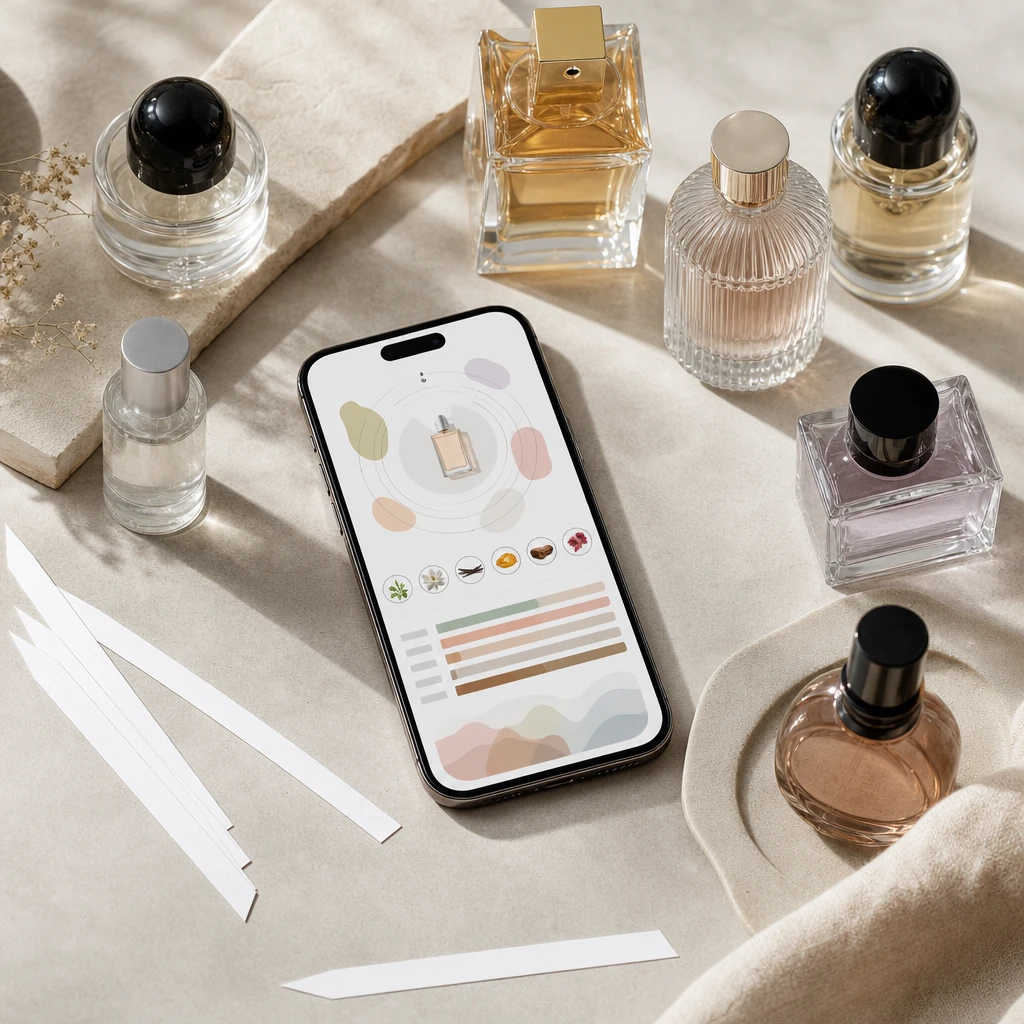
Finding a signature scent doesn’t have to mean buying a dozen discovery sets and hoping something clicks. Here’s a modern, realistic process—powered by a clear scent profile and smarter recommendations.
October 9, 2026
Trying to identify a perfume bottle from a photo? Here’s how perfume scanner apps work in 2026, how to scan bottles and labels for accurate matches, and how to fix the most common scan errors—especially when flankers and lookalike bottles confuse results.