
← Nose News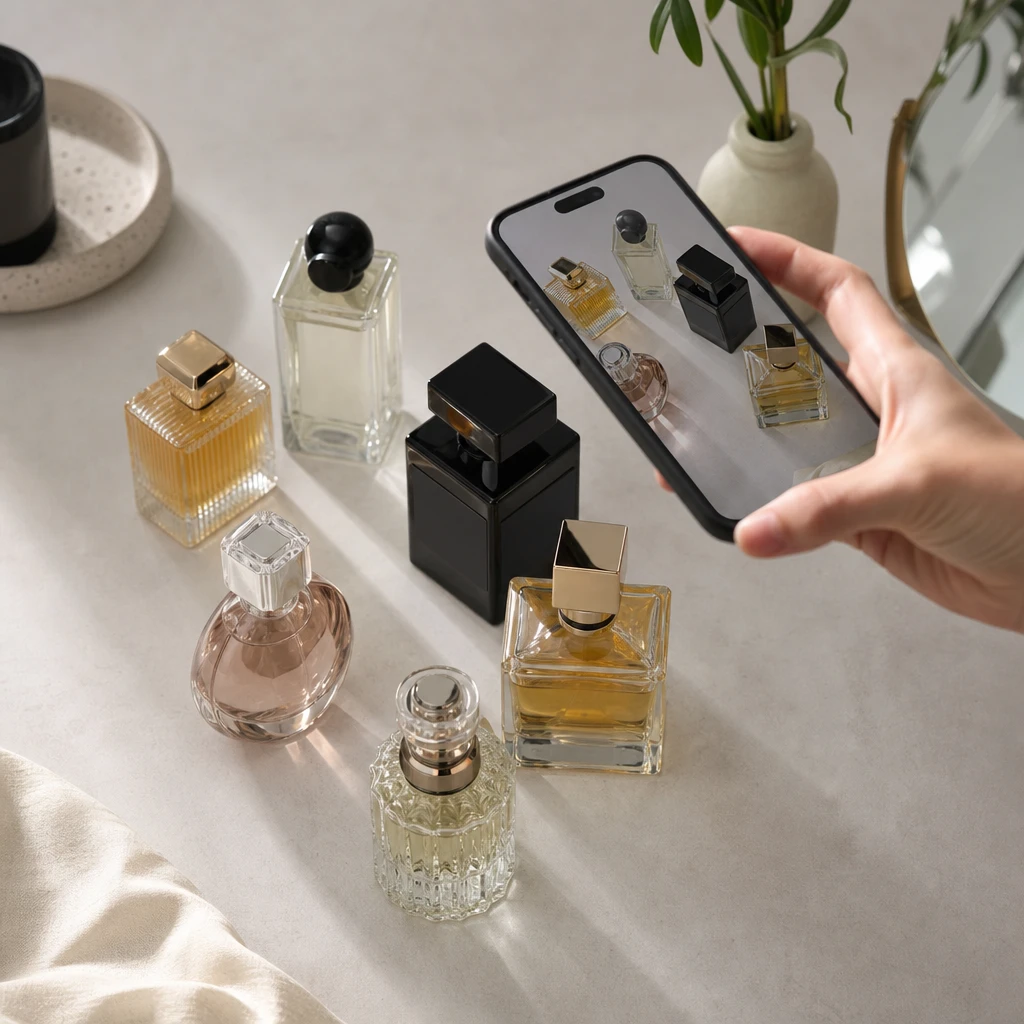
August 14, 2026
Perfume Bottle Scanner: How to Identify a Fragrance From a Photo (and Avoid Flankers)
August 14, 2026
Fragrance discovery has never been more visual. Between resale listings, TikTok “shelfies,” unboxings, and screenshots saved from retail sites, people often encounter a bottle before they ever know the name. That’s why the search for a perfume bottle scanner—tools that can identify perfume from a photo—has taken off.
At N.O.S.E. Notebook, we see the same pattern daily: someone has a bottle (or a photo of a bottle), they want an immediate ID, and they want to be sure it’s the exact one—not a lookalike, a reformulation rumor, or the most common mix-up of all: the flanker.
A bottle-scanning tool is essentially doing fast visual matching. It compares what’s in the image—shape, cap style, label layout, logo placement, and sometimes box design—against known references.
That approach is powerful, but it has limits. Here’s the practical reality:
A scanner is usually strong at:
A scanner may struggle when:
This is why the best results come from pairing a scan with a few quick confirmation checks—especially when you’re trying to avoid buying the wrong version.
If the goal is to identify a perfume bottle from a photo, the photo itself matters more than people think. A few small changes can dramatically improve accuracy.
Aim for:
If you’re scanning from a screenshot (common with resale listings), try to grab the clearest product image—preferably the one that shows the full front label.
If you’ve ever searched “what perfume is this bottle” and got multiple results that look almost identical, you’ve run into the flanker problem.
A flanker is a related release built on the branding of an original—think of it as a sibling in the same family. Brands often keep the bottle shape and change only a few cues: a word added to the name, a different color gradient, a special edition emblem, or a cap tweak. That’s great for collectors, but it’s exactly what causes misidentifications.
Why it matters: flankers can smell very different, and they can vary in longevity, projection, and even intended season. If you’re trying to re-buy a scent you loved (or catalog what you sampled), getting the flanker wrong is frustrating and expensive.
Once a scanner gives you a likely match, use this short checklist to confirm you’ve got the right version.
Read the full name on the bottle
Look for small words that change everything—terms like “Intense,” “Absolu,” “L’Elixir,” “Sport,” “Extreme,” or “Edition.” Many are printed smaller than the main name.
Confirm the concentration
EDT, EDP, Parfum/Extrait, Cologne, and “Intense” variants can share bottle designs. Concentration is usually printed on the box and sometimes on the bottle.
Check the bottle size
Some flankers or special editions only come in certain sizes. A 50 mL vs 100 mL photo can also change how labels look.
Look for year/edition cues on the box
Limited editions often include additional markings, alternate fonts, or a seasonal sleeve.
Use the batch code as a confirmation tool
A batch code won’t magically name a perfume, but it can help verify authenticity and approximate production timing when you already know what the bottle should be. Codes are commonly stamped on the box bottom and sometimes etched on the bottle.
“Batch code checker” searches are often driven by one concern: Is this the same version I remember?
Here’s the nuance. A batch code can help confirm:
What it can’t do on its own:
The most useful way to treat batch codes is as one data point—especially for secondhand purchases.
Sometimes a scan produces a cluster of close matches: the original plus two flankers, or multiple releases from the same line. When that happens, don’t start guessing—triangulate.
A reliable next step is to compare three things side by side:
Even when bottles look identical in a feed, these details usually break the tie.
Identifying a bottle is only step one. The bigger win is keeping a clean record so you don’t lose track again—especially if you sample often, rotate seasons, or buy decants.
A good fragrance record includes:
N.O.S.E. Notebook is built for this kind of collecting. Our bottle scanning & identification flow helps you move from “what is this?” to a personal scent profile and a fragrance vault you can actually use—whether you’re curating a tight wardrobe or tracking a growing collection.
A few real-life situations come up again and again.
If the bottle photo is from a reseller listing: prioritize images showing the bottom label (when available), the box, and any batch code stamps. If the listing only has one glamour shot, assume you’ll need additional confirmation before buying.
If the bottle is a mini or travel size: minis often simplify labels and skip details. Try scanning the box, the set packaging, or the brand’s official travel spray design.
If the bottle is vintage or discontinued: scanning may return the current version first. In that case, rely more heavily on label design, cap style, and box markings to pinpoint the era.
A perfume bottle scanner is the fastest way to identify a fragrance from a photo—but accuracy comes from pairing that scan with a few smart checks. Flankers, concentrations, and special editions are where most misidentifications happen, and a little verification (especially the full name and concentration) saves a lot of disappointment.
When you’re ready to move beyond one-off identifications, N.O.S.E. Notebook makes it easy to scan, catalog, and understand what you’re smelling—so every discovery becomes part of a personal scent library. Reach out to the N.O.S.E. Notebook team or explore the platform online to start building your fragrance vault.
Find your next scent
Browse scent profiles, notes, and houses — or let the Scent Finder match you to a fragrance in four questions.
October 14, 2026
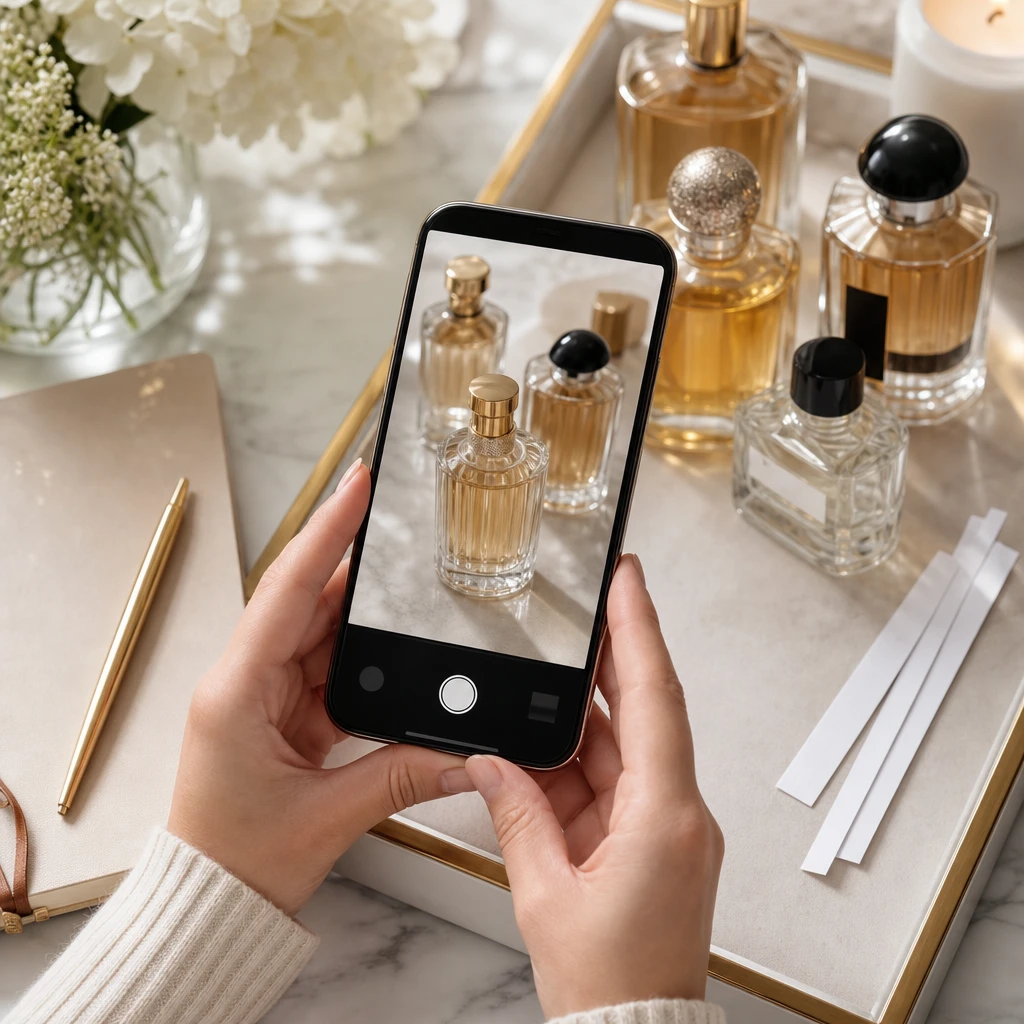
Perfume finder apps have leveled up fast: smarter AI, better bottle scans, and collection “vaults” that help you remember what you own (and what you actually love). Here’s what to look for in 2026—and how to choose the right app for your scent journey.
October 12, 2026
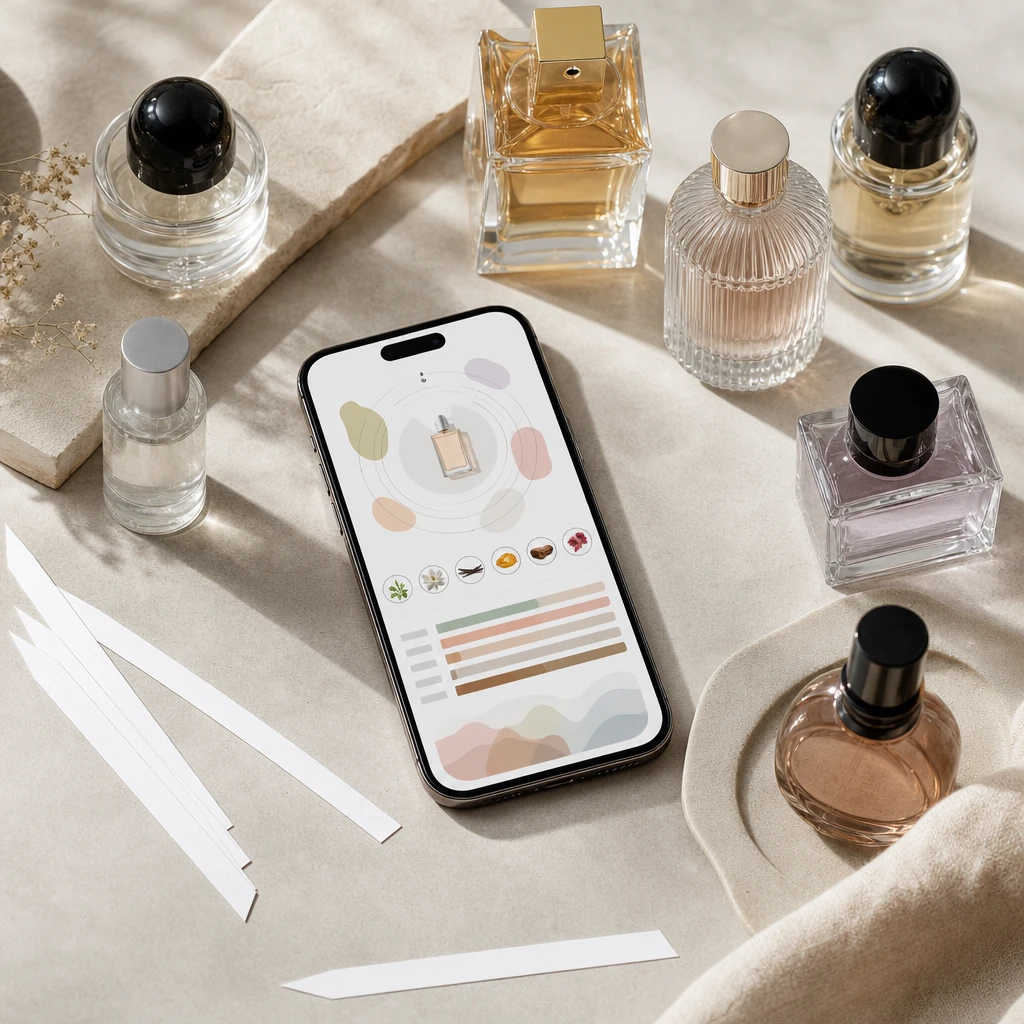
Finding a signature scent doesn’t have to mean buying a dozen discovery sets and hoping something clicks. Here’s a modern, realistic process—powered by a clear scent profile and smarter recommendations.
October 9, 2026
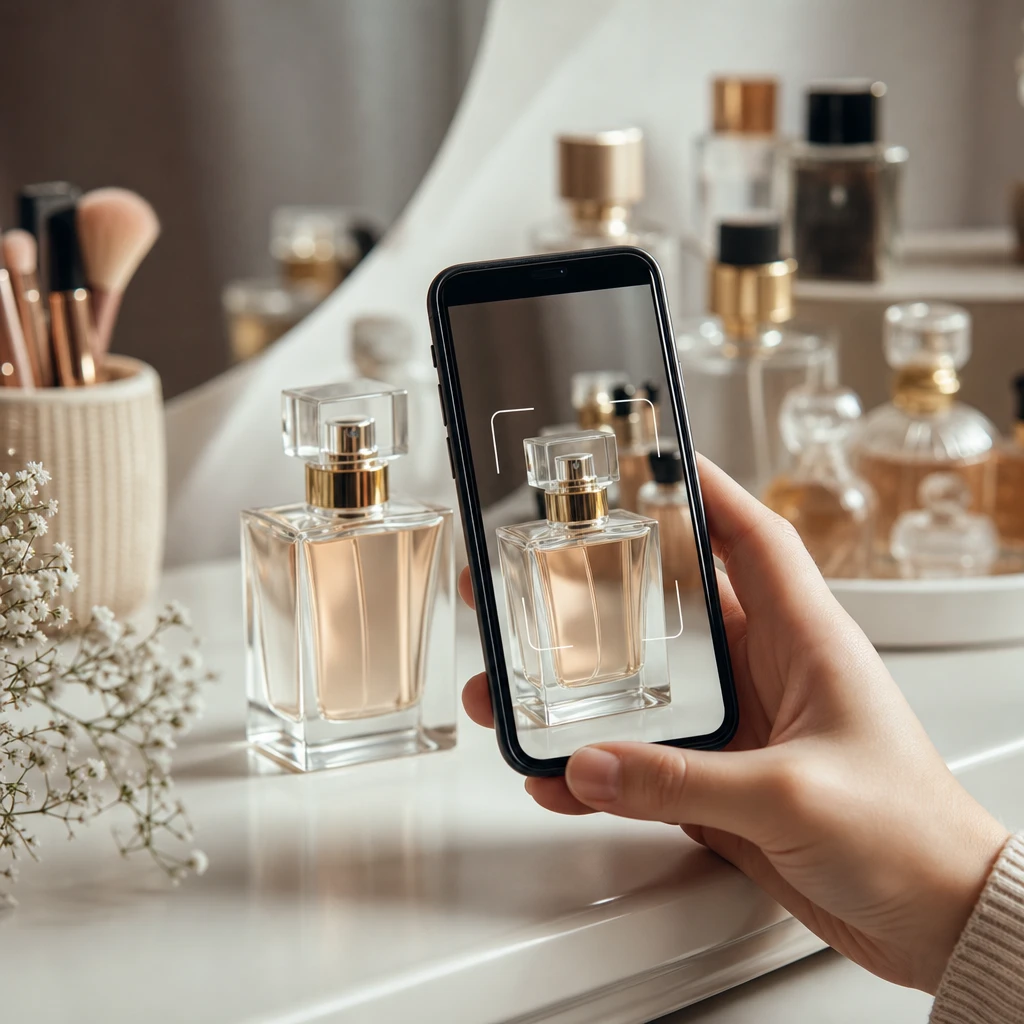
Trying to identify a perfume bottle from a photo? Here’s how perfume scanner apps work in 2026, how to scan bottles and labels for accurate matches, and how to fix the most common scan errors—especially when flankers and lookalike bottles confuse results.