
← Nose News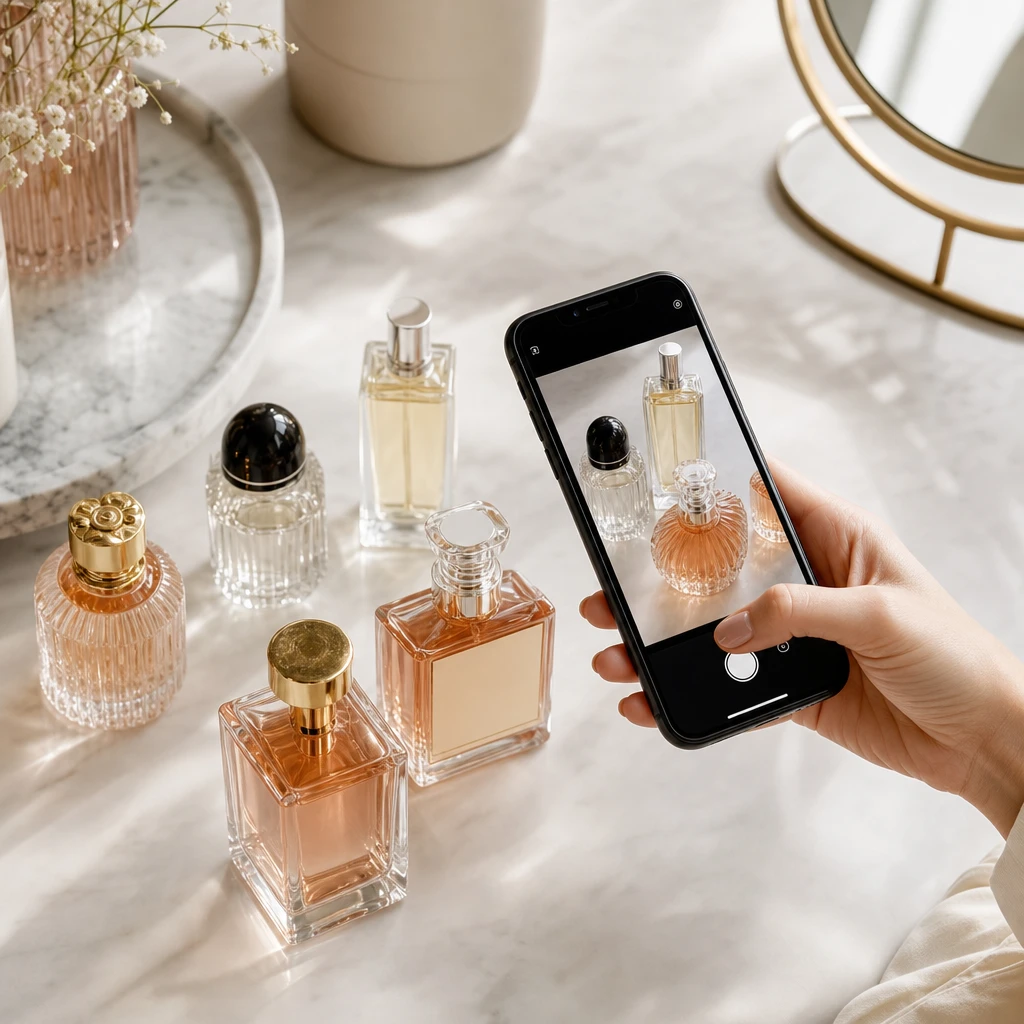
June 26, 2026
Perfume Bottle Scanner: Identify a Fragrance From a Photo (and Save It to Your Vault)
June 26, 2026
## Why “identify perfume by picture” searches are exploding
If you’ve ever spotted a beautiful bottle at a friend’s house, in a hotel bathroom, or in a TikTok “shelfie,” you’ve probably had the same question: **what perfume is this?**
Fragrance discovery is more visual than ever—bottles are photographed, traded, and posted constantly. At the same time, AI “photo search” has become a familiar behavior across shopping and lifestyle apps. So it makes sense that people now expect a **perfume bottle scanner** to do three things in one clean workflow:
1. **Scan the bottle** (or box) and identify the fragrance.
2. **Confirm** the exact match (because bottles can look similar).
3. **Save it** to a personal list, then get **similar recommendations**.
That’s the core idea behind N.O.S.E. Notebook: turning quick, visual fragrance moments into a **reliable, organized scent library**—and better recs over time.
## What a perfume bottle scanner can (and can’t) identify
A good **perfume identifier app** is strongest when the photo includes clear brand cues—shape, label placement, cap style, or packaging. Here’s what typically works well:
- **Full bottle photos** with the front label visible
- **Box photos** (often easier than bottles because text and design are clearer)
- **Distinctive silhouettes** (iconic shapes and caps)
And here’s what can be tricky:
- **Decants and sample vials** (often unbranded)
- **Rebottled travel atomizers** (no original markings)
- **Limited editions** with near-identical packaging to the main line
- **Lookalike bottles** across flankers (e.g., same bottle shape, different concentration or year)
Practical takeaway: **photo scanning is a fast first step**, but you’ll get the best results when you treat it like “scan → confirm → save.”
## How to get an accurate match: a simple scan checklist
When you’re trying to **identify perfume by picture**, small photo choices matter. Use this quick checklist before you scan:
1. **Use good lighting**: natural window light beats dim bathroom lighting.
2. **Shoot straight-on**: skewed angles hide label details.
3. **Include the cap**: caps are often a key identifier.
4. **Capture any text**: brand name, fragrance name, concentration (EDT/EDP/Parfum), size.
5. **Take 2–3 photos**: front, back/bottom, and the box if you have it.
If the app provides multiple likely matches, don’t guess—move to confirmation.
## Confirming the fragrance: avoid the most common mix-ups
The biggest identification errors usually happen in three places:
### 1) Flankers and concentration differences
Many fragrance lines share the same bottle across versions (think: “Intense,” “L’Eau,” “Parfum,” seasonal releases). If you can, confirm:
- **Exact name** (including “Intense,” “Absolu,” “Elixir,” etc.)
- **Concentration** (EDT vs EDP vs Parfum)
- **Release year** (helpful for reformulations and re-launches)
### 2) Similar bottle design across brands
Minimalist bottle styles (clear glass, simple labels) can be deceptively similar. Confirmation signals to check:
- Label typography and placement
- Cap material and shape
- Atomizer collar color
### 3) Dupes and inspired-by bottles
Some inspired-by brands use packaging that resembles popular originals. If the app lets you compare, look for:
- Exact brand match
- Official naming conventions
- Consistent bottle details
A helpful workflow is: **scan → pick best match → verify with one extra photo angle or packaging**.
## Why saving matters: turn “what perfume is this” into a personal fragrance vault
Identifying a fragrance is satisfying—but the real value comes from what happens next.
A **fragrance vault** (or perfume catalog app feature) helps you:
- **Remember what you’ve tried** (no more re-buying the same discovery twice)
- Track **what you own vs what you want**
- Keep notes on **how it wears on your skin** (not just how it smells on paper)
- Record **season, occasion, compliments, performance**
- Build a history of your taste so recommendations improve
If you’re a newcomer, a vault prevents the “I forgot what I liked” problem. If you’re an enthusiast, it becomes your personal archive.
### What to save for each fragrance (best practice)
When you add a fragrance to your vault, capture a few details that actually help later:
- Where you smelled it (store, sample, gift, friend)
- Your first impression (one sentence)
- Notes you notice most (not the full official pyramid—your perception)
- Performance on you (longevity + projection)
- A quick rating and whether you’d wear it again
That small layer of context makes your future “find me something like this” requests dramatically more accurate.
## From identification to discovery: how AI recommendations should work
Most people don’t just want a name—they want the next step:
- “If I like this, what else should I try?”
- “Show me niche options with a similar vibe.”
- “Find something less sweet / more fresh / more affordable.”
The most useful AI fragrance recommendations are preference-driven, not hype-driven. The workflow should look like:
1. **Identify the bottle**
2. **Add it to your vault**
3. **Update your scent profile** (likes/dislikes, styles you reach for)
4. **Generate similar scents** with clear reasoning (shared notes, mood, or structure)
That last part—“clear reasoning”—matters. Good recommendations explain *why* something fits, so you can learn your taste instead of blindly buying.
## Real-world examples: when a bottle scanner is especially helpful
### You found a bottle in a photo
Maybe it’s a background detail in a video or a shelf photo. A scanner gives you a fast shortlist, and your confirmation step locks it in.
### You’re cataloging a growing collection
If you have 20+ bottles and samples, scanning speeds up data entry, so you can spend time on what matters: wearing, comparing, and learning.
### You’re exploring niche and luxury perfume
Niche bottles can be hard to recognize unless you already know the brand. Scanning helps bridge that gap—and then recommendations help you explore the “neighborhood” around that scent.
## Tips for better results (and fewer wrong matches)
- **Photograph the box when possible**: it usually includes the full name and concentration.
- **Don’t rely on bottle color alone**: lighting and glass tint can mislead.
- **Check the bottom sticker**: batch info and size can confirm you’re looking at the right version.
- **Add your own tag** in the vault (e.g., “hotel find,” “date night,” “summer citrus”) so you can retrieve it later.
## The bottom line: scanning is step one—organizing makes it powerful
A **perfume bottle scanner** is the fastest way to answer “what perfume is this?” from a photo. But the real upgrade is pairing identification with a **fragrance vault** and a living **scent profile**, so every discovery becomes easier to remember—and easier to build on.
If you’ve been saving screenshots, keeping notes in your camera roll, or trying to recall “that one bottle from last month,” N.O.S.E. Notebook is built for that exact moment: scan it, confirm it, save it, and keep your fragrance journey organized in one place.
*If you’d like, try scanning a bottle you’re curious about and start a small vault entry with your first impressions—future you will thank you.*
Find your next scent
Browse scent profiles, notes, and houses — or let the Scent Finder match you to a fragrance in four questions.
October 14, 2026
Perfume finder apps have leveled up fast: smarter AI, better bottle scans, and collection “vaults” that help you remember what you own (and what you actually love). Here’s what to look for in 2026—and how to choose the right app for your scent journey.
October 12, 2026
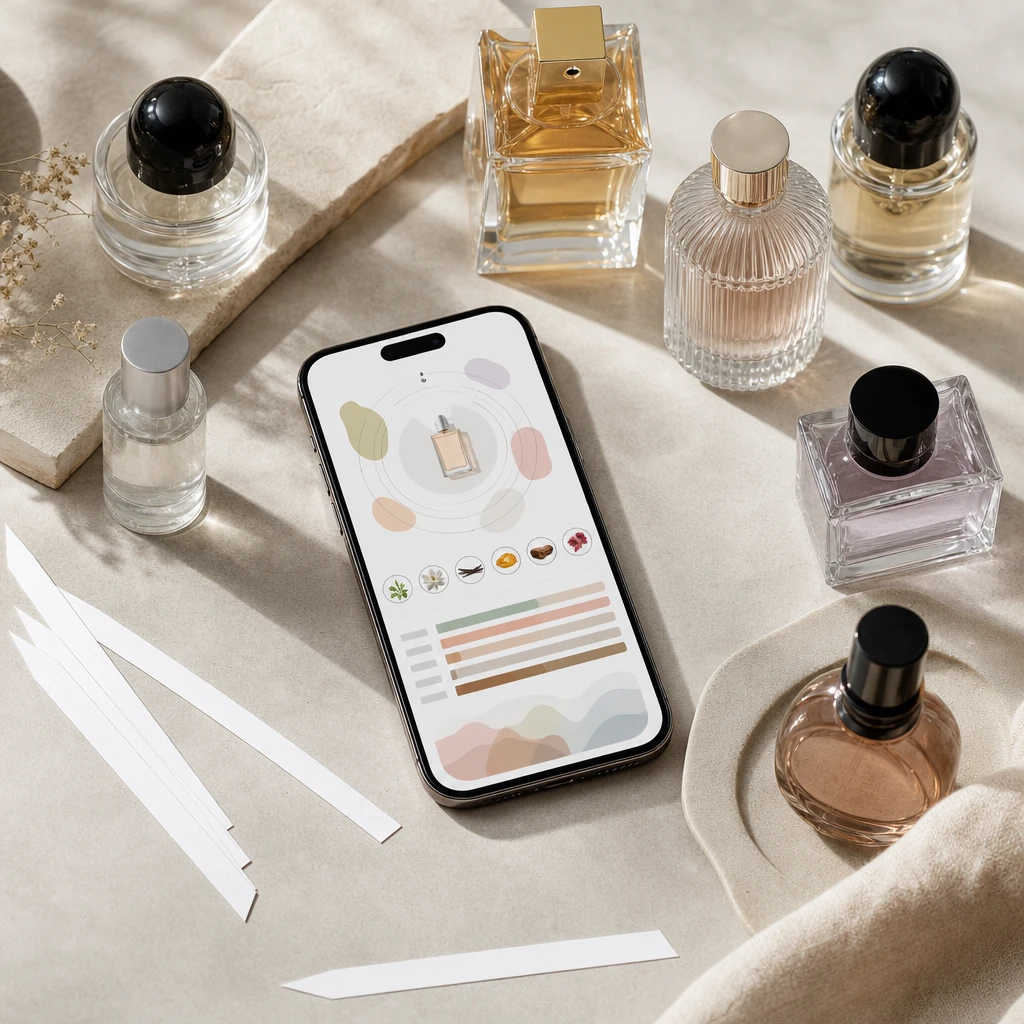
Finding a signature scent doesn’t have to mean buying a dozen discovery sets and hoping something clicks. Here’s a modern, realistic process—powered by a clear scent profile and smarter recommendations.
October 9, 2026
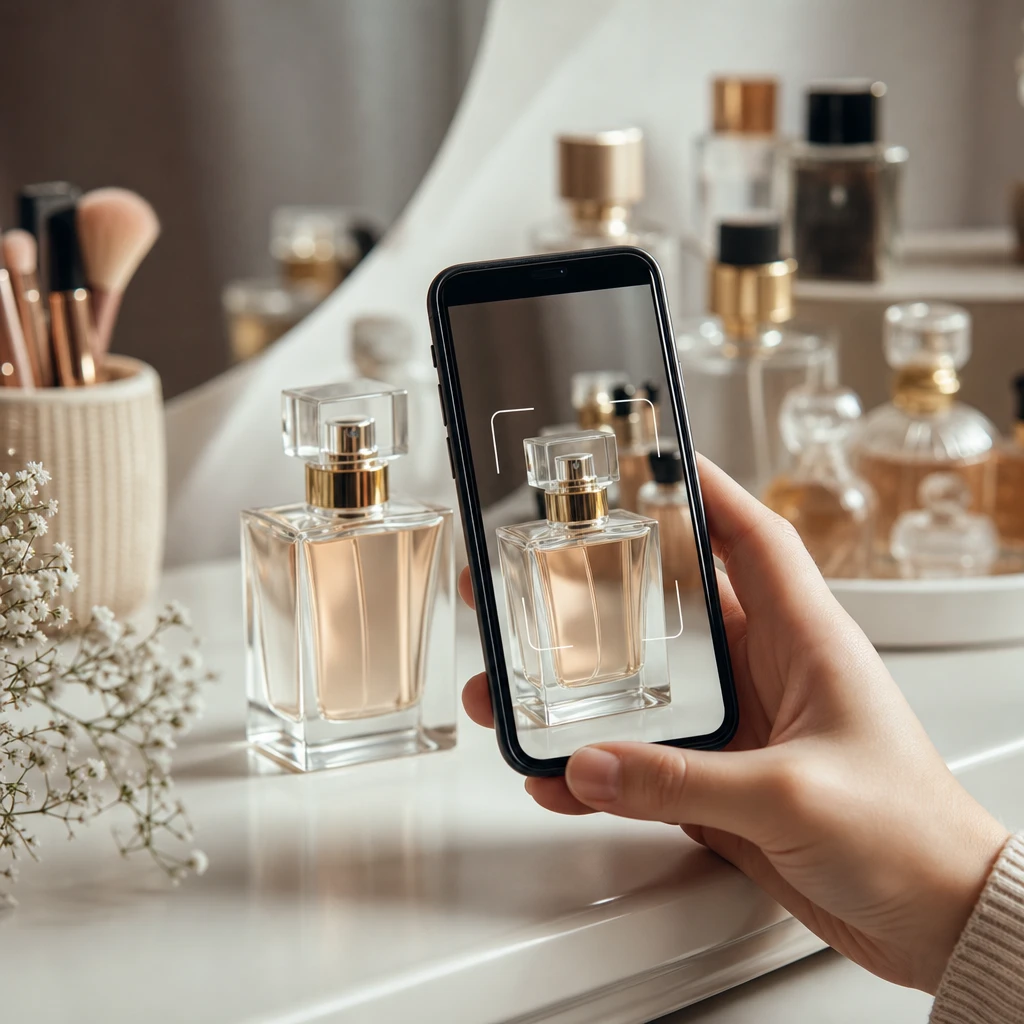
Trying to identify a perfume bottle from a photo? Here’s how perfume scanner apps work in 2026, how to scan bottles and labels for accurate matches, and how to fix the most common scan errors—especially when flankers and lookalike bottles confuse results.