
← Nose News
June 24, 2026
June 24, 2026
If you’ve ever tried to identify a perfume from a half-peeled label or a bottle you found at a friend’s house, you know the old workflow: take a blurry photo, post it to a forum, wait… and hope someone recognizes it.
In 2026, the faster route is camera-based identification: use a perfume bottle scanner (or a perfume identification app) to match the bottle/box to a database, then save the result so you don’t have to repeat the hunt next time.
This guide walks you through:
A scanner is only as good as the input image. Before you upload anything, take 30 seconds to get a clear shot.
Photo checklist (best practices):
If you’re wondering “what perfume is this?” and you only have one quick photo, choose a straight-on shot that includes: the cap shape, label placement, and any distinctive embossing.
When you’re trying to identify perfume by picture, you’re typically relying on visual matching (shape, label layout, cap design) and text detection (brand words, partial product names).
This method is ideal when:
What to expect from photo identification:
If the first match looks close but not exact, try a second scan from a different angle—caps and atomizers are surprisingly diagnostic.
“Scan perfume barcode” sounds foolproof, but barcodes aren’t always unique at the level fragrance lovers care about.
Barcode scanning works best when:
Barcode scanning can fail when:
If the barcode returns something too vague (for example, it identifies the brand but not the exact scent), move to the “clue stack” in the next section.
Sometimes you’ll get close, but not perfect. That’s when you stack a few small clues to narrow it down.
Fast clues to check:
If you can, capture these details in a note: partial text, bottle color gradient, cap material (metal vs plastic), and any emblem/crest.
Once you have a likely match, do a quick “does this smell like the description?” check. You don’t need a trained nose—just a few anchors.
A simple confirmation routine:
If the described notes are wildly different from what you’re smelling, don’t force the match—scan again or refine with the box/bottom label.
Identification is only half the win. The bigger upgrade is keeping what you’ve learned—especially if you’re the kind of person who samples a lot.
A fragrance vault (your own catalog) helps you:
What to save for each fragrance (the essentials):
If you want your future recommendations to feel “mind-reading accurate,” add one extra line: what you expected vs what you got. Example: “Expected beachy coconut; got sunscreeny white floral.”
The most common next step after “identify perfume by bottle” is: “Okay… what else smells like this?”
That’s where AI recommendations are especially useful—because “similar” can mean different things:
A good recommendation flow starts with two questions:
Answer those and you’ll get far better results than generic “people also liked” lists.
“My bottle is a decant/travel spray with no branding.”
“The scanner keeps returning the wrong flanker.”
“It’s an older bottle; the new ones look different.”
“It’s niche and the bottle is minimal.”
Over a few weeks, that habit turns random discoveries into an organized “scent wardrobe”—and makes your future recommendations dramatically more personal.
If you’re building a collection (or even just a wish list), having one place to identify bottles, log what you love, and discover similar scents keeps the hobby fun—and prevents the “I forgot what that amazing perfume was” problem.
If you’d like, you can use N.O.S.E. Notebook to scan a bottle, identify the fragrance, and save it to a personal scent profile and vault—so the next recommendations you get are based on what you actually wear and enjoy.
Find your next scent
Browse scent profiles, notes, and houses — or let the Scent Finder match you to a fragrance in four questions.
October 14, 2026
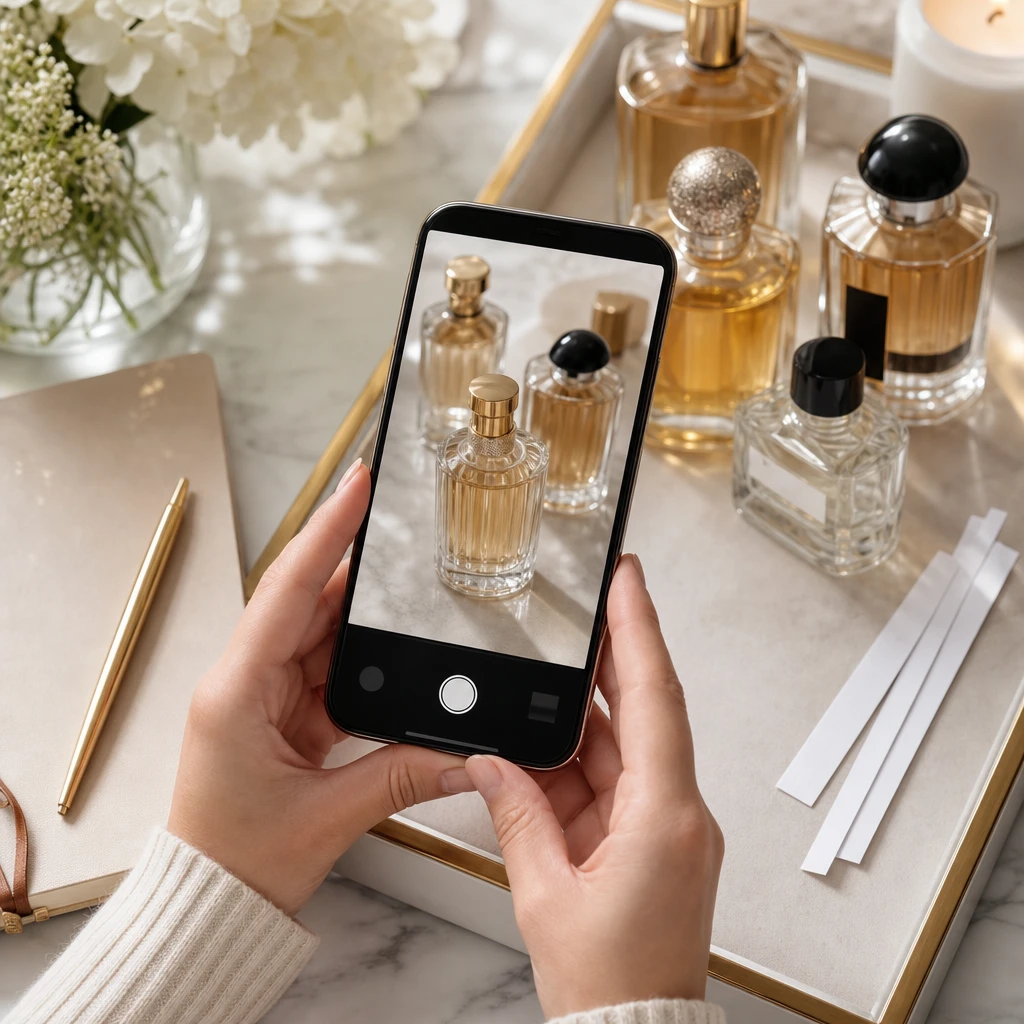
Perfume finder apps have leveled up fast: smarter AI, better bottle scans, and collection “vaults” that help you remember what you own (and what you actually love). Here’s what to look for in 2026—and how to choose the right app for your scent journey.
October 12, 2026
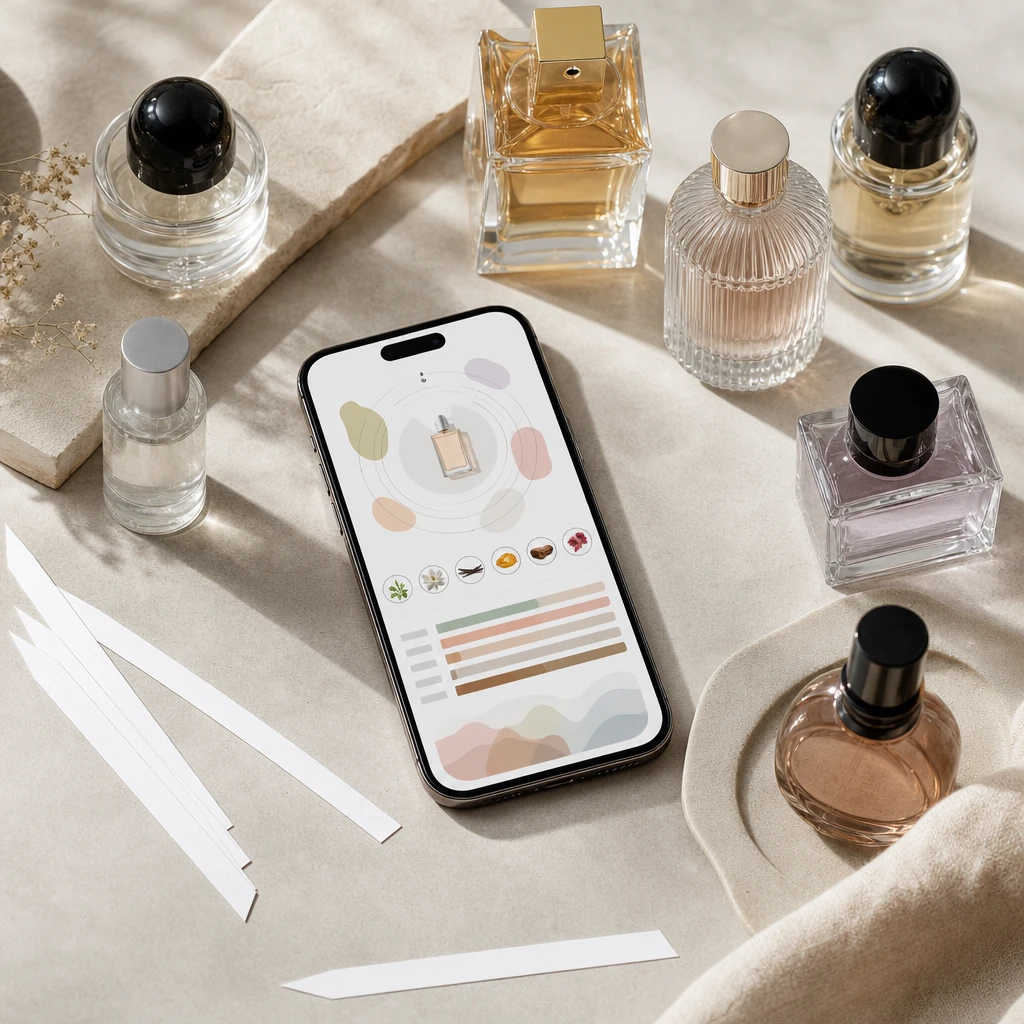
Finding a signature scent doesn’t have to mean buying a dozen discovery sets and hoping something clicks. Here’s a modern, realistic process—powered by a clear scent profile and smarter recommendations.
October 9, 2026
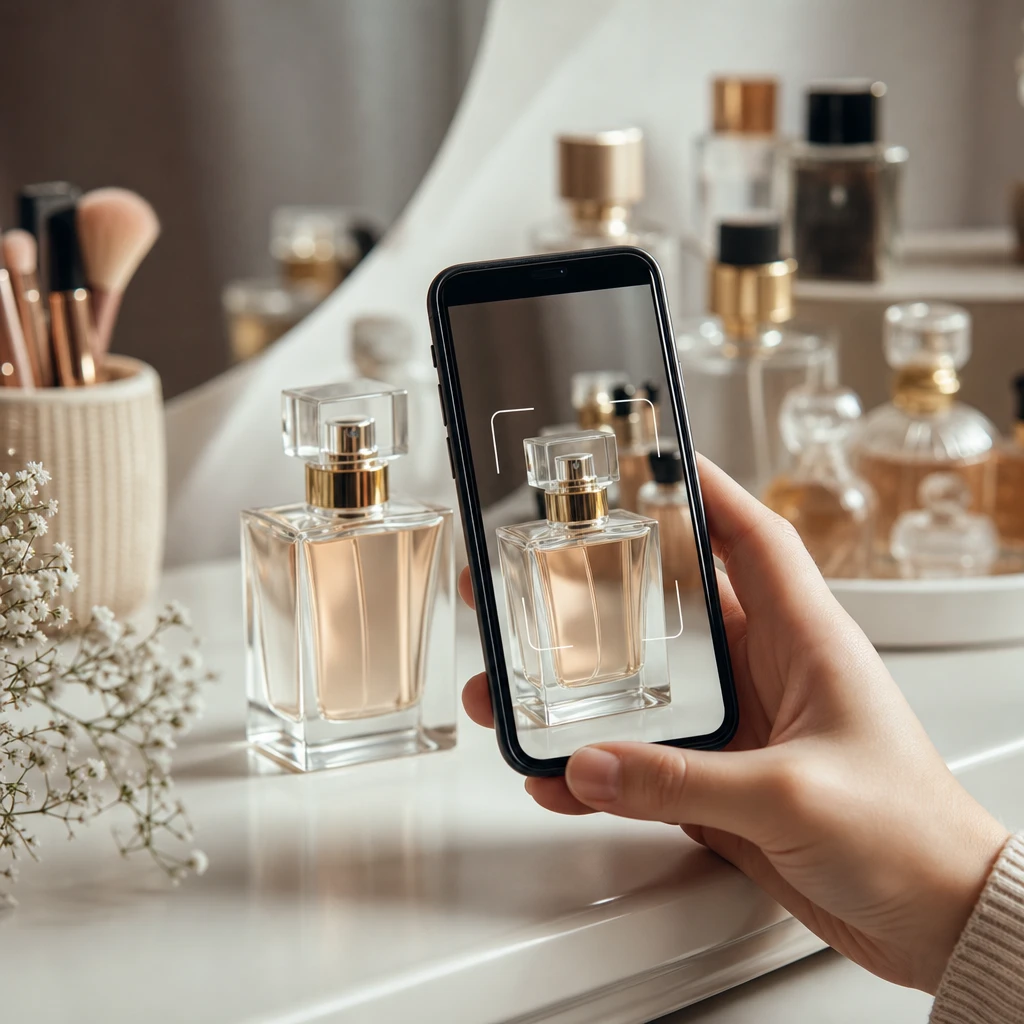
Trying to identify a perfume bottle from a photo? Here’s how perfume scanner apps work in 2026, how to scan bottles and labels for accurate matches, and how to fix the most common scan errors—especially when flankers and lookalike bottles confuse results.