
← Nose News
June 24, 2026
June 24, 2026
If you’ve ever tried to identify a perfume from a photo, you’re not alone. “Perfume bottle scanner” tools and AI identifier sites have exploded in popularity, reflecting a simple behavior shift: we discover scents visually (TikTok, Instagram, resale listings, friends’ vanities) before we ever smell them. Tools like dedicated perfume identifier apps/sites show how mainstream this need has become.
But bottle identification is harder than it looks. Scanners don’t “read minds”—they compare what your camera sees (shape, cap, label typography, colors) to a database of known products. A match can fail when:
The good news: most misses are fixable with better capture and a few quick checks.
A small setup change can dramatically improve results.
Clean the bottle (gently). Fingerprints on glass create glare that obscures logos and etching. A dry microfiber cloth is enough.
Use bright, indirect light. Stand near a window or use a lamp pointed at a wall (bounce light). Avoid direct flash on glossy bottles.
Pick a plain background. A white wall, paper, or a countertop helps the scanner isolate the bottle’s silhouette.
Stabilize your hands. Rest elbows on a table or lean your phone against something. Sharp edges and label detail matter.
One photo rarely contains enough identifying information. For best results, take:
If your scanner allows multiple photos, upload all three.
Many brands are identifiable by the cap (magnetic cube, tassel, sculpted animal, etc.). Keep the entire bottle and cap in-frame.
Filters can shift color and contrast, making a pale-pink juice look coral or turning a clear label into a blown-out white rectangle. Use your standard camera mode when possible.
Most phones let you tap the label to lock focus/exposure. If the label is reflective, angle the bottle slightly until glare disappears.
What’s happening: Many brands reuse bottle designs across flankers.
Fix:
What’s happening: Some bottle silhouettes are common (simple rectangular glass, round atomizer bottles, etc.).
Fix:
Fix:
What’s happening: Decants are repackaged; scanners can’t identify what isn’t visually there.
Fix:
Fix:
Treat scans as a strong lead, not a final verdict.
Quick verification checklist:
If two or more details don’t match, rescan with improved angles.
When visuals aren’t enough, combine small clues.
Read every tiny line on the bottle or sticker
Look for: concentration, volume (mL/fl oz), “Made in…”, distributor name, or a short brand mark.
Check the bottom for codes
Even if you don’t decode it immediately, capturing the code in your notes helps later.
Compare against your own scent memory
Write down what you remember: sweet/woody/clean, notes you detect, and when you wore it (season/daytime). This helps you eliminate lookalike bottles.
Use the identification result to unlock better recommendations
Once you have a likely match, the real win is what you do next: build a list of similar scents you’ll probably love based on the style (fresh musk, syrupy gourmand, modern oud, etc.).
Most people re-identify the same bottle multiple times because they never log it. A simple system prevents that:
A personal fragrance vault becomes your shortcut for future shopping—especially when you want AI fragrance recommendations that actually reflect what you wear, not just what you’ve clicked once.
If you have an unknown bottle (or a screenshot from a video), scan it with N.O.S.E. Notebook, then save the confirmed match to your Fragrance Vault so your future recommendations get smarter—and you never have to play “what was that perfume?” again.
Find your next scent
Browse scent profiles, notes, and houses — or let the Scent Finder match you to a fragrance in four questions.
October 14, 2026
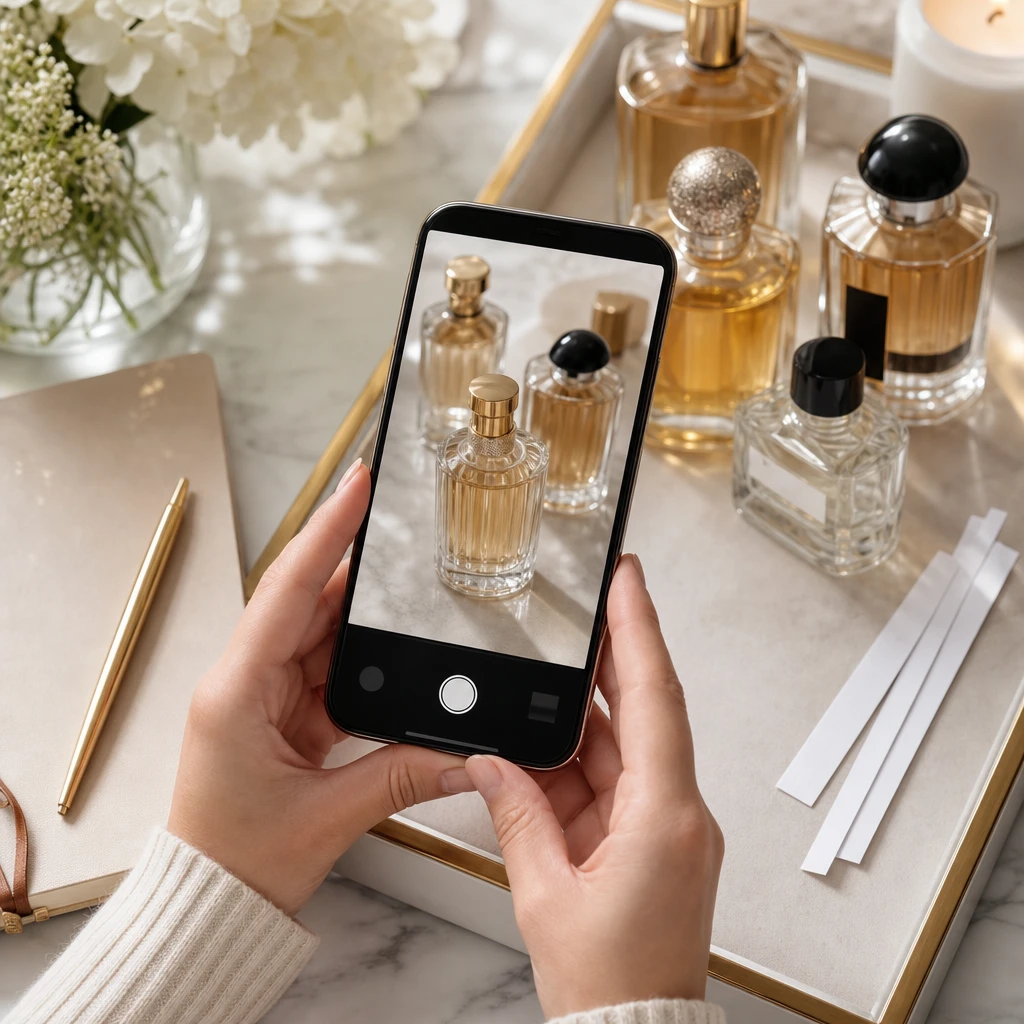
Perfume finder apps have leveled up fast: smarter AI, better bottle scans, and collection “vaults” that help you remember what you own (and what you actually love). Here’s what to look for in 2026—and how to choose the right app for your scent journey.
October 12, 2026
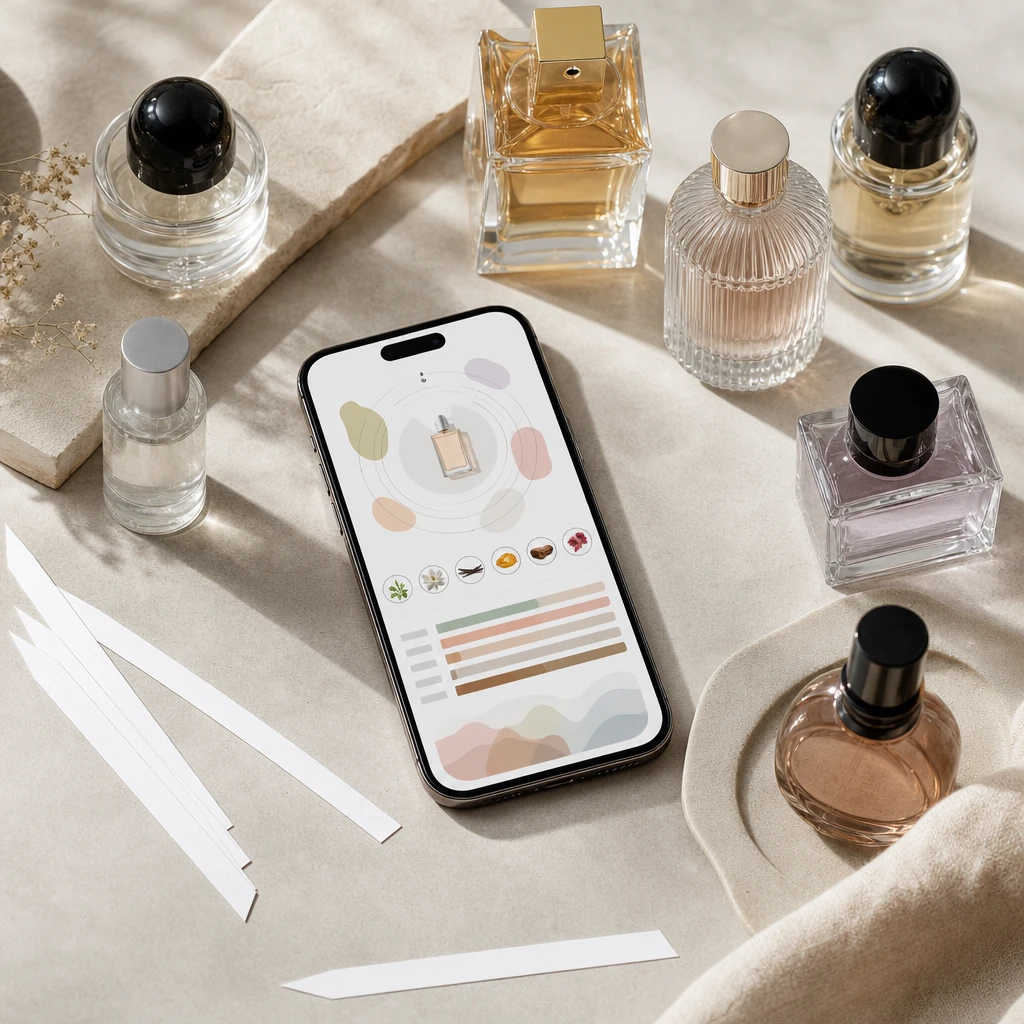
Finding a signature scent doesn’t have to mean buying a dozen discovery sets and hoping something clicks. Here’s a modern, realistic process—powered by a clear scent profile and smarter recommendations.
October 9, 2026
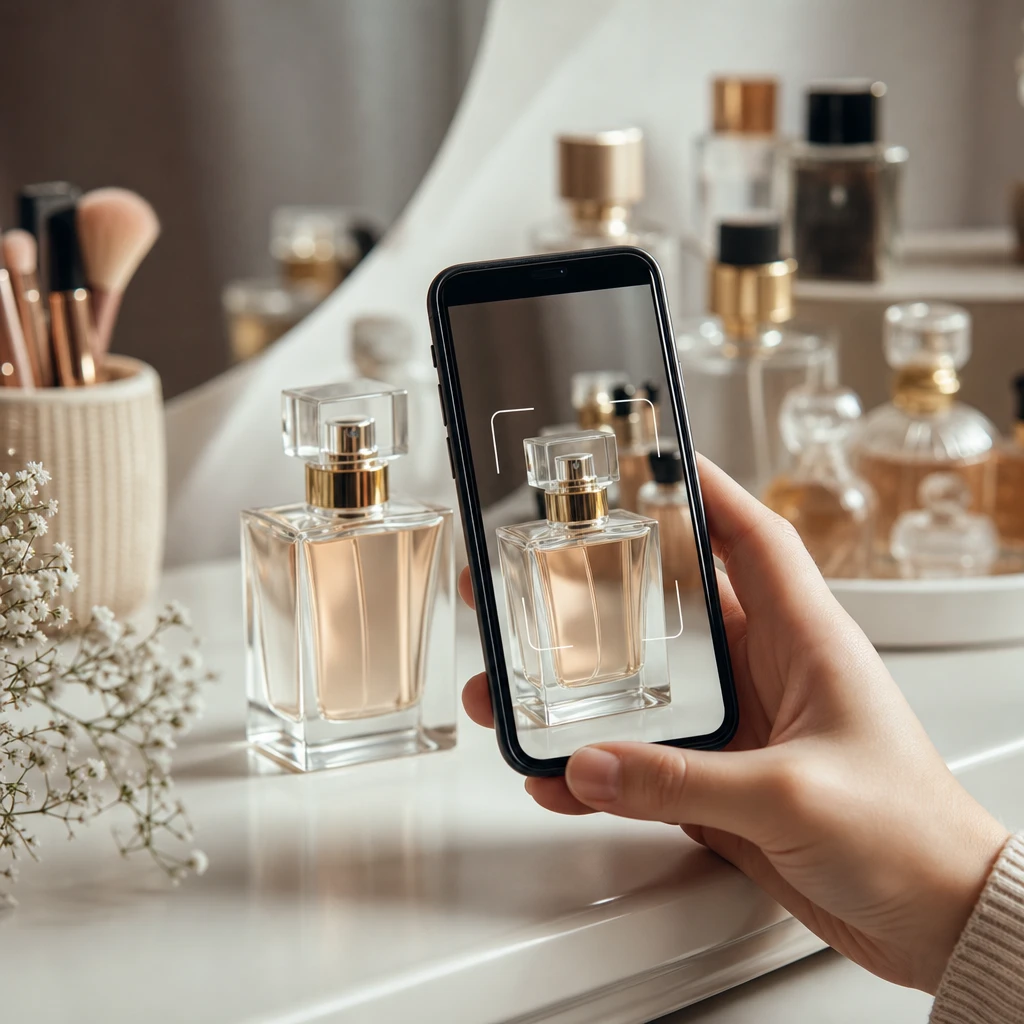
Trying to identify a perfume bottle from a photo? Here’s how perfume scanner apps work in 2026, how to scan bottles and labels for accurate matches, and how to fix the most common scan errors—especially when flankers and lookalike bottles confuse results.