
← Nose News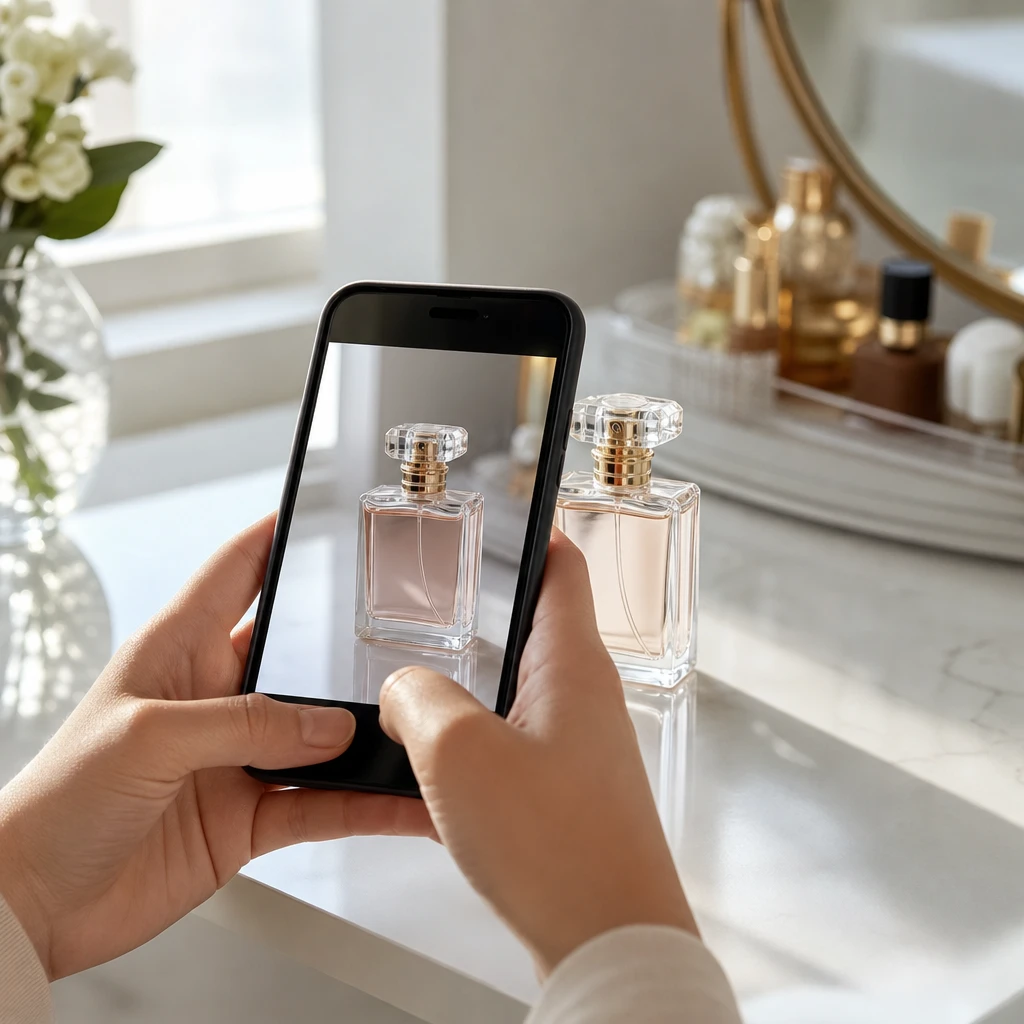
August 21, 2026
Best Perfume Scanner Apps in 2026 (and How to Scan a Bottle to Identify a Fragrance Fast)
August 21, 2026
Perfume discovery has moved far beyond department-store counters. Between decant culture, niche boutiques, travel-size “wardrobe” sets, and social feeds full of bottle shots, it’s easy to meet a fragrance and immediately want to know: What is that? Which concentration is it? Is it the older bottle or the new one?
That’s where the perfume scanner app trend earns its keep. In 2026, the best perfume identifier apps aren’t just novelty barcode readers. They’re built to recognize packaging, pull up fragrance pages quickly, and—most importantly—help you save what you find so you can compare later instead of buying impulsively.
At N.O.S.E. Notebook, we see scanning as the first step in smart discovery: identify the bottle, confirm the details that matter, and then file it into a personal system (your scent profile and Fragrance Vault) so every new find becomes part of a bigger picture.
A realistic expectation makes scanning far more successful.
A good perfume scanner app can often:
Where scanning can struggle:
When the scan is uncertain, the fastest workaround is to capture the most reliable identifiers—brand, fragrance name, concentration (EDT/EDP/Parfum), and any batch/production code—then cross-check.
App stores are full of “scanner” claims, but the best experience usually comes down to a few practical features.
1) Image recognition that prioritizes the label (not the background)
A strong scanner focuses on the typography and logo marks on the bottle, not your countertop pattern or the box behind it.
2) Fast paths to confirmation details
Identification is step one; confirmation is step two. Helpful apps make it easy to verify:
3) A “save it” system you’ll actually use
If an app identifies a bottle but doesn’t help you remember why you cared, it’s a missed opportunity. Look for:
4) Discovery tools that reduce blind-buy regret
The most useful scanners connect identification to recommendations—so a bottle you liked becomes a lead for other options with a similar vibe.
At N.O.S.E. Notebook, this is where scanning shines: once a fragrance is identified, you can scan and save it to your Fragrance Vault, then use your evolving personal scent profile to get AI-powered recommendations that make sense for your taste—not just what’s trending.
Most failed scans aren’t about the app—they’re about the photo. Use this quick workflow to dramatically improve accuracy.
Step 1: Clean the bottle (30 seconds)
Wipe fingerprints and dust off the front label. Smudges distort letters, and letters are what recognition tools love most.
Step 2: Use soft, even lighting
Avoid direct overhead bulbs that create hot spots on glass. The easiest setup is daylight near a window, with the bottle turned slightly so the label is readable and reflections are minimized.
Step 3: Choose the right angle
Start straight-on to the label. If that fails, take two more:
Step 4: Fill the frame with the bottle
Recognition improves when the bottle occupies most of the photo. Remove the box, other bottles, and busy patterns in the background.
Step 5: Capture the concentration if it’s printed
If the label includes “Eau de Toilette,” “Eau de Parfum,” “Parfum,” or “Extrait,” make sure it’s legible in at least one image.
Step 6: If needed, scan the box too
Boxes often show the full product name and concentration more clearly than the bottle—especially with minimalist bottle designs.
People often search “identify perfume by bottle,” but there are two different identification jobs:
Label/bottle scan helps answer: What fragrance is this?
Batch code helps answer: When was this produced, and does it match what I think I bought?
A batch code typically won’t identify the fragrance name on its own if you have zero context—but it can be useful for verifying production details, checking freshness expectations, or confirming whether a bottle aligns with the packaging era you’re seeing.
When scanning doesn’t immediately nail the match, a practical approach is:
Concentration labels are short, easy to miss, and frequently confused—especially when flankers share similar bottle designs.
Here’s the simplified breakdown:
Two important caveats:
When accuracy matters—like repurchasing a favorite—always confirm the concentration printed on the bottle or box before saving.
Scanning is most valuable when it becomes part of a repeatable habit. Our favorite “no-clutter” routine looks like this:
First, scan the bottle to identify the fragrance.
Next, save it to your Fragrance Vault in N.O.S.E. Notebook. That’s where bottles stop being random sightings and start becoming a searchable personal archive—your past loves, your “maybe” list, and the scents you want to revisit by season.
Then, use your personal scent profile to generate recommendations from what you already like. Instead of starting discovery from scratch each time, you’re building a map of preferences—making it easier to explore niche, designer, and luxury perfumes without feeling overwhelmed.
Even with great tools, a few issues come up again and again.
Glare on glass: Rotate the bottle slightly; move the light source; avoid direct flash.
Minimalist labels: Use the box, or take a close-up of the brand stamp on the cap or neck.
Lookalike flankers: Capture any small wording like “Intense,” “Absolu,” “Elixir,” or “L’Intense.” One word changes everything.
Travel sprays/decants: Scan the original bottle or packaging; decant labels vary too much.
Older bottles: Include a shot of the underside sticker (often has more text) and the box if available.
In 2026, a perfume scanner app should do more than identify a bottle in the moment. The real win is turning quick scans into lasting clarity—what you smelled, what you liked, and what to try next.
N.O.S.E. Notebook is built for that full journey: scan and identify, save to your Fragrance Vault, and use AI fragrance recommendations powered by your personal scent profile to keep discovery exciting—and far less random. For anyone building a collection (or simply trying to name that gorgeous bottle from last weekend), it’s the easiest way to make every fragrance encounter count.
Find your next scent
Browse scent profiles, notes, and houses — or let the Scent Finder match you to a fragrance in four questions.

October 14, 2026
Perfume finder apps have leveled up fast: smarter AI, better bottle scans, and collection “vaults” that help you remember what you own (and what you actually love). Here’s what to look for in 2026—and how to choose the right app for your scent journey.

October 12, 2026
Finding a signature scent doesn’t have to mean buying a dozen discovery sets and hoping something clicks. Here’s a modern, realistic process—powered by a clear scent profile and smarter recommendations.

October 9, 2026
Trying to identify a perfume bottle from a photo? Here’s how perfume scanner apps work in 2026, how to scan bottles and labels for accurate matches, and how to fix the most common scan errors—especially when flankers and lookalike bottles confuse results.