
← Nose News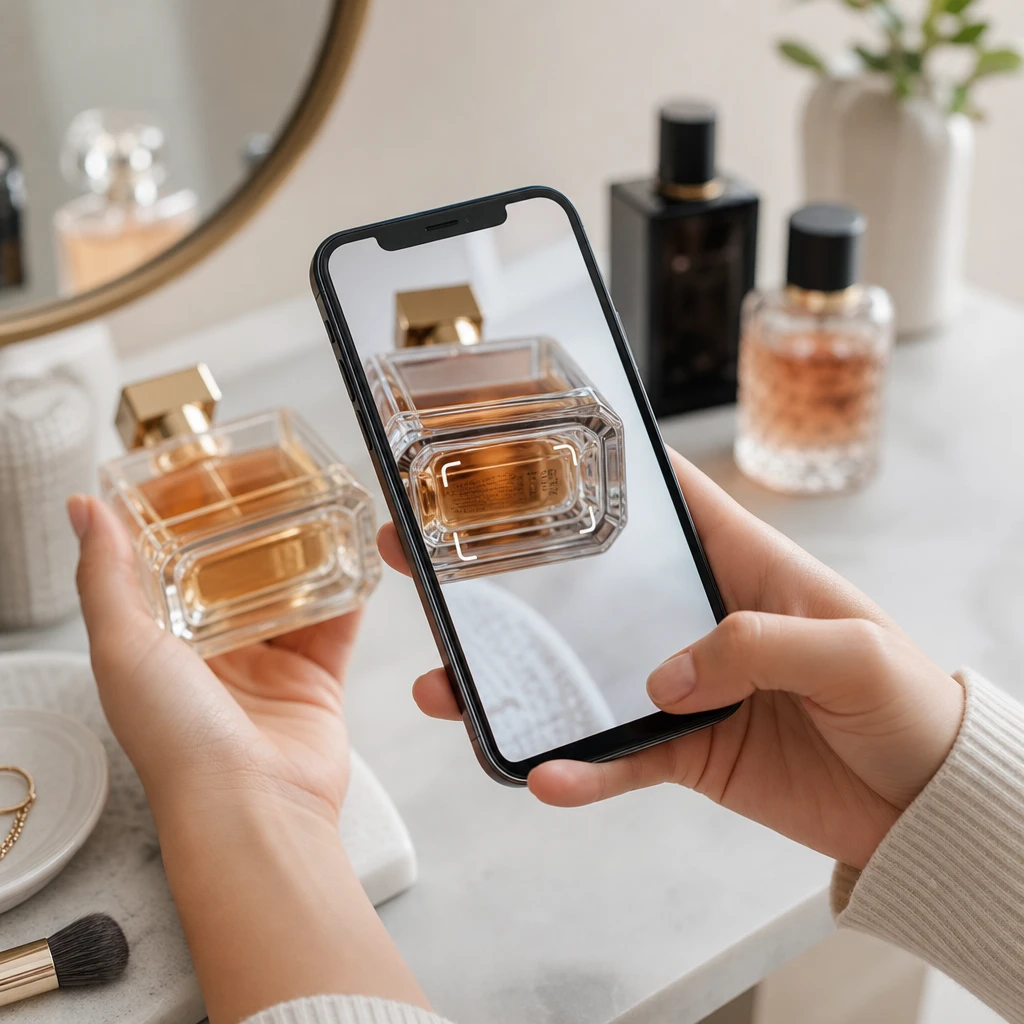
August 26, 2026
Best Perfume Scanner Apps in 2026: How to Scan a Bottle to Identify the Exact Fragrance (and Avoid Flanker Mix‑Ups)
August 26, 2026
Perfume discovery has become more visual than ever. People spot a bottle in a friend’s bathroom, see a “shelfie” on social, inherit a half-used scent, or thrift a beautiful flacon—and the next step is immediate: identify it, find the notes, and decide whether it’s “you.” That’s exactly why searches for a perfume scanner app and identify perfume from photo keep climbing.
But the biggest issue in 2026 isn’t lack of apps—it’s precision. A scan might correctly recognize a brand but still confuse the exact version: the wrong concentration (EDT vs EDP), the wrong year, or—most commonly—the wrong flanker (a related release with a similar name and bottle design). If the goal is to shop smarter, avoid accidental duplicates, or keep a clean collection log, getting the exact fragrance matters.
At N.O.S.E. Notebook, we’re focused on making identification and discovery feel effortless: scan, confirm, learn, and then save it into a personal fragrance vault tied to a scent profile.
A good fragrance identifier app is essentially doing pattern recognition across the bottle’s visible clues. In practice, apps tend to be strongest at:
Where most scanners struggle is the nuance that collectors and frequent wearers care about: concentration, reformulations, limited editions, and flankers with near-identical names.
That’s why the best results come from scanning like a pro—capturing the details that separate “close” from “correct.”
If a scan has ever returned three similar options and none felt right, it usually comes down to missing information in the image. Here’s the quickest way to improve accuracy.
First, clean the bottle—even a light film of fingerprints creates glare that blurs small type. Then, use bright natural light (or a soft lamp) and avoid overhead reflections.
Next, capture these essentials:
Front label, perfectly straight-on
Fill most of the frame with the label. Make sure the brand name and the fragrance name are readable. A slight tilt can distort lettering and throw off recognition.
Concentration shot (EDT / EDP / Parfum / Extrait)
This is a frequent cause of “correct name, wrong wear.” Concentration text is often small and may sit at the bottom of the front label or on the back.
Bottom sticker or engraving
This often includes the batch code and sometimes the exact format size. For many scents, this is the difference between a confident ID and a vague guess.
Cap and atomizer details
Sounds picky, but it matters. Many flankers share the same bottle silhouette while changing cap color, collar shape, or sprayer finish.
Box photo (if you have it)
If the bottle is unclear or the label is worn, the box is often easier to identify—especially when it shows concentration, barcode, or full naming.
A practical tip: take a quick set of 4–6 photos from different angles rather than trying to get a single “perfect” shot. Multiple strong images dramatically reduce flanker confusion.
In fragrance, a flanker is a related release that builds on an original name—often with a seasonal twist, a different concentration, or a different key accord. The problem is that flankers can look nearly identical in a photo, especially at a glance.
Common flanker pitfalls include:
If an app gives you multiple options that feel “almost the same,” treat it as a prompt to verify. Cross-check the concentration, bottle color, and any wording on the bottle bottom.
Batch codes are not just for authenticity checks. They can help narrow down release windows and packaging variations, which is especially useful when a fragrance has gone through reformulations or packaging refreshes.
A batch code typically appears as:
When you scan, include a clear photo of that code. Even if the app doesn’t interpret it automatically, it’s valuable context for confirming the exact item—especially if you’re comparing two similar listings online or trying to match what you smelled on someone else.
Sometimes a bottle is too generic, the label is worn, or the brand uses minimalist packaging. When an identifier app returns a list of candidates, a fast manual check usually resolves it.
Focus on three anchors:
If two options still seem plausible, check where the bottle was purchased (department store vs niche retailer), and whether the scent itself leans airy, dense, sweet, dry, or spicy. Even without getting into full note pyramids, that “weight” often separates an original from an intense or extrait-style flanker.
The strongest perfume bottle identification experiences are less about one magic scan and more about a workflow:
That last point is the difference between a one-off “what is this?” moment and a system that actually improves discovery over time.
Identification is only step one. The real payoff comes when the scent is saved in a way that’s searchable and useful later—especially if you sample often.
A simple fragrance vault approach keeps track of:
N.O.S.E. Notebook is built around that idea: scan and identify a bottle, then store it alongside your preferences in a personal scent profile—so future recommendations get smarter and your collection stays organized.
Some bottles are genuinely difficult: vintage packaging, decants with generic atomizers, limited releases with minimal labeling, or bottles with damaged text.
In those cases, the best next step is to combine partial identification with personal context:
Even incomplete entries can be useful, because they preserve the discovery and prevent “mystery samples” from piling up.
Perfume scanner apps in 2026 can be impressively accurate—especially when the scan includes the label, concentration, and bottom code that separate the exact fragrance from a look-alike flanker. With a few small habits, bottle identification becomes faster, more reliable, and far more useful for shopping and collecting.
When you’re ready to turn those identifications into a searchable wardrobe—complete with a personal scent profile and a fragrance vault—reach out to the N.O.S.E. Notebook team and start building a system that keeps up with your curiosity.
Find your next scent
Browse scent profiles, notes, and houses — or let the Scent Finder match you to a fragrance in four questions.

October 14, 2026
Perfume finder apps have leveled up fast: smarter AI, better bottle scans, and collection “vaults” that help you remember what you own (and what you actually love). Here’s what to look for in 2026—and how to choose the right app for your scent journey.

October 12, 2026
Finding a signature scent doesn’t have to mean buying a dozen discovery sets and hoping something clicks. Here’s a modern, realistic process—powered by a clear scent profile and smarter recommendations.

October 9, 2026
Trying to identify a perfume bottle from a photo? Here’s how perfume scanner apps work in 2026, how to scan bottles and labels for accurate matches, and how to fix the most common scan errors—especially when flankers and lookalike bottles confuse results.