
← Nose News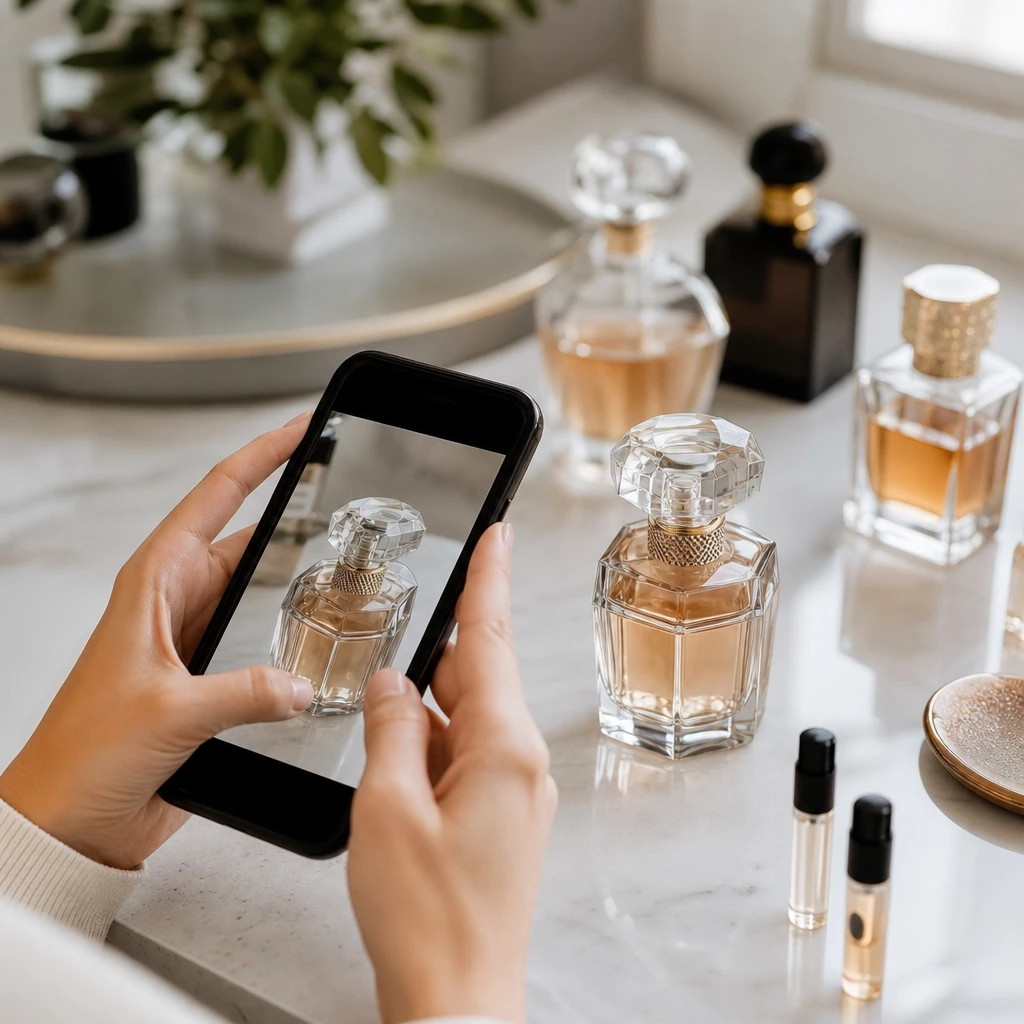
September 28, 2026
How to Identify a Perfume by Bottle (or Photo): A Practical Guide to Fragrance Bottle Scanning
September 28, 2026
Perfume has never been easier to buy—and never easier to lose track of. Between sample sets, decants, travel sprays, vintage finds, and gifts that arrive without a box, plenty of bottles end up separated from their names. Even when a label is present, it may be partly peeled, translated differently by region, or confusingly similar to another release in the same line.
That’s why searches like “identify perfume by bottle” and “find perfume by picture” keep growing: people aren’t window-shopping—they already have a scent in hand and want an exact match so they can repurchase it, learn the notes, compare flankers, or confirm what they’re smelling.
At N.O.S.E. Notebook, we built bottle scanning and identification tools for this exact moment: when curiosity turns into “what is this, exactly?”—and you want an answer that’s specific enough to be useful.
Before scanning, take a minute to capture the clues that help any identification tool (and help you verify the result).
Look for:
If you still have the box, keep it nearby. Boxes often carry the cleanest codes and full product name.
Bottle scanning is only as good as the image you provide. Perfume bottles are famously reflective, curved, and glare-prone—three things that can obscure key details.
For the best results:
This isn’t about aesthetics—it’s about capturing identifiers: typography, embossing, label borders, and any fine print.
A common assumption is that a barcode will solve everything. In practice, barcodes and batch codes help, but they’re not the whole story.
A barcode is designed for retail inventory and checkout. It can point you toward a product, but it may not uniquely identify every variation (like reformulations, regional releases, or gift set packaging). Also, many bottles don’t display a barcode—only the box does.
Batch codes are usually short alphanumeric strings printed or etched on the bottle and box. They’re primarily used for production tracking (and sometimes for estimating production date). They’re helpful for authenticity checks and for confirming whether a bottle and box belong together—but a batch code alone doesn’t reliably identify a fragrance name without cross-referencing.
A clear photo captures what codes can’t: the bottle’s design language. That matters because:
In other words: visual ID solves the real-world problem people actually have—a bottle in front of them.
When you want an accurate match (not a guess), a simple process beats frantic searching.
Scan the bottle photo (front + back + bottom if possible)
Confirm the exact naming
Many fragrances share similar naming structures (brand line + flanker name + concentration). The goal is the full, specific identity—especially when multiple versions exist.
Cross-check with what you can observe
Does the bottle color, cap shape, and label style match the identified result? If not, you may be looking at a similar release within the same family.
Log it immediately
Once you’ve identified it, capture the key details while you have them: concentration, size, and where you got it. This saves you from repeating the mystery six months later.
That’s where a personal fragrance vault becomes more than “nice to have.” It turns a one-time identification into an organized collection.
Some bottles are genuinely tricky. Here are the scenarios that most often cause confusion.
This often happens with:
In these cases, identifying by exact bottle design is usually more reliable than going by a partial name you think you remember.
Decants and travel sprays may have no brand identifiers. If you can’t identify by bottle, shift your strategy:
A photo-based ID can help you get to the claimed product, but authenticity is its own check.
Use a combination of:
Be wary of overconfidence from any single signal. Authenticity is about patterns lining up, not one magic code.
Knowing the name is step one. The real payoff comes from understanding why you like it—because that’s how you find the next love.
When you add an identified fragrance to your N.O.S.E. Notebook vault, you can start capturing the details that actually guide better recommendations:
This also prevents the classic collector problem: buying near-duplicates because you forgot what you already own—or forgetting a great sample you meant to revisit.
Fragrance trends move fast, and Fall 2026 coverage continues to spotlight warmer profiles—especially sweeter comfort directions and more nuanced takes on popular themes. When a scent shows up in a friend’s collection, at a resale shop, or in a travel bag, identifying it quickly is the difference between “that was nice” and “I can actually track it down again.”
Bottle scanning helps you do that without guessing, and a vault helps you keep the momentum—turning one discovery into a growing, organized map of your taste.
Perfume bottle identification doesn’t have to be a dead-end of blurry screenshots and half-right search results. With clear photos, a little code awareness, and a reliable bottle scanning workflow, you can go from “mystery bottle” to a confirmed name—and then turn that identification into lasting value by logging it and learning what it reveals about your preferences.
For anyone building a collection—whether it’s five bottles or fifty—N.O.S.E. Notebook makes it easier to identify what you already have, catalog what you discover, and keep your fragrance journey organized as it grows.
Find your next scent
Browse scent profiles, notes, and houses — or let the Scent Finder match you to a fragrance in four questions.

October 14, 2026
Perfume finder apps have leveled up fast: smarter AI, better bottle scans, and collection “vaults” that help you remember what you own (and what you actually love). Here’s what to look for in 2026—and how to choose the right app for your scent journey.

October 12, 2026
Finding a signature scent doesn’t have to mean buying a dozen discovery sets and hoping something clicks. Here’s a modern, realistic process—powered by a clear scent profile and smarter recommendations.

October 9, 2026
Trying to identify a perfume bottle from a photo? Here’s how perfume scanner apps work in 2026, how to scan bottles and labels for accurate matches, and how to fix the most common scan errors—especially when flankers and lookalike bottles confuse results.