
← Nose News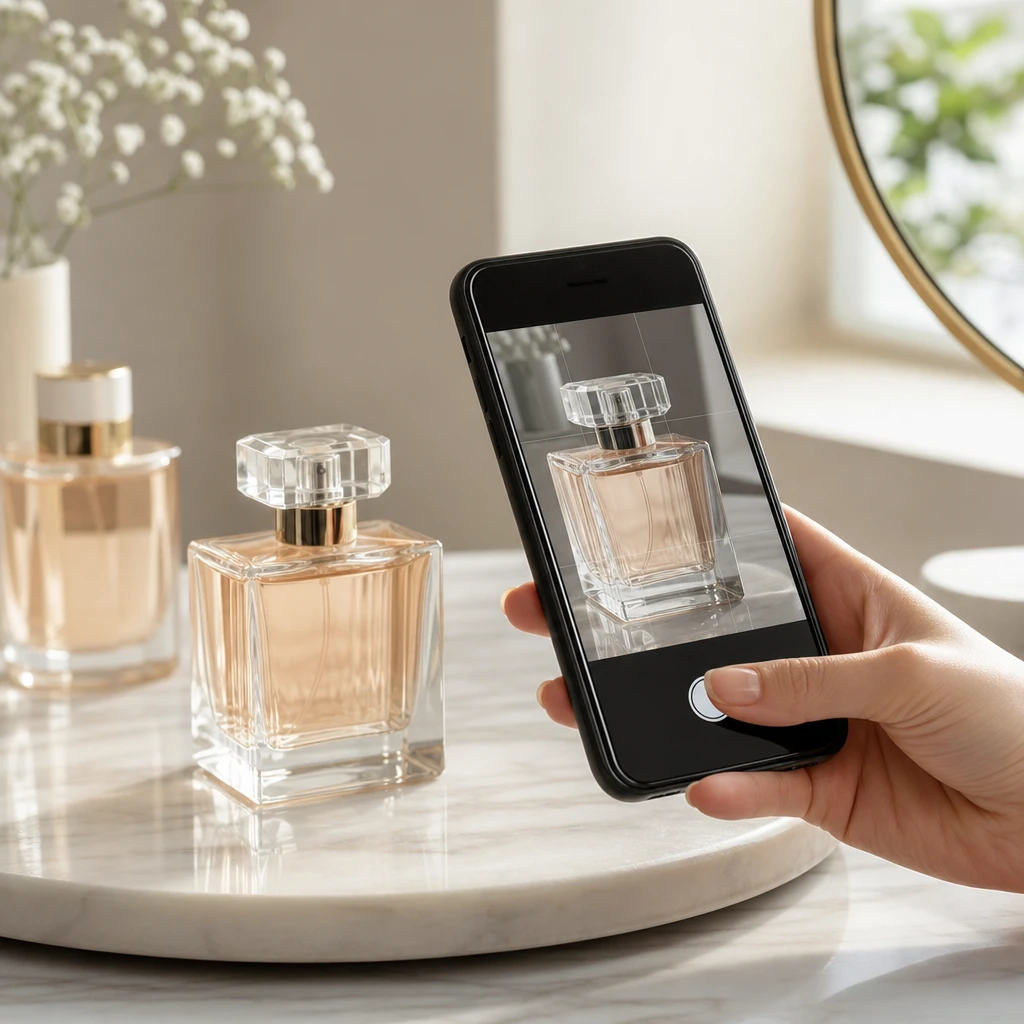
September 9, 2026
Perfume Scanner Apps in 2026: How to Identify a Fragrance From a Bottle Photo (And Why Scans Fail)
September 9, 2026
“Perfume scanner app” searches keep rising for one simple reason: most of us discover fragrance visually. A friend’s bottle on a dresser, a blurred TikTok screenshot, a department-store shelf you didn’t have time to browse—then later, the same question: what perfume is this bottle?
In 2026, bottle scanning is genuinely useful, especially when it’s paired with a fragrance vault that helps you remember what you’ve tried and what you actually loved. But it’s not magic. The same things that make perfume packaging beautiful—reflective glass, metallic caps, minimalist labels, and a dozen similar flankers—are also what make identification harder.
At N.O.S.E. Notebook, we see the patterns of what helps scans succeed, what causes failures, and what to do next when the first result isn’t right. This guide breaks it down so you can get clean IDs faster—and spend your time discovering scents, not fighting your camera.
Most perfume identifier apps rely on a combination of visual recognition methods. You don’t need to know the technical details to use them well, but understanding the basics explains why certain photos win and others fail.
A typical workflow looks like this:
This is why a photo that looks “pretty” can still be unscannable: heavy glare can erase label text, and a cropped image can remove the exact features the system uses to match.
If there’s one thing that improves results the most, it’s taking one intentional, scan-first photo instead of an artistic shot.
Here’s the quick checklist we recommend before you hit “scan perfume bottle”:
If you only have time for one photo: choose a centered, straight-on image with the label readable and the cap visible.
When a perfume identifier app misses, it’s rarely random. A few failure cases show up again and again—especially with today’s design trends.
Chrome caps, mirrored plates, and glossy lacquers can “white out” the very text a scanner needs.
Fix: Move the bottle a few inches and change the angle of the light—not the camera. Side-lighting from a window often reduces glare. If needed, take two photos: one for the label (less glare) and one for the bottle shape (more detail).
Many lines release multiple versions in nearly the same bottle: limited editions, seasonal variations, intense/parfum versions, and special collaborations. A scanner may identify the “family” correctly but pick the wrong flanker.
Fix: Photograph the bottom sticker (often includes concentration, size, and batch code) and the front label in separate shots. Even if the app can’t read the sticker perfectly, the extra image helps confirm the exact variant.
Social screenshots and cropped images are common inputs in 2026—especially when a bottle appears in a quick clip. But cropping removes key context: cap shape, base curve, and label placement.
Fix: If you’re scanning from an existing photo, choose one that shows the entire bottle. If you can’t, scan what you have—but expect to verify using any visible text clues.
Minimal typography and neutral labels look elegant—and can look identical in a small photo.
Fix: Add one “context” shot: bottle next to your hand (for scale) or capture the side/back where ingredient text and the brand’s address often appear.
Even with a strong scan match, it’s smart to confirm before you purchase a full bottle, hunt a decant, or add it to your permanent fragrance vault.
A quick verification routine:
This isn’t about being pedantic—it’s about avoiding the most common frustration: thinking you loved that perfume when it was actually a closely related version.
Identification is only the first win. The bigger payoff is what happens after: you can treat each scanned bottle as a breadcrumb in your taste history.
When you scan and correctly identify a fragrance, you can:
In other words, bottle scanning isn’t just a party trick. It’s a practical on-ramp to intentional fragrance discovery.
Not every “scan perfume bottle” moment involves a pristine retail flacon.
Perfume scanner apps in 2026 are a fast, practical way to identify a fragrance from a bottle photo—when the image is clear, complete, and well-lit. Most misidentifications come down to glare, cropped frames, and flanker confusion, all of which are fixable with a simple two-photo approach.
At N.O.S.E. Notebook, bottle scanning is built to fit into the bigger goal: helping fragrance enthusiasts and curious newcomers identify what they’ve found, save it, and use that history to power better recommendations over time. When you’re ready to stop losing track of “the one that got away,” reach out to the team or visit N.O.S.E. Notebook online to start scanning and building your fragrance vault.
Find your next scent
Browse scent profiles, notes, and houses — or let the Scent Finder match you to a fragrance in four questions.

October 14, 2026
Perfume finder apps have leveled up fast: smarter AI, better bottle scans, and collection “vaults” that help you remember what you own (and what you actually love). Here’s what to look for in 2026—and how to choose the right app for your scent journey.

October 12, 2026
Finding a signature scent doesn’t have to mean buying a dozen discovery sets and hoping something clicks. Here’s a modern, realistic process—powered by a clear scent profile and smarter recommendations.

October 9, 2026
Trying to identify a perfume bottle from a photo? Here’s how perfume scanner apps work in 2026, how to scan bottles and labels for accurate matches, and how to fix the most common scan errors—especially when flankers and lookalike bottles confuse results.