
← Nose News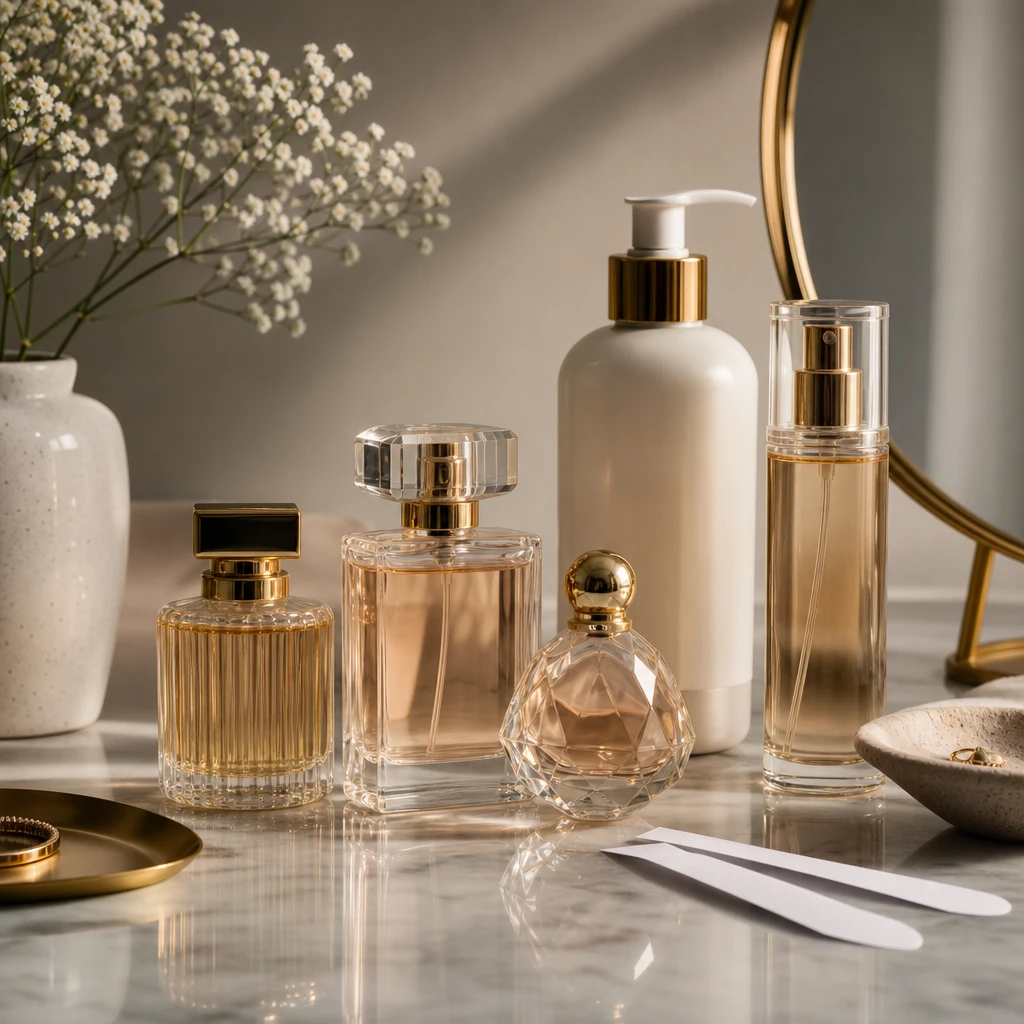
September 18, 2026
Scent Stacking in 2026: How to Layer Perfume for a Signature Scent (Without It Turning Muddy)
September 18, 2026
Scent stacking (also called perfume layering or fragrance layering) has moved from niche hobby to mainstream habit. Instead of buying one fragrance and wearing it unchanged for years, more people are building “signature” combinations—mixing perfume with body lotion, body mist, hair scent, and even a second fragrance to adjust mood, season, or setting.
That shift is showing up in trend coverage for 2026, with major beauty outlets calling out layering as a defining behavior change: fragrance is less a single purchase and more a personal routine. The appeal is obvious—layering lets a classic favorite feel new again, stretches the wear time, and helps a scent fit you rather than the other way around.
The challenge is that layering can also go sideways fast: two beautiful perfumes can combine into something indistinct (“muddy”), overly loud, or oddly sour. The good news is that there’s a method to stacking that keeps it wearable and repeatable.
A strong perfume layering combination usually does one of three things:
What layering doesn’t do reliably is “fix” a fragrance you dislike. If a perfume makes you feel tense or nauseated on its own, stacking rarely solves it—it usually amplifies the problem. Start with at least one base scent you already enjoy.
If perfume layering feels intimidating, use a three-step structure. It keeps the result intentional without needing a dozen products.
1) Skin prep (quiet, unscented):
Apply an unscented or lightly scented lotion to pulse points. Moisturized skin helps scent last longer and prevents harsh “alcohol burst” dryness.
2) Anchor scent (your main fragrance):
This is the fragrance you want to recognize throughout the day—the one that carries the identity.
3) Modifier (a small adjustment):
Add a second product to steer the vibe: a body mist for lift, a clean musk for softness, a citrus for brightness, a woody scent for depth.
The key is ratio. Most layering wins come from 80/20 rather than 50/50: the anchor stays dominant; the modifier behaves like a filter.
A common reason scent stacking fails is that everything gets sprayed onto the same spot, forcing a chaotic blend. Try creating “zones.”
This approach lets the scent evolve naturally as you move, instead of collapsing into one dense chord.
This is the most searched layering question for a reason—it’s the easiest routine to repeat.
A reliable order is:
If you’re using a scented lotion and a mist and an EDP, keep the perfume sprays conservative. In layering, it’s easy to go nose-blind and end up wearing far more than intended.
People often search for direct answers—what layers with vanilla, musk, citrus, or oud. Rather than listing dozens of specific bottles (which can vary by concentration, reformulation, and flanker), it’s more useful to think in roles and materials.
Vanilla is a natural anchor—warm, comforting, and easy to build around. Great modifiers:
The common mistake: pairing vanilla with multiple other sweet-heavy scents, which can become cloying and indistinct.
Musk is often the best “glue” layer because it smooths edges and makes a stack feel cohesive.
The common mistake: adding too many musky products (lotion, mist, perfume) and losing contrast.
Citrus is a classic modifier—bright, clean, uplifting—but it can fade quickly.
The common mistake: mixing multiple sharp citrus-forward scents, which can read like cleaner rather than perfume.
Oud tends to dominate, so it works best as the anchor.
The common mistake: stacking oud with another extremely dense base, which can overwhelm quickly—especially indoors.
Layering is chemistry, and chemistry is unpredictable. Before wearing a new stack out, use these checks.
1) The blotter-strip test (fast):
Spray the anchor on one strip and the modifier on another. Wave them together, then overlap them. If the overlap smells confused or sour, skip it.
2) The “two-hour truth” test:
Many stacks smell great for 10 minutes and then fall apart. If possible, wait two hours before deciding it’s a winner.
3) The distance check:
Step into another room and come back. If the scent hits you like a wall, dial it back.
The difference between “I layered today” and “this is my signature” is documentation and repeatability.
A simple way to make stacking consistent is to create a small wardrobe of roles:
Then keep notes on what worked: how many sprays, where you applied, and how it wore after a full day. This is exactly where a personal scent profile and a fragrance vault become practical—layering success is easier when past wins are searchable rather than remembered vaguely.
Layering is fun, but restraint is part of good taste. If you’re attending a close-quarters event, working in an office, or wearing something already potent, a single well-placed application can be more elegant than a complex stack.
A good rule: if the goal is clarity (smelling “like you”), keep the routine simple. If the goal is creativity (exploring scent), experiment at home first.
Scent stacking in 2026 isn’t about owning more—it’s about wearing smarter. With a solid anchor, a light modifier, and thoughtful placement, perfume layering becomes a reliable way to create a signature scent that shifts with the moment while still feeling unmistakably personal.
At N.O.S.E. Notebook, our tools are built for this kind of fragrance life: discovering new options, identifying what you’ve found, and saving the combinations that genuinely work. For anyone ready to turn layering experiments into a repeatable routine, reach out to the team or explore N.O.S.E. Notebook online.
Find your next scent
Browse scent profiles, notes, and houses — or let the Scent Finder match you to a fragrance in four questions.

October 14, 2026
Perfume finder apps have leveled up fast: smarter AI, better bottle scans, and collection “vaults” that help you remember what you own (and what you actually love). Here’s what to look for in 2026—and how to choose the right app for your scent journey.

October 12, 2026
Finding a signature scent doesn’t have to mean buying a dozen discovery sets and hoping something clicks. Here’s a modern, realistic process—powered by a clear scent profile and smarter recommendations.

October 9, 2026
Trying to identify a perfume bottle from a photo? Here’s how perfume scanner apps work in 2026, how to scan bottles and labels for accurate matches, and how to fix the most common scan errors—especially when flankers and lookalike bottles confuse results.