
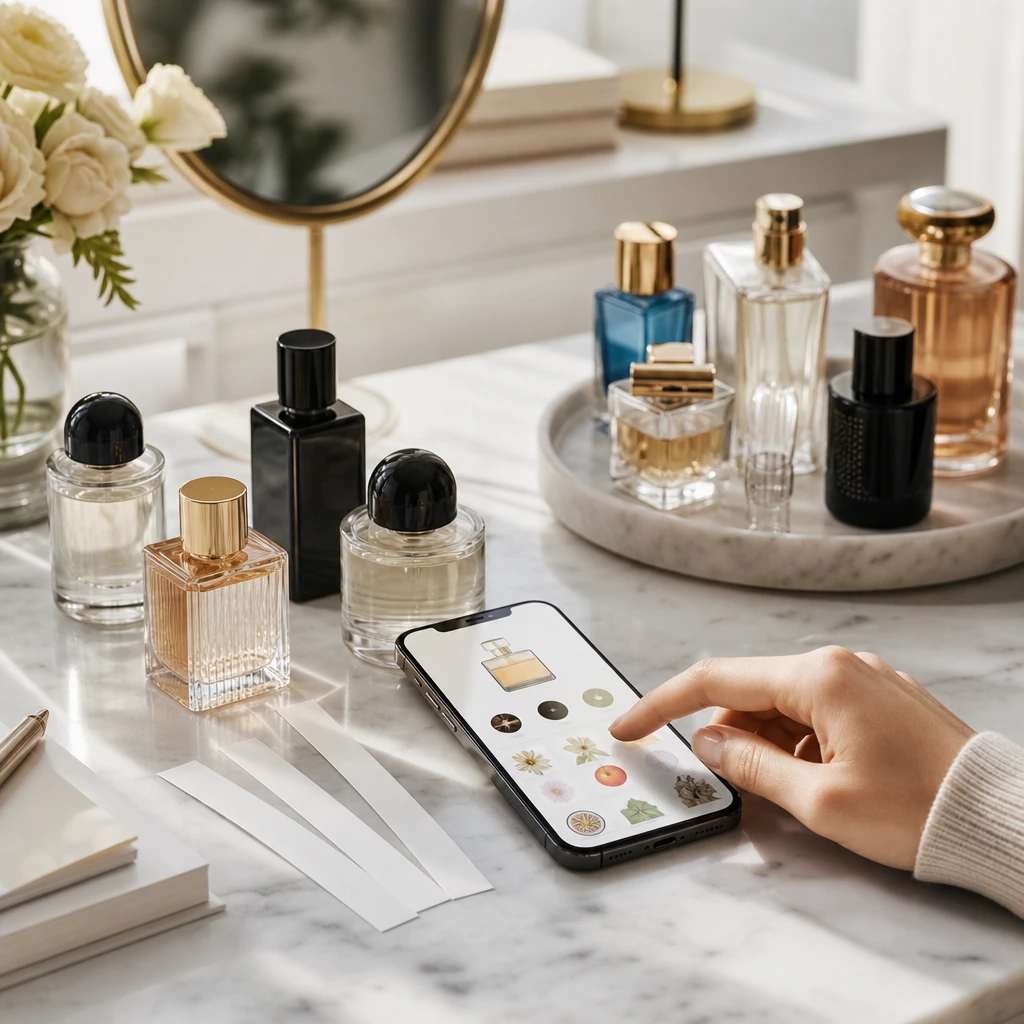
Why “What perfume should I wear?” is a 2026 question (not a 2016 one)
Fragrance discovery has changed. In 2026, most people aren’t choosing between a handful of department-store classics—they’re navigating niche launches, “FragranceTok” micro-trends, limited drops, and a resale market where names, bottles, and reformulations can get confusing fast. At the same time, there’s a strong swing toward wearable, intimate styles—skin scents and musks—alongside richer “elevated gourmand” perfumes that feel grown-up rather than candy-sweet. Vogue’s 2026 coverage points to exactly that tension: comfort and closeness on one side, indulgence and statement notes on the other.
That’s why a modern fragrance finder (or perfume recommendation quiz) works so well: it turns a huge, overwhelming universe into a shortlist that actually fits how you live, what you like, and how you want to be perceived.
At N.O.S.E. Notebook, we built our fragrance finder approach around that reality—personalization first, trend awareness second, and a system for saving what you learn so every discovery gets you closer to a true signature scent.
What a good fragrance finder quiz should do (and what it shouldn’t)
A perfume finder quiz isn’t just a personality test with a pretty result screen. The best ones do three practical jobs:
First, they translate preferences into scent structure. Most people don’t think in “amber woody with lactonic facets.” They think in memories, textures, places, and food. A smart quiz maps those inputs to fragrance families, common note pairings, and intensity levels.
Second, they account for wear context. The perfume you love in a boutique may not be the one you reach for at 7:30 a.m. before commuting, working out, or sitting close to coworkers. A useful fragrance finder considers climate, setting, and how much projection you want.
Third, they learn from your feedback. One-off recommendations are fine; the goal is momentum. The quiz should get sharper as you like, dislike, and save scents.
What it shouldn’t do: push the same handful of viral fragrances to everyone. Trend-aware is helpful; trend-only is how people end up with a bottle they admire but never wear.
The 2026 trend families that matter (and how to wear them without regret)
Trends are most useful when they become “directions,” not mandates. Here are the 2026 families we see people actively searching—and how to make them work for real life.
Skin musks and “your-scent-but-better” minimalism
Skin scents are intimate, clean, and softly addictive. They often lean musky, slightly powdery, or airy-woody, sometimes with a subtle creamy or salty undertone. They’re ideal when you want something close, modern, and easy—especially for office wear, travel, or anyone who feels overwhelmed by heavy perfume.
Trend-safe move: Choose a skin musk with one extra “hook” (a sheer floral, a warm wood, or a clean amber) so it feels personal rather than generic.
Elevated gourmands (cozy, but not cupcakes)
Gourmands are still everywhere, but the most wearable versions feel sophisticated: toasted notes, subtle vanilla, coffee, cacao, warm woods, or a whisper of spice. The goal is comfort with polish.
Trend-safe move: If sweet scents make you nervous, look for gourmands with bitter edges (espresso, cocoa, burnt sugar) or dry bases (cedar, vetiver, incense) so the finish is less sugary.
Green fresh and “bitter-citrus” coolness
Late-summer and warm-weather interest has been leaning into greener, more bracing freshness—herbal citrus, leafy accords, and crisp notes that feel cooling. Who What Wear has highlighted the appeal of bitter-leaning scents as an alternative to standard bright citrus.
Trend-safe move: Go for green freshness when you want energy and clarity, and pair it with a gentle musk base so it lasts longer and feels less like a splash.
A simple fragrance finder quiz—without the fluff
To get a genuinely useful answer to “what perfume suits me?”, start with these inputs. This is the same information we use to build accurate AI fragrance recommendations inside N.O.S.E. Notebook.
1) Choose your “vibe” in textures (not notes)
Pick two that feel most like you:
- Clean linen / freshly showered
- Warm sweater / cozy café
- Creamy skin / soft powder
- Crisp leaves / green garden
- Dark wood / quiet library
- Sparkling citrus / iced drink
Textures skip the jargon and still point to reliable families.
2) Decide your projection comfort zone
Be honest—this matters more than most people think.
- Close-to-skin: someone notices only when they’re near
- Personal bubble: noticeable within arm’s length
- Statement: you enter the room with it
A skin musk in statement strength can feel “too much,” while a bold amber in close-to-skin strength can feel like it disappears.
3) Set your non-negotiables (and your no-go list)
A perfume finder quiz should ask what you actively avoid. Common deal-breakers:
- Heavy patchouli
- Powdery iris
- Screechy citrus
- Loud white florals
- Very sweet vanilla
Knowing what to exclude is how you stop buying bottles that look perfect on paper.
4) Pick your “signature scent lane”
Most people settle into one of these lanes:
- Everyday easy: clean, musky, sheer woods
- Date night / cozy: amber, vanilla-leaning, spice
- Fresh confidence: citrus-herbal, green, aromatic
- Artful niche: unusual florals, incense, leathery woods
Once you have a lane, recommendations become dramatically more accurate.
How to test your results so you don’t waste money
A quiz should lead to sampling—not blind buying. The fastest way to a signature scent is structured testing over a week or two.
We recommend a simple three-wear method:
- Blotter strip (first impression): Do you like the opening? If not, move on.
- One-spray wear (true fit): Try it on skin, no layering, on a normal day.
- Repeat wear (real-life proof): If you miss it when it’s gone, it’s a contender.
During testing, pay attention to two overlooked factors:
- Drydown identity: Many fragrances “reveal themselves” after 45–90 minutes.
- Lifestyle compatibility: A scent can be gorgeous and still wrong for your routine (gym, small office, heat, migraines, etc.).
Turn recommendations into a personal scent profile (so every quiz gets smarter)
The hidden value of a fragrance finder isn’t the one-time answer—it’s the profile you build while exploring.
A solid scent profile includes:
- Families you reach for: musky, woody, amber, green, floral, gourmand
- Notes you consistently love: vanilla bean vs. vanilla sugar, bergamot vs. grapefruit, sandalwood vs. cedar
- Performance preference: longevity, sillage, and whether you like a soft aura or a trail
- Occasion wardrobe: work, weekend, evening, special events
In N.O.S.E. Notebook, that profile lives in a fragrance vault so favorites, “maybes,” and past samples don’t disappear into a drawer. Over time, your vault becomes a map of your taste—useful for shopping, gifting, and avoiding accidental dupes.
Where AI fragrance recommendations shine (and where human judgment still matters)
AI is excellent at pattern recognition: connecting what you like about one scent to new releases, niche houses, and overlooked classics you’d never search for by name. It can also help filter by budget, intensity, or season without flattening everything into “top 10 perfumes.”
But fragrance still lives on skin. Body chemistry, heat, and even lotion can shift a scent’s balance. The best approach is AI-assisted discovery paired with real sampling and good recordkeeping.
That’s the philosophy behind N.O.S.E. Notebook: use AI to narrow the universe, use your nose to choose, and use your vault to remember.
Conclusion: finding your 2026 signature scent should feel simpler
A great fragrance finder quiz doesn’t box anyone into a label—it gives a clear starting point, trend-aware options, and a method for testing that protects your budget. In 2026, when skin musks, sophisticated gourmands, and greener freshness are all competing for attention, the easiest way to buy smarter is to make your preferences visible and trackable.
N.O.S.E. Notebook is built for exactly that: AI fragrance recommendations, a personal scent profile, and a fragrance vault that keeps every discovery in one place. When the shortlist is ready, reach out to the N.O.S.E. Notebook team or visit our online experience to start refining your signature scent.
Find your next scent
Explore the fragrance catalog
Browse scent profiles, notes, and houses — or let the Scent Finder match you to a fragrance in four questions.
More from Nose News
All articles →
October 14, 2026
Best Perfume Finder Apps in 2026: AI Recommendations, Bottle Scan, and Your Fragrance Vault
Perfume finder apps have leveled up fast: smarter AI, better bottle scans, and collection “vaults” that help you remember what you own (and what you actually love). Here’s what to look for in 2026—and how to choose the right app for your scent journey.
October 12, 2026
How to Find Your Signature Scent in 2026 (With an AI Scent Profile)
Finding a signature scent doesn’t have to mean buying a dozen discovery sets and hoping something clicks. Here’s a modern, realistic process—powered by a clear scent profile and smarter recommendations.
October 9, 2026
Perfume Scanner Apps (2026): How to Identify a Fragrance From a Photo + Fix Common Scan Errors
Trying to identify a perfume bottle from a photo? Here’s how perfume scanner apps work in 2026, how to scan bottles and labels for accurate matches, and how to fix the most common scan errors—especially when flankers and lookalike bottles confuse results.