
← Nose News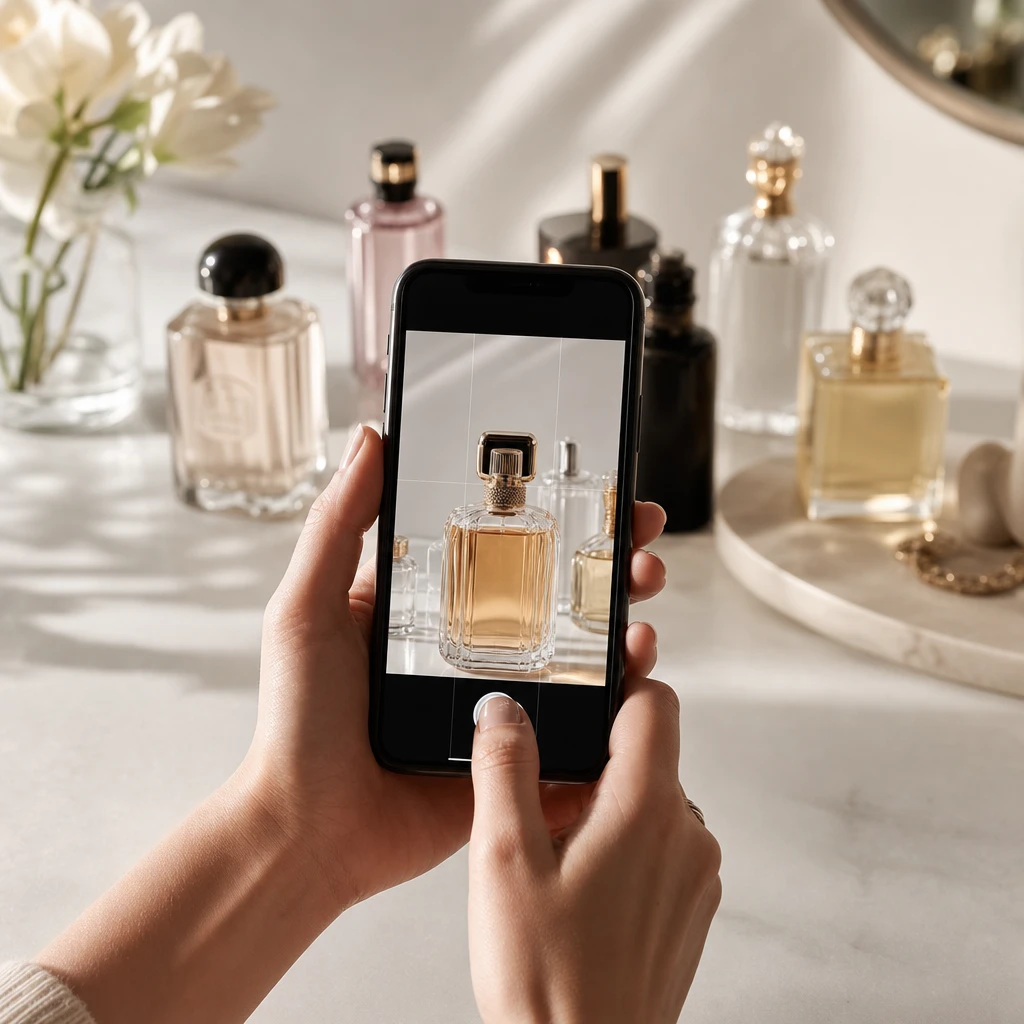
August 3, 2026
How to Identify a Perfume From a Photo: Bottle-Scanning Tips (and What to Do When It’s a Flanker)
August 3, 2026
A clear photo of a bottle feels like it should be an instant answer. Sometimes it is—especially with iconic silhouettes. But fragrance packaging is also a maze of look‑alikes: seasonal gift sets, store exclusives, reissues, and (most confusing of all) flankers—variations on the original scent released under the same name.
That’s why bottle scanning works best when it’s treated like a fast first step, not the final word. The goal isn’t just a name—it’s getting to the exact version you smelled, so you can find it again, compare it, and discover similar scents you’ll actually love.
Most “misses” happen because the scanner can’t see the details that distinguish one release from another. Before scanning, take 20 seconds to capture the information a database needs.
Use these photo tips:
If the bottle is in a store and you can’t handle it for multiple angles, take one full-bottle photo and one tight crop of the name plate/label.
Bottle scanning is excellent for:
Where it struggles:
When a scan returns multiple results, that’s not failure—it’s a sign to confirm the version using a few checks that perfumers and collectors rely on.
A flanker is a related release built off an original fragrance name—think “Original,” then “Intense,” “L’Eau,” “Absolu,” “Parfum,” “Elixir,” or a seasonal twist with a new note focus. Many flankers share the same bottle shape, same typography, and only minor color differences.
Here’s how to tell flankers apart when you only have a photo:
Small words matter. “Parfum” vs “Eau de Parfum,” “Intense,” “Le Parfum,” “L’Eau,” and even a single extra line of text can indicate a different release.
Brands often signal flankers via:
Two bottles can look identical except for “Eau de Toilette” vs “Eau de Parfum.” That difference can change projection, longevity, and even the note balance.
A 10 ml travel spray from a discovery set may have the same name but different packaging—scans can misread it as a related product.
In N.O.S.E. Notebook, this is where identification becomes genuinely useful: once the most likely match is found, the next step is saving it to a fragrance vault with the concentration and any label details—so your collection doesn’t turn into a confusing list of similar names later.
People often search “batch code” after a scan—especially when they suspect a fake or want to date a bottle.
A key limitation: batch codes rarely help you identify a fragrance by themselves unless you also know the product and have the original packaging. For photo-based identification, the batch code is a supporting clue—not the main path.
When we’re trying to identify a scent from a photo—whether it’s a bottle spotted on a vanity, a screenshot from a video, or a thrift-store find—this is the most reliable process.
Scan the bottle and note the top 2–3 results.
Verify the exact label text (zoom in and compare spelling, accents, and concentration).
Cross-check the bottle details: cap shape, collar, atomizer color, and any emblem placement.
Confirm the release family: original vs intense vs l’eau vs parfum.
Save it to a fragrance vault immediately with:
That last part is the difference between “I think I found it once” and a collection that actually supports better buying decisions. N.O.S.E. Notebook is built for that scan → save → learn loop, so each identification makes the next recommendation smarter.
Some bottles simply aren’t in image databases yet—especially indie releases and older discontinued designs. In those cases, identification becomes a small investigation.
Focus on these high-signal clues:
If you’re cataloging in N.O.S.E. Notebook, even an “unknown” entry is useful: save the photos and your scent impression now. Once it’s identified later, you’ll still have the memory anchored—and the system can start suggesting similar profiles based on what you noticed.
Photo identification can’t authenticate a bottle on its own. If the price or source feels off, take a beat before assuming the scan result is proof.
A few red flags that warrant extra verification:
If authenticity matters (for gifting, resale, or skin sensitivity reasons), buy from authorized retailers whenever possible and keep packaging for documentation.
The best moment to find your next fragrance is right after you’ve identified the current one—because you’re already in the right scent family. But generic “similar scents” lists often miss the nuance that made you like it.
What improves recommendations is capturing a few personal specifics:
N.O.S.E. Notebook combines identification with a personal scent profile and a fragrance vault, so your future picks reflect your taste—not just what looks adjacent in a database.
Identifying a perfume from a photo is absolutely doable, but it’s rarely just one click—especially when flankers and near-identical packaging enter the picture. A clean set of photos, a quick concentration check, and a few packaging details usually separate the “close” answer from the correct one.
N.O.S.E. Notebook is designed to make that process practical: scan the bottle, confirm the right version, save it to a fragrance vault, and use what you’ve learned to discover your next great scent. When you’re ready to organize what you’ve found and get recommendations that match your preferences, reach out to the N.O.S.E. Notebook team or explore the platform online.
Find your next scent
Browse scent profiles, notes, and houses — or let the Scent Finder match you to a fragrance in four questions.
October 14, 2026
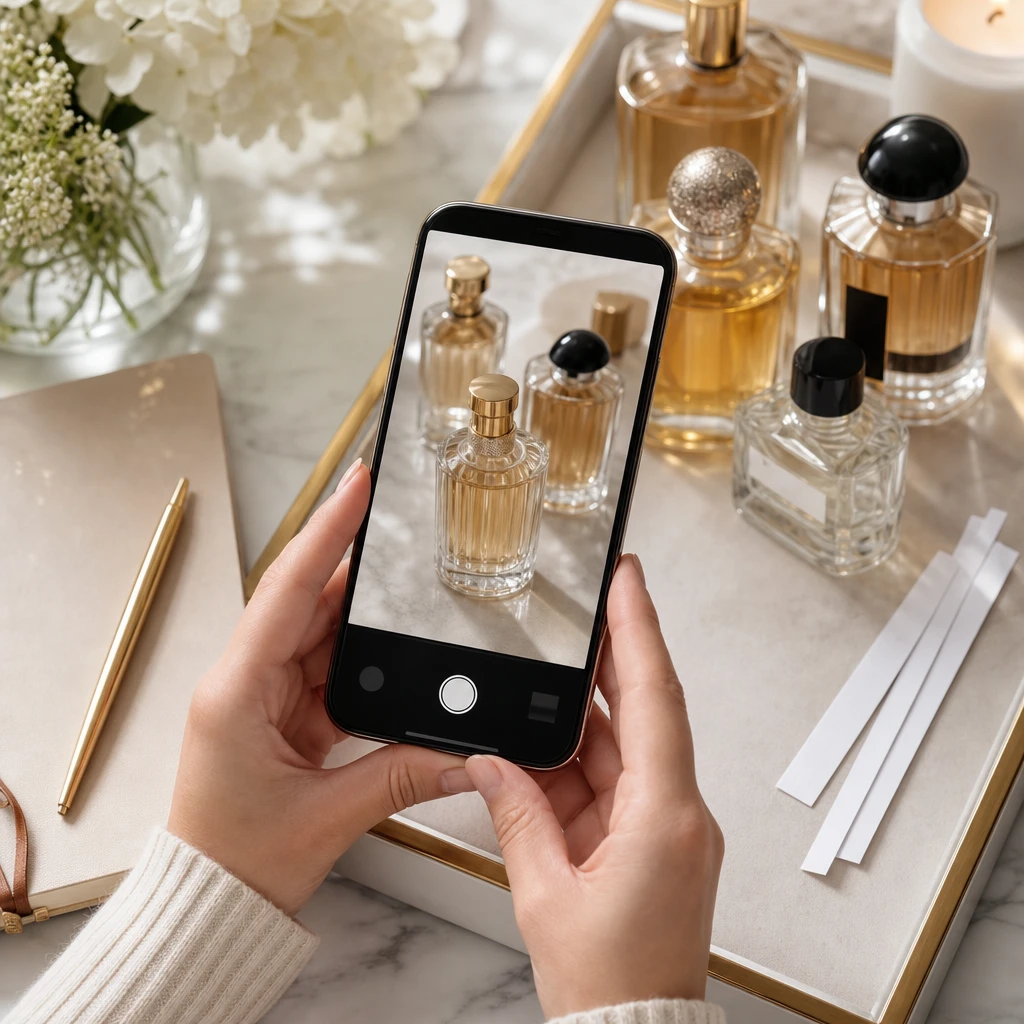
Perfume finder apps have leveled up fast: smarter AI, better bottle scans, and collection “vaults” that help you remember what you own (and what you actually love). Here’s what to look for in 2026—and how to choose the right app for your scent journey.
October 12, 2026
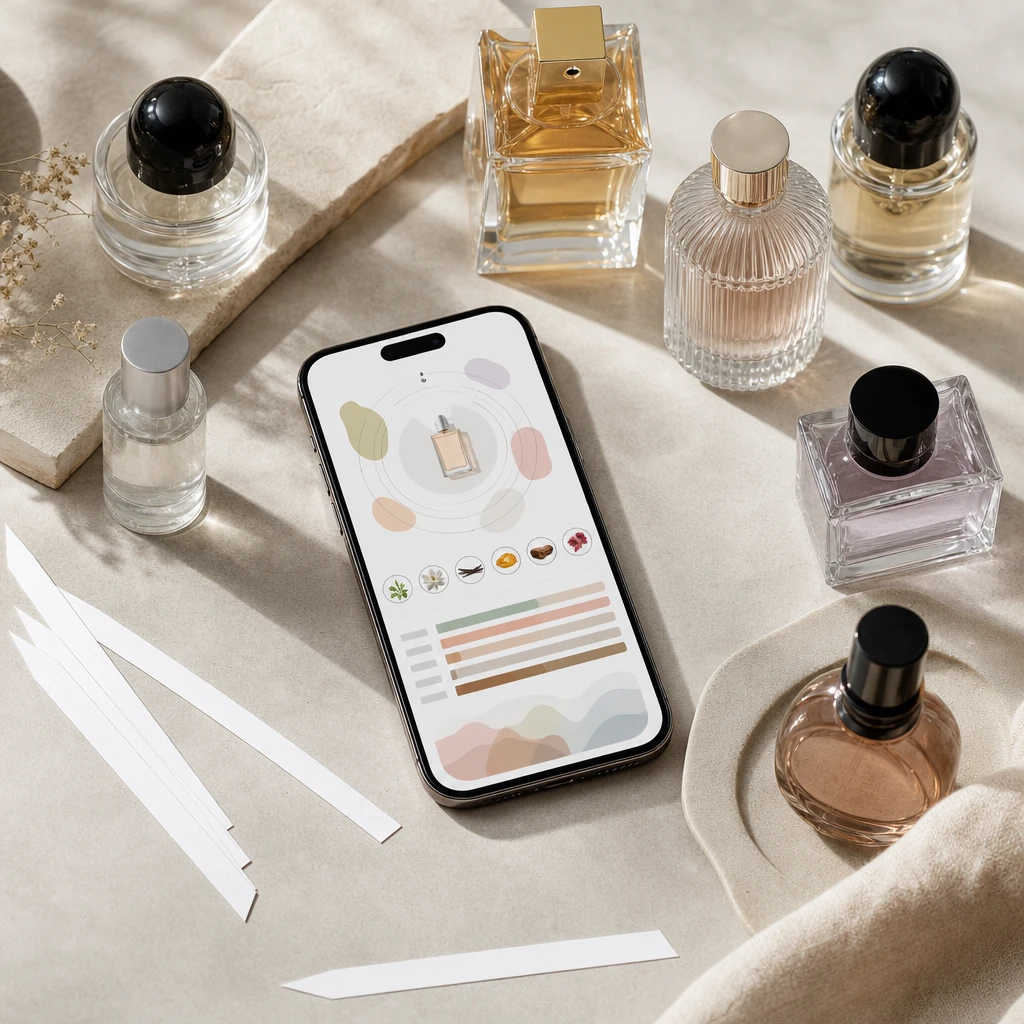
Finding a signature scent doesn’t have to mean buying a dozen discovery sets and hoping something clicks. Here’s a modern, realistic process—powered by a clear scent profile and smarter recommendations.
October 9, 2026
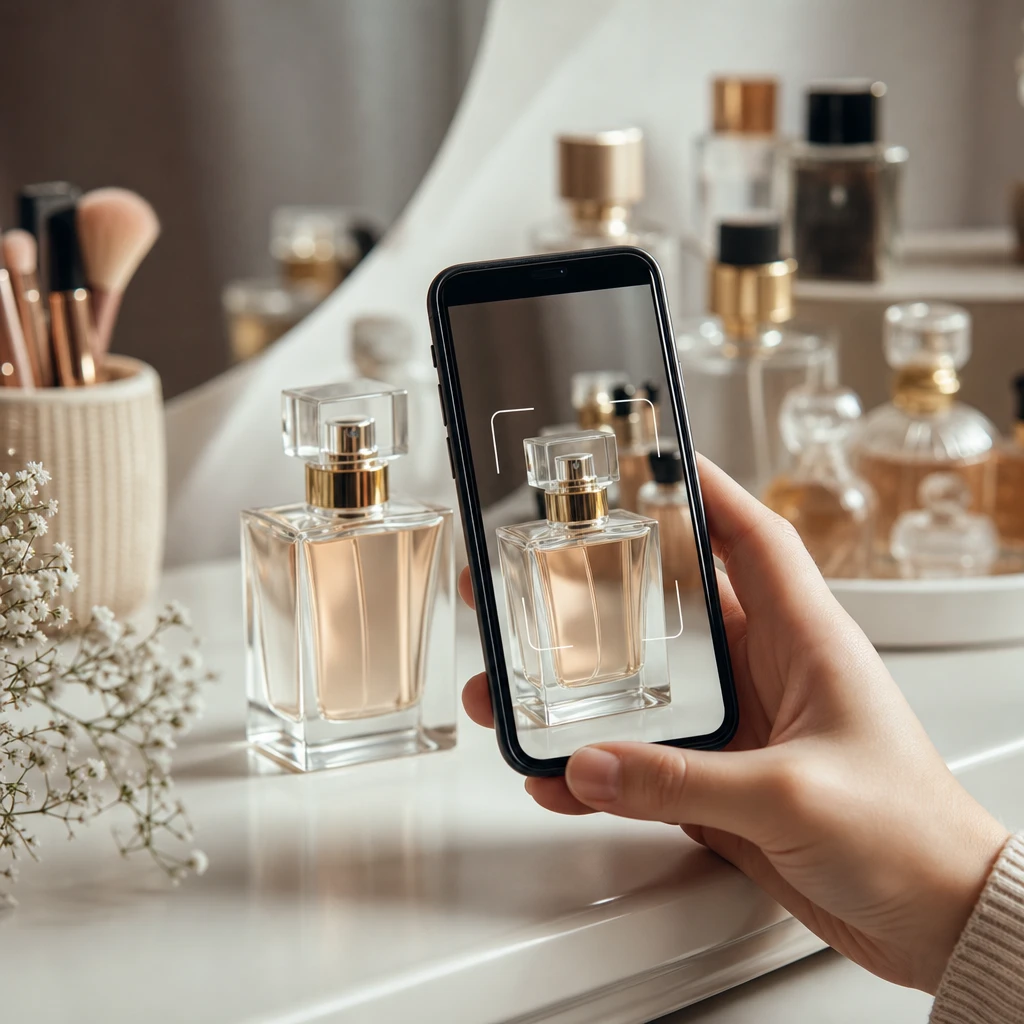
Trying to identify a perfume bottle from a photo? Here’s how perfume scanner apps work in 2026, how to scan bottles and labels for accurate matches, and how to fix the most common scan errors—especially when flankers and lookalike bottles confuse results.