
← Nose News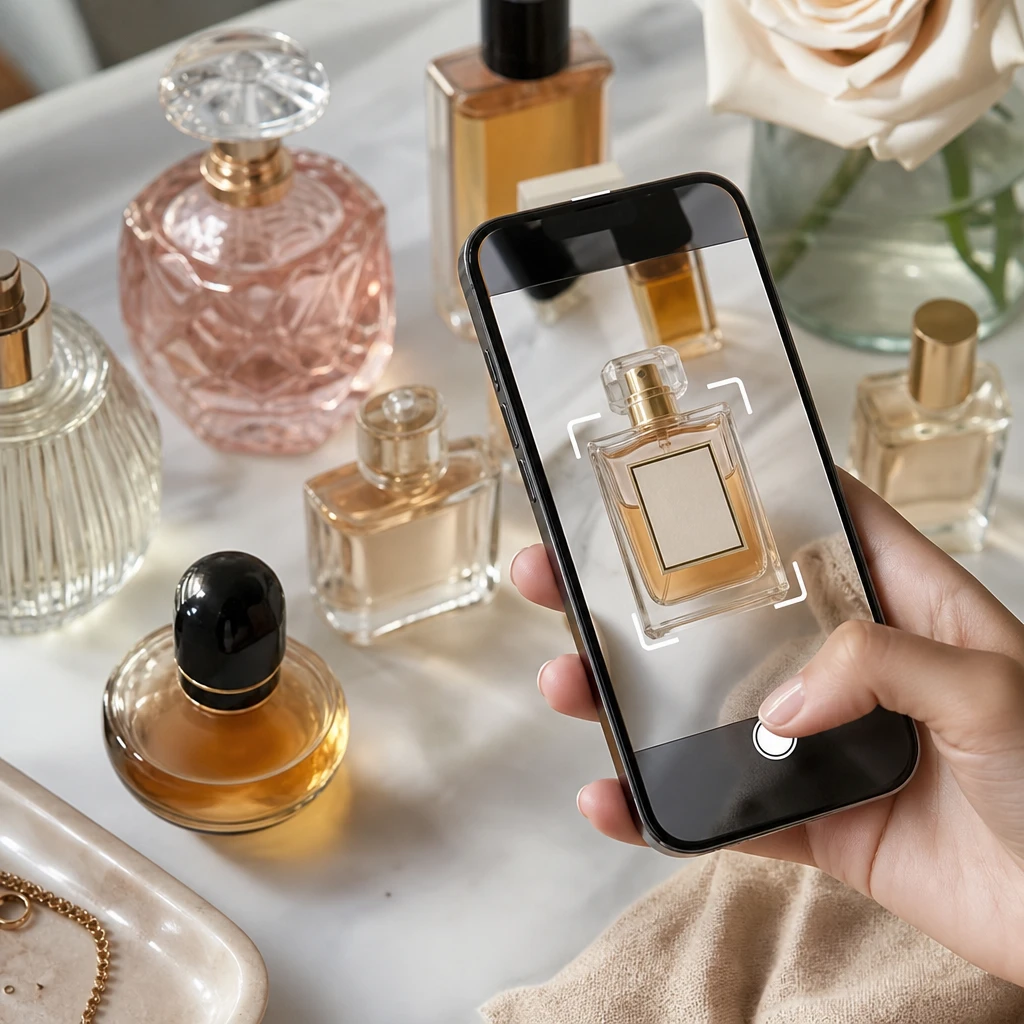
October 2, 2026
Find My Perfume From a Photo: How Bottle Scanning Helps You Identify, Save, and Shop Smarter
October 2, 2026
If you’ve ever picked up a gorgeous bottle at a thrift store, inherited a half-full flacon from a family member, or found a mini in a travel bag with the label rubbed off, you’ve had the same thought: what perfume is this? It’s a high-intent question because it’s rarely just curiosity. Most people asking want to do one of three things: replace it, learn what it smells like (and what else they might like), or make sure they don’t buy something they already own.
As holiday party season approaches, identification gets even more useful. Once you can identify perfume by bottle and save it to a collection, it becomes much easier to build a cold-weather rotation, plan gifts, and avoid accidental duplicates when seasonal discovery sets kick in.
At N.O.S.E. Notebook, we built bottle scanning and a personal fragrance vault for exactly this kind of real-life perfume problem: identify it quickly, store it properly, and use that knowledge to make smarter buys.
A good photo can reveal more than most people expect. Identification typically relies on a few “layers” of evidence, and the more of these you capture, the faster and more accurate the match:
A common misconception: a single front-on photo is always enough. Sometimes it is—but many perfumes share similar bottles, and brands frequently release multiple versions in nearly identical packaging. Clear, complete images turn a frustrating guess into a confident identification.
Most identification errors come from glare, missing angles, or cropped labels. When photographing a mystery bottle, aim for:
Even a slightly scuffed bottle can be identifiable if the bottom label and batch code are legible. If the bottle is very reflective, placing it near a window with a white wall opposite (to bounce soft light) often helps.
People searching for a perfume bottle identifier often run into three different “ID methods.” Each can work, but they solve different problems.
Bottle/label scanning (photo identification) is best when:
Barcode scanning (UPC/EAN) is best when:
Batch code checking is best when:
One note of caution: batch codes are often misunderstood as a universal “authenticity checker.” They can help validate consistency, but counterfeiters sometimes copy codes. Identification works best when you use multiple signals—photos + barcode + batch code whenever possible.
Once you’ve identified a perfume, the next question becomes: Where do you keep that information so it’s actually useful later? Screenshots get lost, notes apps become chaotic, and memory is unreliable—especially if you enjoy sampling.
A fragrance vault app approach changes the whole experience. Instead of “solving” the mystery once and forgetting it, you can:
This is the hidden advantage behind photo ID: it turns a one-off question into a long-term system. For fragrance enthusiasts, that system becomes a personal scent library. For newcomers, it becomes a learning tool—because you can see patterns in what you reach for.
October through December is peak “impulse discovery” season: department store sets, limited editions, gift-with-purchase minis, and travel sprays everywhere. That’s also when accidental duplicates happen—especially if you already own a similar flanker or a purse spray tucked in a drawer.
A simple pre-holiday routine helps:
When your collection is visible, shopping becomes more intentional. You’ll know if you already own “something like that,” and you’ll have an easier time choosing a party scent that fits the vibe—without rebuying what’s already on your shelf.
Even with great photos, a few situations make identification trickier.
Unlabeled decants or refillable atomizers
If the fragrance was transferred from its original bottle, the visual cues disappear. In those cases, the best next step is linking the decant to where it came from (order history, sample set, or notes) and then saving the identified fragrance to your vault so it doesn’t happen again.
Flankers and reformulations
Brands often release multiple versions under a familiar name. Small details—cap color, label wording, concentration (EDT/EDP/extrait), and bottle size—matter. Capturing the bottom sticker and the exact text on the front label usually resolves this.
Vintage or discontinued bottles
Older packaging can differ from what you see online today. A clear shot of the bottle shape, branding style, and any manufacturing text on the base helps narrow era and edition.
Lookalike bottles
Minimalist glass designs can resemble each other across brands. That’s where combining photo scanning with barcode data becomes especially useful.
The most satisfying part of identifying a mystery perfume is what comes after: understanding what it suggests about your taste. When a fragrance is saved in your N.O.S.E. Notebook vault, it’s no longer a dead end—it becomes a reference point for AI fragrance recommendations.
That matters because most people don’t want “random popular perfumes.” They want perfumes like the ones they already enjoy—just better aligned to their budget, season, or occasion. A scanned-and-saved collection creates the context that makes recommendations feel personal instead of generic.
“Find my perfume from a photo” is more than a quick search—it’s the first step toward a collection that’s organized, searchable, and genuinely useful when you’re shopping or building a seasonal rotation. With clear bottle photos (and, when possible, barcodes and batch codes), identification becomes straightforward. Saving the result to a fragrance vault is what makes it stick.
For anyone heading into holiday season with a growing shelf—full bottles, minis, and thrifting finds—now is the perfect time to scan, catalog, and build a cold-weather rotation inside N.O.S.E. Notebook. Reach out to the team or visit N.O.S.E. Notebook online to start identifying and saving what you already own.
Find your next scent
Browse scent profiles, notes, and houses — or let the Scent Finder match you to a fragrance in four questions.

October 14, 2026
Perfume finder apps have leveled up fast: smarter AI, better bottle scans, and collection “vaults” that help you remember what you own (and what you actually love). Here’s what to look for in 2026—and how to choose the right app for your scent journey.

October 12, 2026
Finding a signature scent doesn’t have to mean buying a dozen discovery sets and hoping something clicks. Here’s a modern, realistic process—powered by a clear scent profile and smarter recommendations.

October 9, 2026
Trying to identify a perfume bottle from a photo? Here’s how perfume scanner apps work in 2026, how to scan bottles and labels for accurate matches, and how to fix the most common scan errors—especially when flankers and lookalike bottles confuse results.