
← Nose News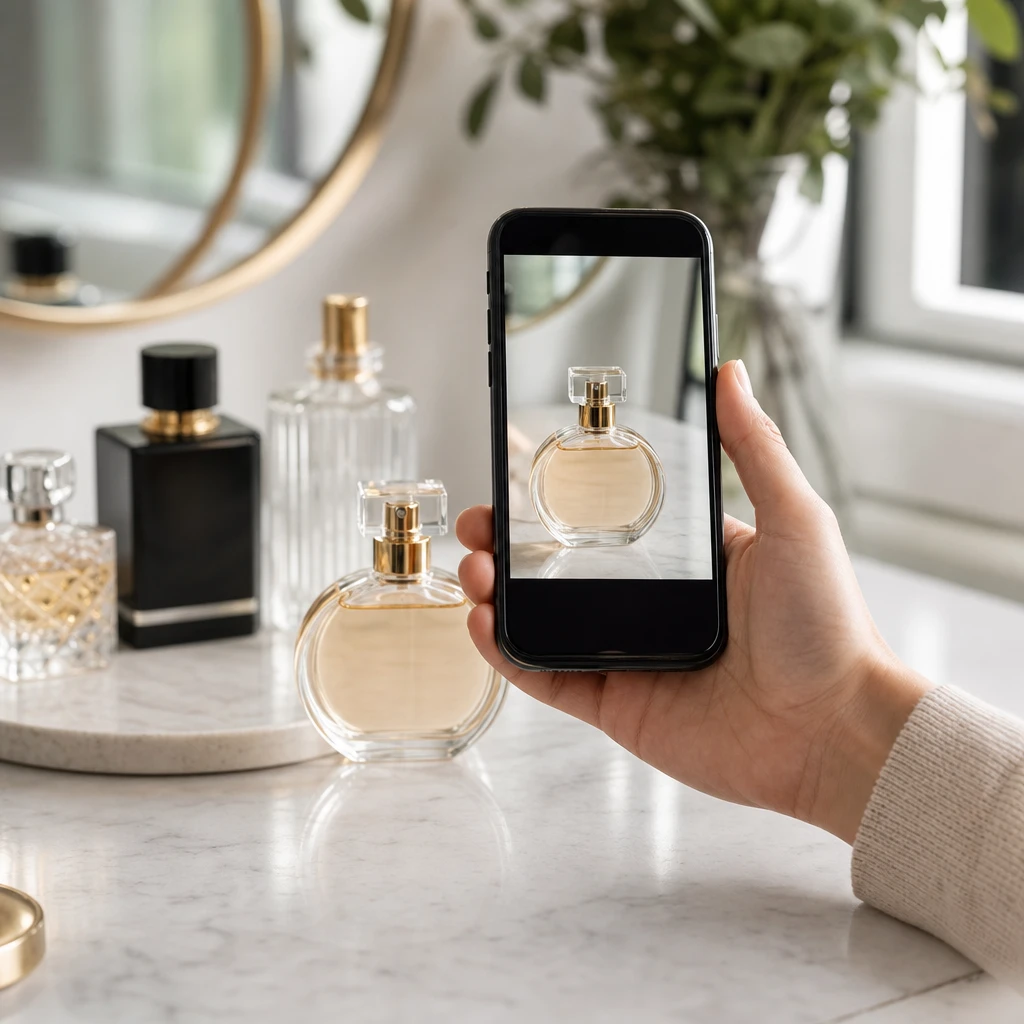
August 28, 2026
Best Perfume Scanner Apps (2026) + How to Scan a Bottle to Identify a Fragrance Fast
August 28, 2026
If you’ve ever picked up an intriguing bottle at a friend’s house, spotted a great-looking flacon at a resale shop, or pulled an old fragrance from a drawer and thought, what is this?—you’re not alone. “Perfume scanner app” searches have climbed alongside the broader shift toward faster, camera-first discovery. The big change in 2026 is that more apps can reliably recognize packaging across multiple angles and lighting conditions, then connect that scan to a usable fragrance record—something you can save, compare, and come back to later.
At N.O.S.E. Notebook, we see fragrance scanning as the bridge between curiosity and confidence: identify what’s in front of you, then turn that moment into a real collection, a personal scent profile, and smarter recommendations over time.
Most perfume identification tools rely on one (or more) of these inputs:
In practice, the best results come from a combination—especially image matching plus readable text. That’s why the way you take the photo matters.
Here’s a simple decision table to choose the fastest workflow based on what you have in hand.
| What you have | Fastest method | Accuracy | Best for |
|---|---|---|---|
| Retail box with barcode | Barcode scan | High | New purchases, gifting, store finds |
| Bottle with clear label | Bottle scan + text recognition | High | Most day-to-day identification |
| Bottle with minimal text | Bottle scan (multiple angles) | Medium–High | Luxe bottles, flankers, older releases |
| Unmarked/decant/sample vial | Manual entry + cross-check | Medium | Decants, travel sprays, swaps |
| Only a photo from online | Image match + brand/name hints | Medium | Resale browsing, wishlist building |
A good “scanner app” experience should do more than guess a name—it should help you confirm you’ve found the right match, then save it so you’re not re-identifying the same bottle later.
The difference between a clean match and a frustrating miss is usually the photo. Use this quick workflow.
First, clean the bottle (quick wipe with a soft cloth). Smudges and fingerprints can blur logos and foil stamping.
Next, set up even lighting. Indirect daylight is ideal. Avoid harsh overhead lights that create glare on glass.
Then follow these capture tips:
Finally, once you get a match, verify it before you save it:
Unlabeled bottles are where most people get stuck—especially with travel sprays, decants, minis, or vintage bottles that have lost their labels.
Start with what’s still knowable:
If it’s a decant/sample vial with no identifying features, shift the goal from “perfect ID” to “track and narrow.” The fastest approach is to:
This is where a fragrance vault becomes more than a nice-to-have. If you catalog as you go—even with imperfect info—you dramatically reduce the number of “mystery bottles” that pile up over time.
Misidentification is usually predictable. Here are the big culprits we see:
Flankers and limited editions. A house may release multiple versions with near-identical bottles. Fix: scan + take one close-up of the label and one of the box (if available).
Refillable bottles and testers. Some refill formats omit retail markings. Fix: scan the bottle, then try barcode/box, or search the brand plus bottle description.
Counterfeit packaging. If the bottle looks “almost right,” the app may match the closest real thing. Fix: compare key design details and, when possible, buy from reputable retailers.
Glare and reflections. Glass bottles love mirrors and windows. Fix: move to softer light and change the angle slightly until the label becomes legible.
Not every “perfume scanner” is built for collectors and explorers. In 2026, the most useful apps tend to share a few qualities:
At N.O.S.E. Notebook, our focus is turning identification into ongoing discovery: scan a bottle, identify it, save it to your personal vault, and use that growing history to power smarter AI fragrance recommendations.
If you want a simple system that works whether you’re brand-new to perfume or already deep into niche and luxury, this is the routine we recommend:
This approach keeps fragrance discovery fun while reducing impulse buys that don’t fit your tastes.
A perfume scanner app is at its best when it does two things well: identifies the bottle quickly and helps you do something useful with that information afterward. With a clean photo, good lighting, and a quick verification step, most bottles can be identified in under a minute—then saved so your collection stays organized and your preferences become clearer over time.
For fragrance lovers across the United States who want a smoother way to identify what they find and build a meaningful scent wardrobe, N.O.S.E. Notebook is designed to make that scan-to-discovery journey simple. Reach out to the team or visit N.O.S.E. Notebook online to start scanning, saving, and exploring with confidence.
Find your next scent
Browse scent profiles, notes, and houses — or let the Scent Finder match you to a fragrance in four questions.

October 14, 2026
Perfume finder apps have leveled up fast: smarter AI, better bottle scans, and collection “vaults” that help you remember what you own (and what you actually love). Here’s what to look for in 2026—and how to choose the right app for your scent journey.

October 12, 2026
Finding a signature scent doesn’t have to mean buying a dozen discovery sets and hoping something clicks. Here’s a modern, realistic process—powered by a clear scent profile and smarter recommendations.

October 9, 2026
Trying to identify a perfume bottle from a photo? Here’s how perfume scanner apps work in 2026, how to scan bottles and labels for accurate matches, and how to fix the most common scan errors—especially when flankers and lookalike bottles confuse results.