
← Nose News
July 31, 2026
Bottle Scanning & Perfume Identification: How Accurate Is It, What Photos Work Best, and How to Tell Originals vs Flankers
July 31, 2026
If you’ve ever thrifted a bottle with a half-worn label, inherited a tray of fragrances, or bought something secondhand that “looks right,” you’ve probably had the same question: what exactly is this perfume? The rise of resale, decants, and collector culture has made perfume identification a real-world need—not just curiosity. And because bottles change over time (reformulations, rebranding, new caps, special editions), the human brain isn’t always the best database.
That’s where bottle scanning comes in. A good perfume bottle scanner can narrow down a match quickly, help confirm what you already suspect, and—just as importantly—help you catalog what you own so you can stop re-buying the same scent in different packaging.
Most “identify perfume from photo” tools rely on visual recognition: they compare what your camera sees (shape, label layout, color, cap design) against a reference set of known bottles and product images. Some systems also use text recognition to read the brand and fragrance name on the label, while others combine both.
Accuracy isn’t a single number because it depends on three things happening at once:
In practice, scanning tends to be most accurate when the bottle has clear branding on the front and a widely distributed release history (designer classics and popular niche lines usually scan well). It can be less reliable for look-alike bottles, limited editions, and older formulas where packaging has changed multiple times.
A scanner can only “see” what you show it. If you want the most reliable match, treat it like photographing an item for resale: clean, bright, and specific.
Aim for these photo basics:
Then, take one extra photo that most people skip but that often seals the identification:
Photograph the bottom sticker and/or batch code area. Many bottles include a printed sticker with concentration (EDT/EDP/Parfum), size, and sometimes a product code—details that help distinguish near-identical flankers.
If the bottle is reflective or curved, rotate it slightly to reduce glare while keeping the text readable. Two “imperfect but legible” images often outperform one glossy image that hides half the label.
In fragrance, a flanker is a related release that builds on the original name—often with a descriptor like Intense, Absolu, L’Eau, Parfum, Elixir, Sport, or a year/season theme. Flankers can smell dramatically different while sharing the same brand and core naming, which is why identification matters.
A few reasons flankers trip up scanning tools (and people):
When you’re trying to confirm whether you have the original or a flanker, look for these clues in order:
For cataloging (and for resale), getting the exact flanker name right is everything. The difference between “Original,” “Intense,” and “Elixir” isn’t a footnote—it’s usually a different scent profile, different performance, and a different market value.
Bottle scanning is best viewed as a fast first pass—a way to narrow the field and surface likely matches. It’s highly effective for:
Where you should slow down and verify:
A good workflow is: scan the bottle → review the top 2–5 candidates → confirm with the exact label text + bottom sticker → save it to your vault.
Identification and authenticity are related, but they’re not the same problem. A counterfeit can be labeled as the right scent while being wrong in quality and composition.
If you’re evaluating a bottle you bought secondhand, check these practical signals:
One important nuance: brands legitimately change packaging over time, and older bottles can look “off” compared to current retail. That’s why it helps to confirm the exact release name first (original vs flanker vs limited edition), then compare details within that specific version.
At N.O.S.E. Notebook, we see scanning as the start of a better relationship with your collection—not just a one-time identification trick.
Once a bottle is identified, the value is in what comes next: saving it, tagging it, and tying it to your taste history. When you know which scents you own (and which flankers you actually prefer), it becomes much easier to get recommendations that feel “you”—whether you’re exploring niche, designer, or luxury.
A simple habit that works well is building a personal trail:
Perfume bottle scanning is at its best when it’s treated as a practical tool: it speeds up identification, reduces duplicate purchases, and helps separate originals from similar-looking flankers. With good lighting, a clear front photo, and a quick shot of the bottom sticker, results become dramatically more reliable—and your collection becomes easier to understand and enjoy.
For anyone building a wardrobe of scents online, a scanner paired with a personal scent profile and fragrance vault turns “What is this?” into “What should I try next?” Reach out to the N.O.S.E. Notebook team to start scanning, organizing, and discovering with confidence.
Find your next scent
Browse scent profiles, notes, and houses — or let the Scent Finder match you to a fragrance in four questions.
October 14, 2026
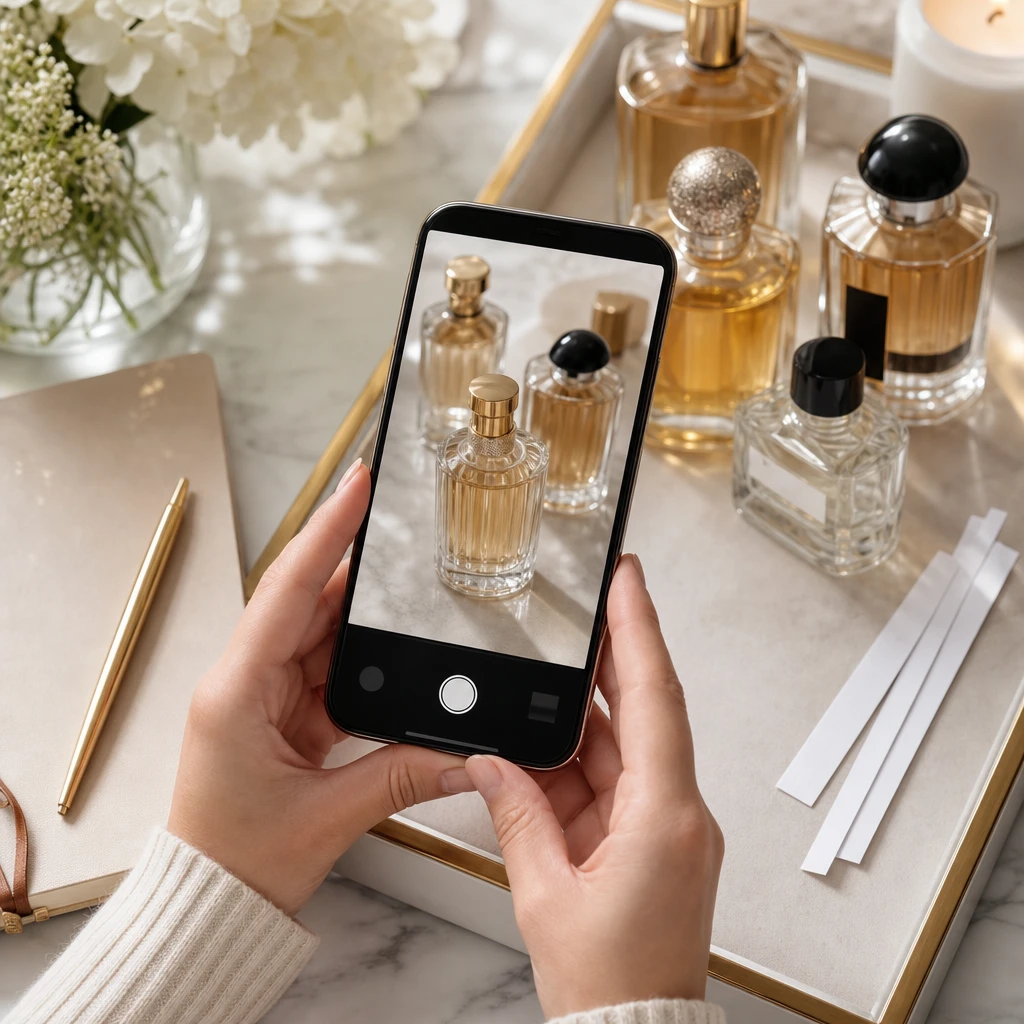
Perfume finder apps have leveled up fast: smarter AI, better bottle scans, and collection “vaults” that help you remember what you own (and what you actually love). Here’s what to look for in 2026—and how to choose the right app for your scent journey.
October 12, 2026
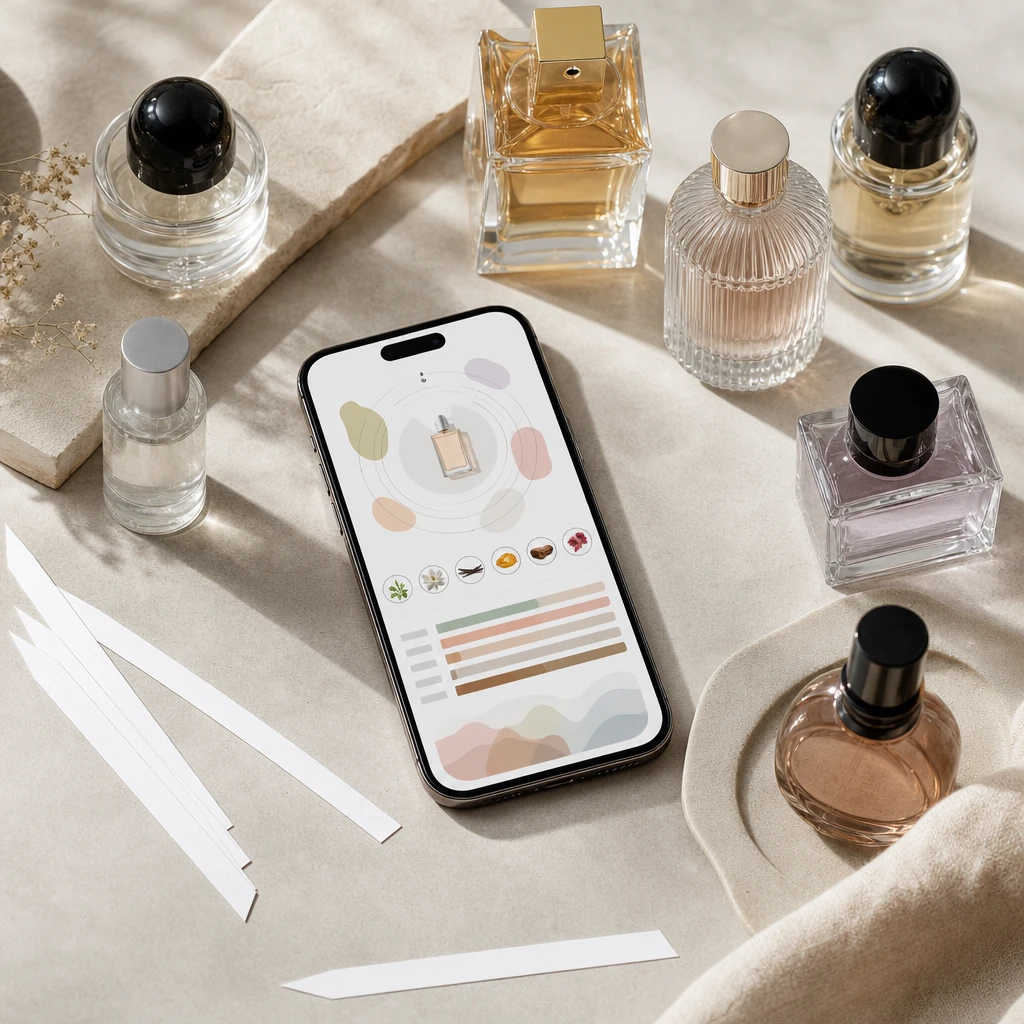
Finding a signature scent doesn’t have to mean buying a dozen discovery sets and hoping something clicks. Here’s a modern, realistic process—powered by a clear scent profile and smarter recommendations.
October 9, 2026
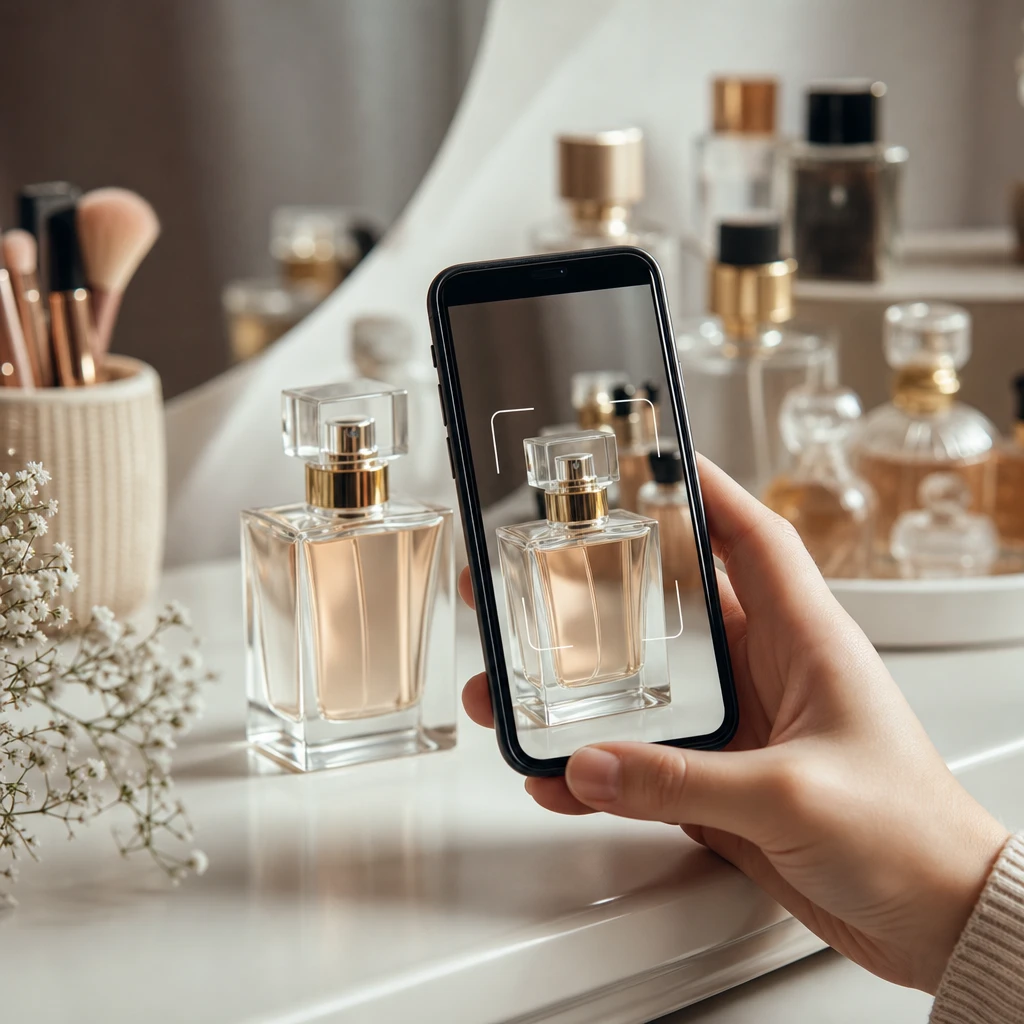
Trying to identify a perfume bottle from a photo? Here’s how perfume scanner apps work in 2026, how to scan bottles and labels for accurate matches, and how to fix the most common scan errors—especially when flankers and lookalike bottles confuse results.