
← Nose News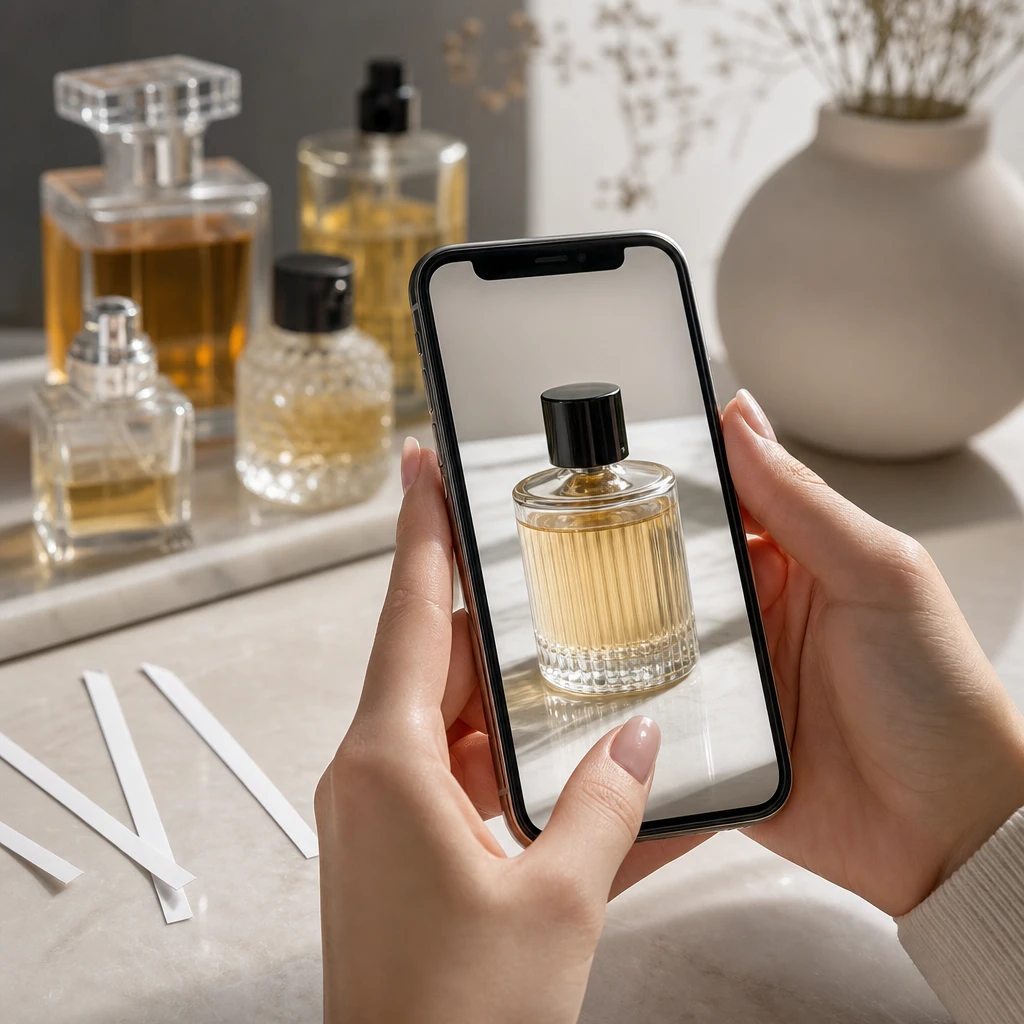
August 24, 2026
Find a Perfume Like This in 2026: How Bottle Scanning Helps You Identify Scents and Discover Similar Picks
August 24, 2026
There’s a specific kind of fragrance problem that shows up again and again: you have a reference scent you already like—maybe it’s on a friend’s dresser, in a hotel bathroom, or sitting half-forgotten on your own shelf—but you don’t have the name, the concentration, or the confidence to repurchase it. Or you know the name, but you want something in the same vibe (warmer, cleaner, longer-lasting, more budget-friendly, more niche) without starting from scratch.
That’s exactly where a perfume bottle identifier workflow shines. In 2026, camera-based scanning has become one of the most practical ways to go from “what perfume is this?” to a curated list of similar picks—and to do it quickly enough that it actually fits real life.
At N.O.S.E. Notebook, we built our discovery tools around this high-intent moment: identify the bottle, understand what you’re smelling, then turn that single data point into better recommendations and a more organized fragrance life.
A perfume scanner app (or bottle scan feature) generally aims to do two jobs:
First, it helps identify a fragrance from a photo—useful when the label is missing, the bottle design is recognizable, or the name is hard to read. Second, once it knows what the bottle likely is, it can jump you into discovery: similar perfumes, potential dupes, and adjacent profiles.
It’s important to set expectations. Bottle scanning works best when:
Where scanning can struggle:
Even in those cases, scanning still helps by narrowing down possibilities, and it’s often a faster starting point than trying to remember a name from a scent memory alone.
When someone searches “identify perfume by bottle” or “find perfume by picture,” they’re usually trying to solve a problem in minutes, not hours. Here’s a simple, reliable process that turns a quick scan into a genuinely useful recommendation list.
If you want accurate results, treat it like a product photo:
A surprising number of “what perfume is this” mysteries come down to a slightly clearer image.
A scan result is a starting point—not a blind purchase signal.
Before acting on it, confirm:
This is where having the fragrance saved to a personal vault becomes more than a nice-to-have: you can track what you identified and what you actually liked, instead of losing it to camera roll purgatory.
A good “perfume similar to…” list shouldn’t be a generic bestseller roundup. It should interpret what you likely love about the reference and translate that into options.
For example, “similar” can mean:
At N.O.S.E. Notebook, we treat the reference bottle as a signal—then refine recommendations using your preferences and history, so the picks stay personal.
Searches like “perfume dupe for [fragrance name]” are high-intent for a reason: people want the vibe without the price or the scarcity. But in fragrance, dupe and similar aren’t always the same.
A true dupe aims for a near-match. A similar scent aims for the same experience.
In practice, “similar” is often the smarter route because it gives you:
If the goal is to build a wardrobe you’ll actually wear, similarity tends to outperform strict duplication.
Blind buying isn’t always a mistake—some enthusiasts love the thrill. But most people searching “find perfume by picture” aren’t looking for a gamble; they’re trying to reduce uncertainty.
Bottle scanning helps in three ways:
It turns a vague memory into a concrete product. Once you know what it is, you can read accurate details, compare versions, and stop guessing.
It gives you a controlled shortlist. Instead of scrolling endlessly, you start from one anchor scent and explore in a defined radius.
It builds continuity. The real power comes when you save what you’ve scanned, what you’ve sampled, and what you’d repurchase—so each discovery improves the next.
One of the biggest differences between random fragrance shopping and confident fragrance discovery is having reliable reference points.
If you want consistently good recommendations, start keeping track of:
A personal scent profile becomes more accurate when it’s built from real, identified fragrances—not just abstract preferences like “I like clean scents.” When you scan and save bottles into a fragrance vault, your taste stops being a mood and becomes usable data.
Scanning shines in everyday moments that fragrance lovers recognize instantly.
“I smelled this on someone—now what?”
If you can get a quick photo of the bottle (or even the box), scanning can get you to an ID fast. From there, similar picks help you choose whether you want the same scent or your own version of that vibe.
“I found this in a drawer—do I already own something like it?”
Scan it, identify it, and save it. Once it’s in your vault, it’s easier to spot duplicates in your wardrobe and avoid buying the same profile repeatedly.
“I want a niche alternative to my designer favorite.”
Start with the designer bottle scan, then explore similar recommendations filtered toward niche and luxury discovery.
“I love this, but I want something easier for daytime.”
The reference is still valuable—you can branch into softer, cleaner, or more transparent options that keep the DNA without the intensity.
Fragrance discovery should be fun, but it should also get easier over time. Scanning is the bridge between the physical world—real bottles, real encounters—and a smarter digital system that remembers what you like.
N.O.S.E. Notebook brings together:
In 2026, the best way to “find a perfume like this” isn’t guessing notes from memory or scrolling endless lists. It’s starting with what you already have in hand, using a bottle scan to identify it, then exploring similar picks with a system that actually learns your taste.
When you’re ready to identify a bottle and build a smarter shortlist from it, reach out to the N.O.S.E. Notebook team or visit us online to start scanning, saving, and discovering with confidence.
Find your next scent
Browse scent profiles, notes, and houses — or let the Scent Finder match you to a fragrance in four questions.

October 14, 2026
Perfume finder apps have leveled up fast: smarter AI, better bottle scans, and collection “vaults” that help you remember what you own (and what you actually love). Here’s what to look for in 2026—and how to choose the right app for your scent journey.

October 12, 2026
Finding a signature scent doesn’t have to mean buying a dozen discovery sets and hoping something clicks. Here’s a modern, realistic process—powered by a clear scent profile and smarter recommendations.

October 9, 2026
Trying to identify a perfume bottle from a photo? Here’s how perfume scanner apps work in 2026, how to scan bottles and labels for accurate matches, and how to fix the most common scan errors—especially when flankers and lookalike bottles confuse results.