
← Nose News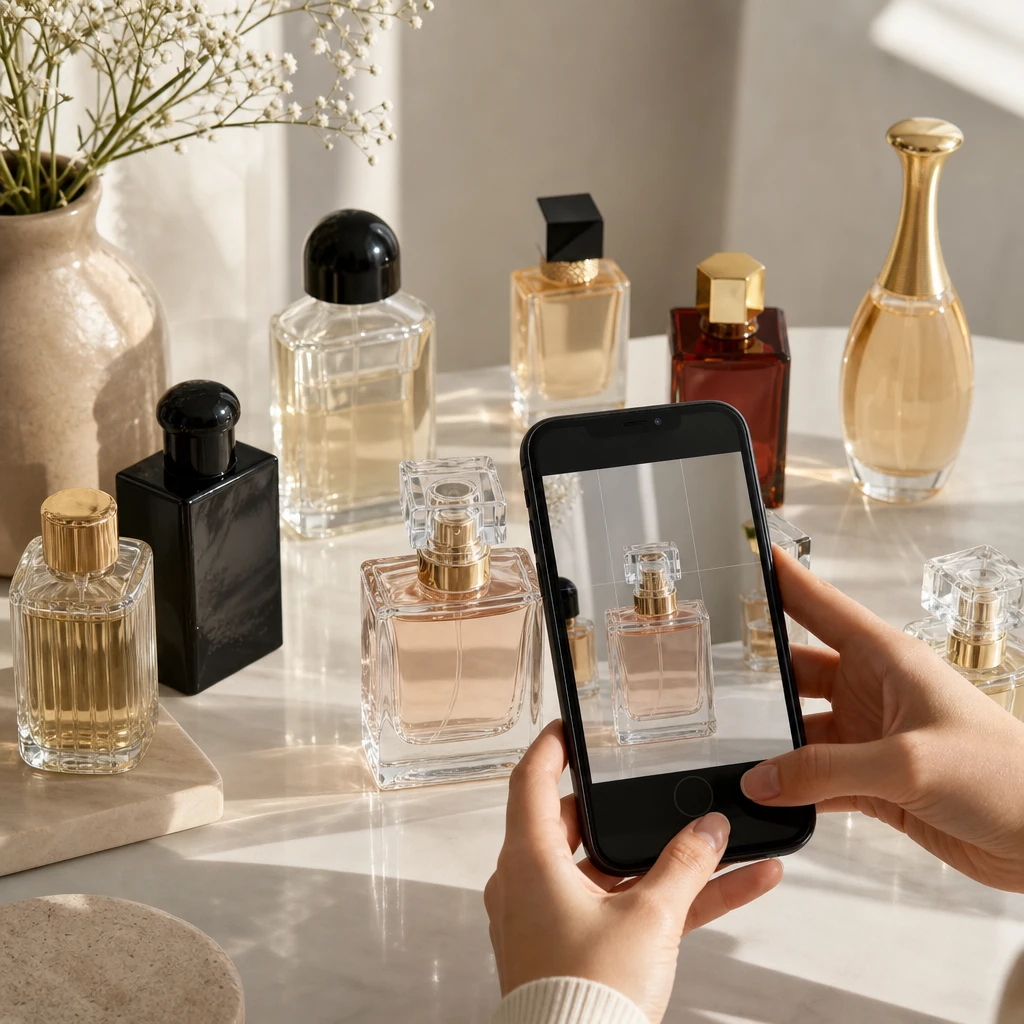
June 26, 2026
How to Identify a Perfume by Bottle (or Photo) — and Save It to Your Fragrance Vault (2026 Guide)
June 26, 2026
## Why “perfume photo ID” is such a common problem now
Perfume discovery has become camera-first. You’ll spot a bottle in a TikTok “get ready with me,” find an unlabeled mini in a travel pouch, thrift a vintage-looking flacon, or get a hand-me-down with the box long gone. The tricky part is that **many fragrances share similar bottle silhouettes**, and limited editions often reuse the same base bottle.
That’s why “what perfume is this?” searches (by bottle or photo) are high-intent: you’re not casually browsing—you want to **name the scent you’re holding** so you can rebuy it, avoid duplicates, or figure out what to sample next.
Below is a practical, step-by-step workflow you can use in 2026—whether you’re a collector building a wardrobe or a newcomer trying to identify your first “signature.”
## Start with the fastest win: check the bottle like a perfumer would
Before you try any scanning or image search, spend 30 seconds on the bottle itself. Most IDs are solved here.
### Look for these identification clues
- **Bottom sticker or etching:** Brand, fragrance name, concentration (EDT/EDP/Parfum), and batch code often live on the base.
- **Back label text:** Sometimes the front is decorative and the back has the legal line that includes the product name.
- **Cap + sprayer details:** Distinctive caps (magnetic, sculptural, engraved) can narrow a lookalike bottle quickly.
- **Size and concentration:** “50 ml Eau de Parfum” helps separate flankers that share the same design.
### Don’t ignore the outer packaging (if you have it)
Boxes often include:
- Full name + flanker name (e.g., “Intense,” “L’Extrait,” “Summer Edition”)
- A barcode/UPC
- Batch code that can confirm the exact release
## How to take a photo that’s actually identifiable
Scanning and photo ID work best when the image gives the algorithm (and you) clean, legible signals.
### Quick photo checklist
- **Shoot straight-on** (front label fills the frame)
- **Take 3 angles:** front, back, and bottom
- **Avoid glare:** tilt slightly or move to diffused window light
- **Include the cap:** many bottles are identified by cap shape
- **Use a plain background:** a countertop is better than a busy bedroom scene
If the label is worn, take a close-up of any remaining typography—partial letters often solve the puzzle.
## 2026 methods to identify a perfume by bottle or photo
Different situations call for different tools. If one method stalls, switch—most “mystery bottle” hunts crack with two passes.
### 1) Bottle scan / perfume identifier tools (best when you have the bottle in-hand)
A dedicated bottle-scanning flow is ideal when:
- You’re holding the bottle (thrifted, gifted, inherited)
- The label is partially readable
- You want to **save the identification** immediately to a collection
A strong scanner should return **multiple likely matches** (especially for common bottle designs) and let you confirm by reading the full name, concentration, and brand.
### 2) Reverse image search (best for screenshots or bottles you saw online)
If you only have a screenshot from social media or a blurry photo:
- Try a reverse image search using the clearest crop of the bottle
- Also search a crop of **the cap only** (surprisingly effective for designer bottles)
Tip: If your result list shows the bottle but wrong name, add a text query like:
- “black bow cap perfume bottle”
- “ribbed glass perfume bottle gold collar”
### 3) Text-based searching using partial label details (best for worn labels)
When the image is unclear but you can read fragments:
- Search **brand + partial fragrance name**
- Add distinctive descriptors: “tassel,” “medallion,” “ombre glass,” “square stopper”
Even one detail like “Eau de Toilette Natural Spray” plus the brand can narrow it down.
### 4) Barcode/UPC lookup (best when the box is available)
If you have the box, a UPC lookup can be the cleanest confirmation. Just note that:
- Some UPC databases are incomplete
- Gift sets sometimes have a set UPC that doesn’t match the individual bottle
### 5) Community confirmation (best for vintage, rare, or refillables)
For older bottles, discontinued flankers, and refillable formats, community ID can help—especially when a bottle design was reused across years.
If you go this route, share:
- Photos (front/back/bottom)
- What the scent smells like (top notes you perceive, “powdery,” “soapy,” “ambery,” etc.)
- Any batch code
## Common reasons perfume ID fails (and how to fix it)
### The bottle design is shared across multiple flankers
Many iconic bottles are reused for:
- “Intense”
- Seasonal editions
- “L’Eau” or “Eau Fraîche”
**Fix:** Confirm using the **exact wording** on the base label (and concentration).
### Limited editions and minis have tiny or missing labels
Minis can be especially hard.
**Fix:** Photograph the bottom, then search using “mini” plus brand + bottle descriptors.
### Decants and refill atomizers aren’t identifiable by design
If it’s in an unbranded sprayer, there’s no visual ID.
**Fix:** Build a habit of cataloging decants the moment you get them—name, concentration, where you got it, and a quick note on how it smells.
## Once you identify it, don’t lose it again: build a “Fragrance Vault”
Identification is only step one. The real win is turning one-off finds into an organized system.
A personal fragrance vault (digital collection) helps you:
- **Prevent duplicates** (especially with flankers)
- Track **what you own vs. what you want**
- Log **when you wore it** and how it performed
- Save a short “scent memory” note so you can recall it later
- Generate smarter recommendations because your preferences are stored over time
### What to save for each fragrance (simple but powerful)
- Exact name + concentration (EDT/EDP/Parfum)
- Bottle size
- Where you found it (store, gift, thrift, sample site)
- Season/occasion tags (work, date night, gym, summer)
- “Smells like” notes in your own words (e.g., “salty vanilla sunscreen,” “clean shampoo musk”)
- Performance notes: longevity, projection, and skin vs. fabric behavior
These details matter because two people can “like vanilla,” but one loves airy vanilla musks and the other wants dense amber-gourmands.
## Turn a mystery bottle into your next best recommendation
Once you’ve identified a fragrance, it becomes a data point—and that’s where AI recommendations get genuinely useful.
Try this approach:
1. **Add the identified perfume to your vault**
2. Tag what you liked: “creamy,” “tea,” “salty,” “skin scent,” “fresh floral,” etc.
3. Tag what you didn’t: “too loud,” “too sweet,” “sharp citrus,” “powdery”
4. Ask for recommendations in a specific direction, such as:
- “Similar vibe but lighter for summer”
- “Same clean musk idea but longer-lasting”
- “A niche alternative with more depth”
This is also a good moment to decide whether you want:
- A **closest match** (same family, same mood)
- A **next-step exploration** (adjacent notes that expand your taste)
## A quick “mystery perfume” checklist (save this)
- Photograph: front, back, bottom (plus cap)
- Read: base sticker/etching, concentration, size
- Scan/ID: use a bottle identifier flow when possible
- Verify: look for the exact flanker name (Intense/L’Eau/etc.)
- Save: log it to a fragrance vault with your own scent notes
## If you want help identifying and organizing your perfumes
If you’re building a collection—or you just want to know what that one mystery bottle is—N.O.S.E. Notebook is designed for **fragrance bottle scanning, identification, and personalized recommendations**, with a scent profile and vault so your finds don’t disappear into your camera roll. Explore at your own pace and save what you love as you discover it.
Find your next scent
Browse scent profiles, notes, and houses — or let the Scent Finder match you to a fragrance in four questions.
October 14, 2026
Perfume finder apps have leveled up fast: smarter AI, better bottle scans, and collection “vaults” that help you remember what you own (and what you actually love). Here’s what to look for in 2026—and how to choose the right app for your scent journey.
October 12, 2026
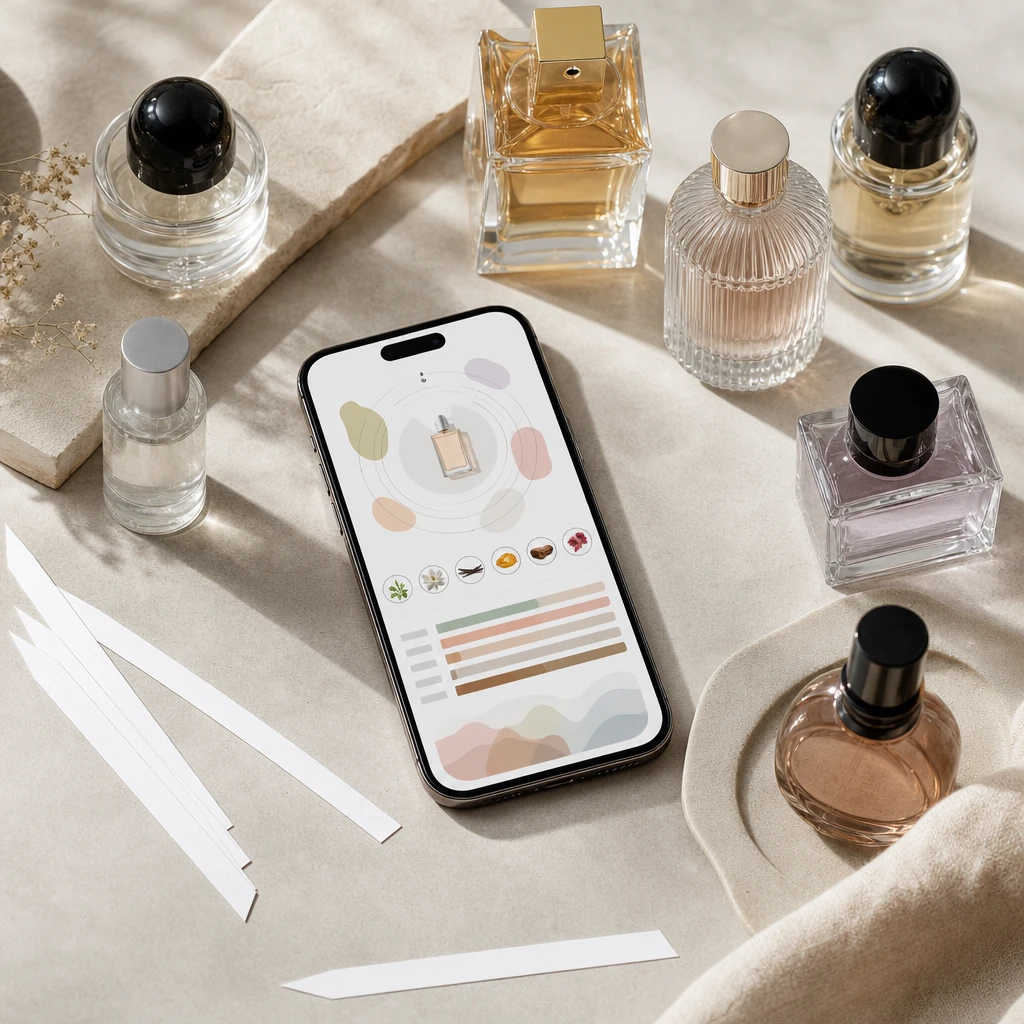
Finding a signature scent doesn’t have to mean buying a dozen discovery sets and hoping something clicks. Here’s a modern, realistic process—powered by a clear scent profile and smarter recommendations.
October 9, 2026
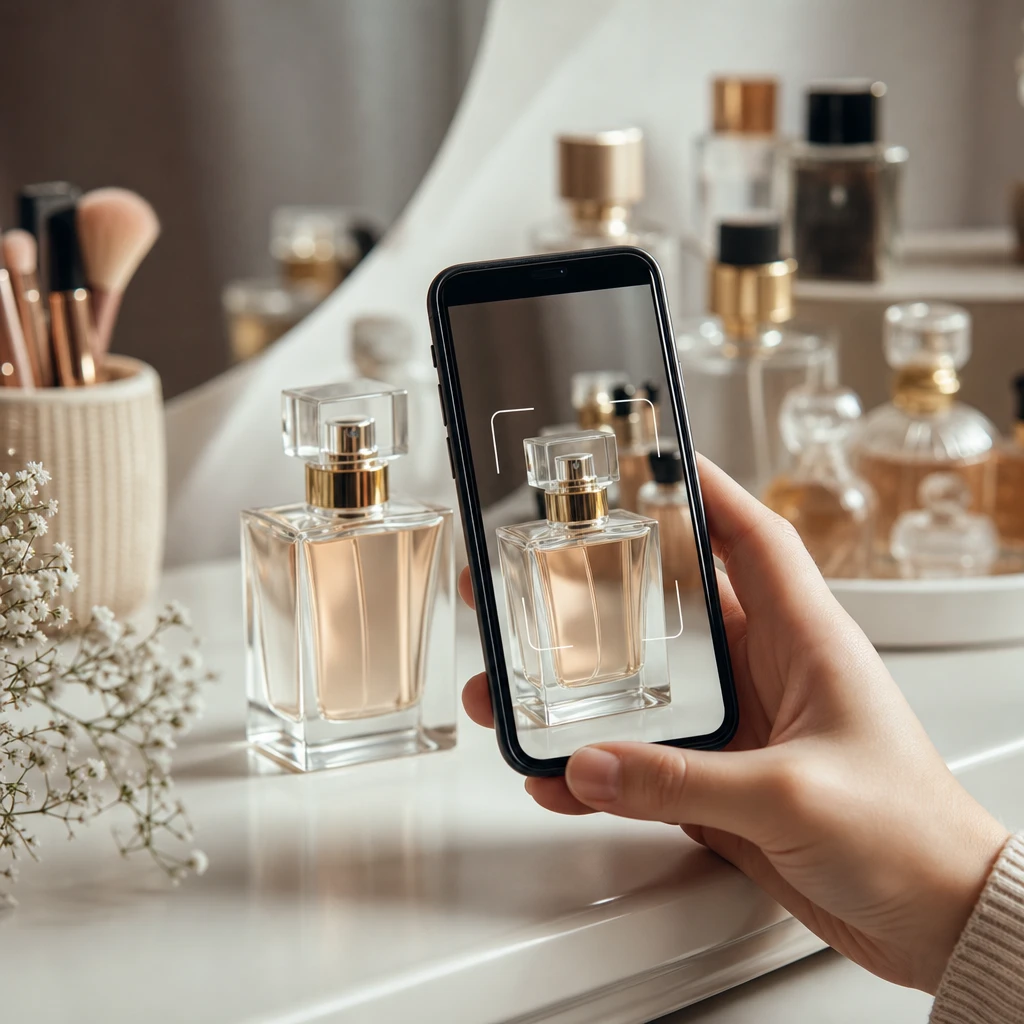
Trying to identify a perfume bottle from a photo? Here’s how perfume scanner apps work in 2026, how to scan bottles and labels for accurate matches, and how to fix the most common scan errors—especially when flankers and lookalike bottles confuse results.