
← Nose News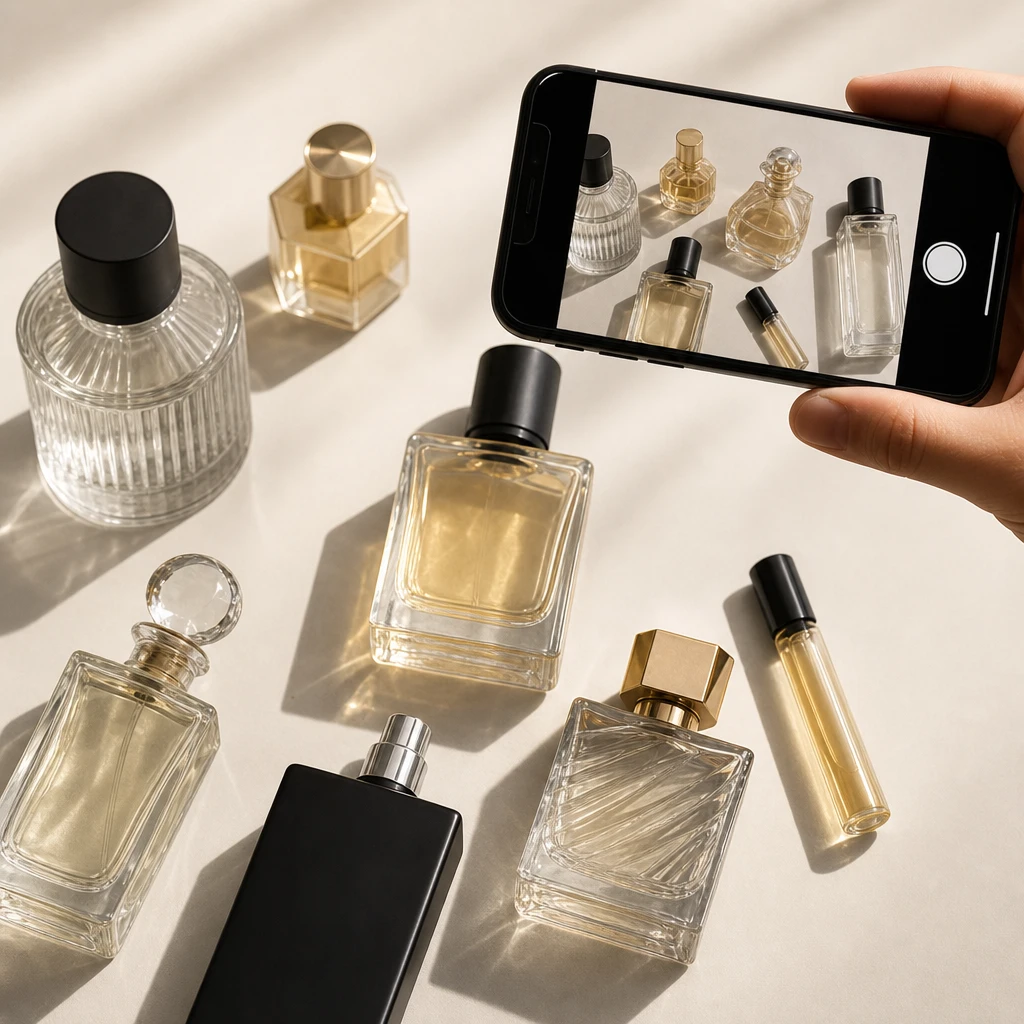
July 6, 2026
How to Identify a Perfume by the Bottle (Photo/Scan)—Even If the Label Is Missing
July 6, 2026
Perfume bottles are designed to be memorable—but identification can still be surprisingly tricky. Labels peel, caps get swapped, and many brands reuse similar bottle shapes across flankers (different versions of the “same” perfume). Add in gift sets, limited editions, and travel sprays, and it’s easy to end up with a beautiful mystery on the shelf.
At N.O.S.E. Notebook, we see this all the time: enthusiasts trying to re-find a scent they loved, newcomers inheriting a bottle with no box, or collectors sorting through testers and decants. The good news is there’s a reliable workflow to identify a perfume by the bottle—especially when using a photo/scan approach.
Before scanning anything, take 30 seconds to capture the details that typically narrow the field fastest:
Tip: Photograph the bottle straight-on, plus a 45° angle, and the bottom. Most successful identifications come from those three shots.
“Find perfume by picture” searches have surged because camera-based identification is often faster than guessing by memory. A strong scan workflow looks like this:
Take clean photos
Scan the bottle for recognizable brand markers
Many brands have consistent cues (cap shape, plaque placement, bottle geometry) that help narrow results quickly even without readable text.
Cross-check with secondary identifiers
If the scan suggests a match, confirm using one of the “hard proof” methods below (barcode, batch code, or exact bottle measurements).
At N.O.S.E. Notebook, bottle scanning and identification is designed around this same idea: use the image to generate candidates, then verify with objective details so the result is dependable.
The underside of the bottle is often the most overlooked—and most valuable—clue.
Most legitimate perfumes have a batch code etched, printed, or stickered onto the bottom (or sometimes the back). This code helps brands track production.
What to do:
Batch codes won’t always tell you the exact fragrance name by themselves, but they can confirm whether a bottle is consistent with a certain brand and production era.
Some bottles include small glass marks or country-of-origin text (“Made in France,” “Made in Italy,” etc.). These are supporting clues—especially useful for vintage pieces.
People often search “barcode scan perfume” because it feels definitive—and it can be, with one important caveat:
If a barcode is available:
Reverse image search can be excellent at pulling up visually similar bottles, but it has two common failure points:
Use reverse image results as a shortlist—then confirm with concentration markings, batch code placement, and the exact cap/collar configuration.
Tester bottles may have:
Identification strategy:
Vintage identification is harder because:
Identification strategy:
Decants typically have no reliable visual signature, because the container isn’t the original.
Identification strategy:
Some bottles are produced for boutique/private labels using common “stock” bottle shapes.
Identification strategy:
If the bottle scan yields a few candidates, scent can confirm the right one—without turning into guesswork.
A practical method:
Also note performance behaviors:
In N.O.S.E. Notebook, this is where a personal scent profile becomes useful: once notes and styles are captured, identification and future recommendations both get more accurate.
Once the mystery is solved, a little organization prevents repeat detective work.
We recommend capturing:
A searchable “fragrance vault” turns a one-time identification into lasting value—especially for collectors, seasonal wardrobes, and anyone comparing similar scents.
Identifying a perfume by the bottle is most successful with a structured approach: start with clear photos, use bottle-scan style matching to generate candidates, then verify using bottom markings, batch codes, and scent behavior. The tricky cases—testers, vintage bottles, and decants—become manageable when the process is consistent.
For anyone building a collection or rediscovering forgotten favorites, N.O.S.E. Notebook makes it easier to scan, identify, and catalogue fragrances in one place—so every great find stays searchable long after the label is gone.
Find your next scent
Browse scent profiles, notes, and houses — or let the Scent Finder match you to a fragrance in four questions.
October 14, 2026
Perfume finder apps have leveled up fast: smarter AI, better bottle scans, and collection “vaults” that help you remember what you own (and what you actually love). Here’s what to look for in 2026—and how to choose the right app for your scent journey.
October 12, 2026
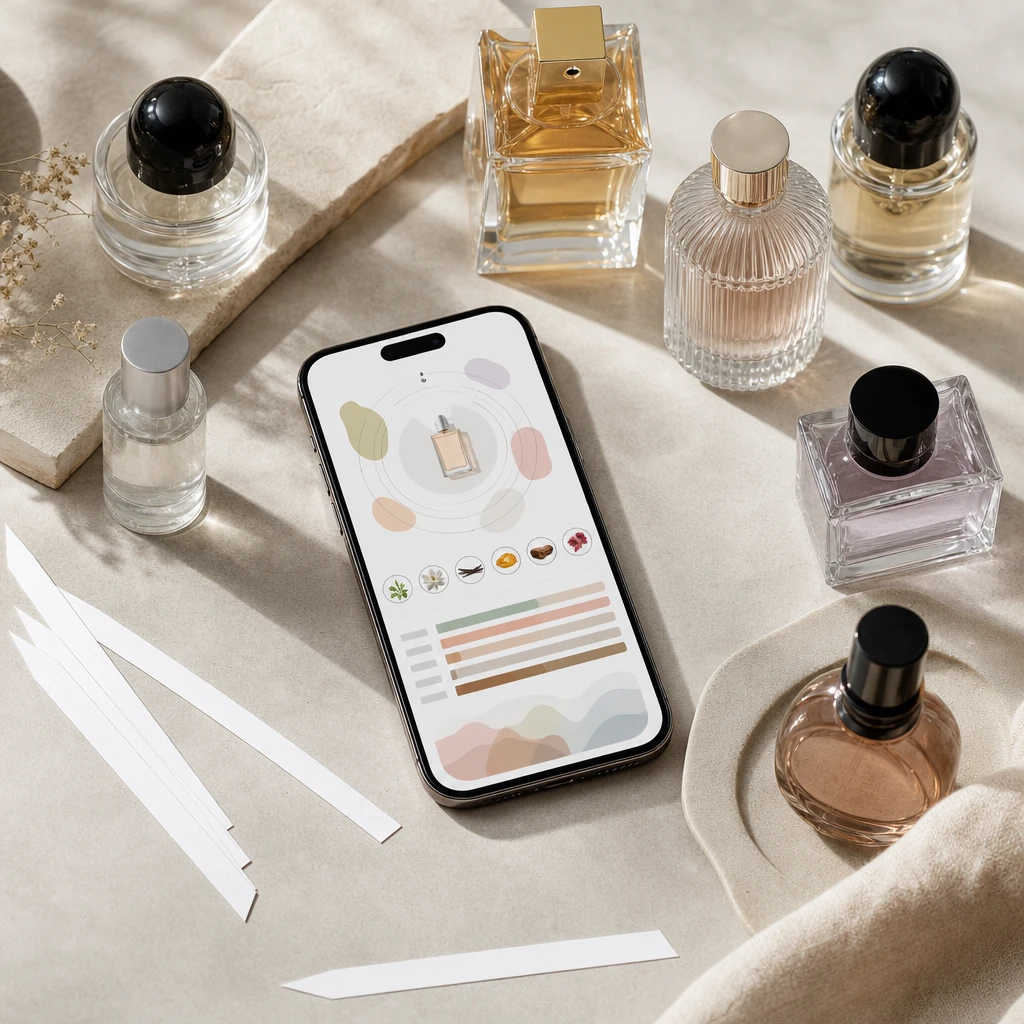
Finding a signature scent doesn’t have to mean buying a dozen discovery sets and hoping something clicks. Here’s a modern, realistic process—powered by a clear scent profile and smarter recommendations.
October 9, 2026
Trying to identify a perfume bottle from a photo? Here’s how perfume scanner apps work in 2026, how to scan bottles and labels for accurate matches, and how to fix the most common scan errors—especially when flankers and lookalike bottles confuse results.