
← Nose News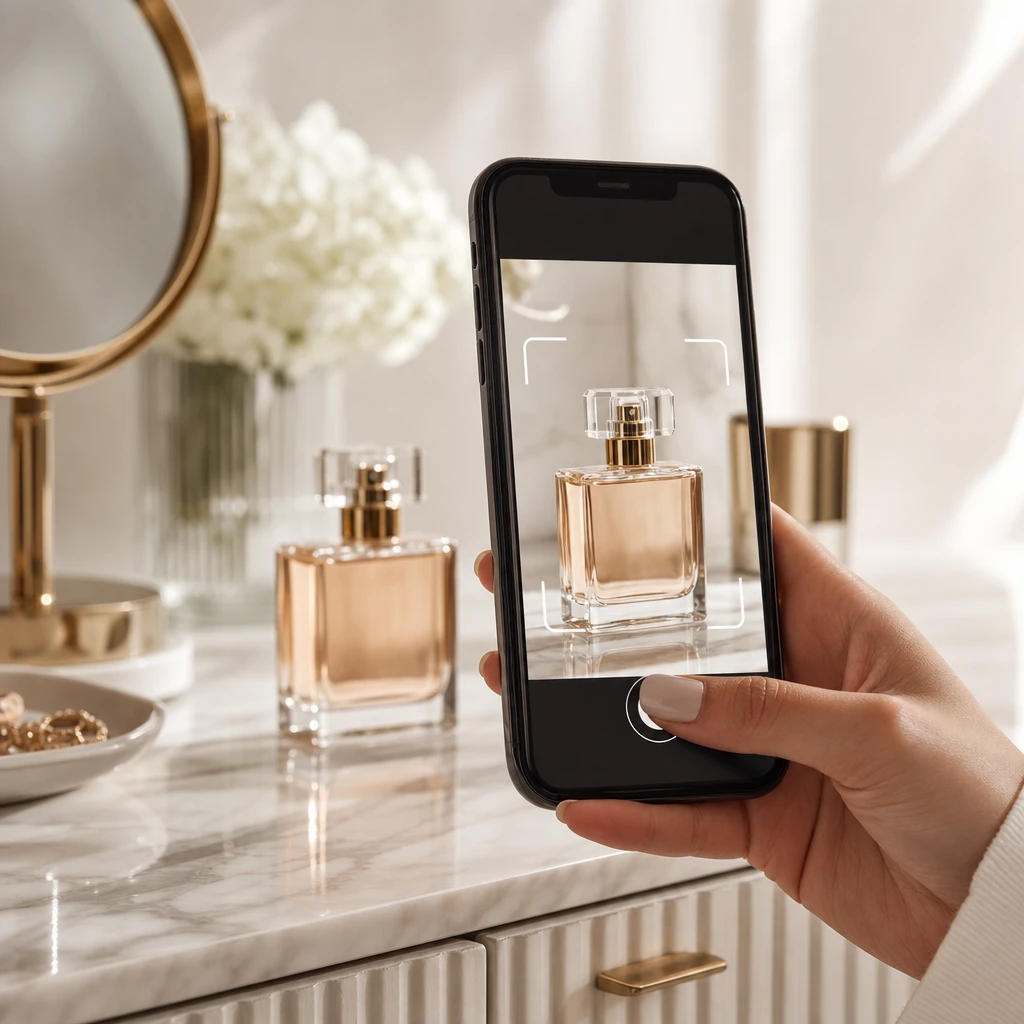
August 31, 2026
Perfume Scanner Apps (2026): How to Identify a Fragrance From a Bottle Photo
August 31, 2026
Perfume has become more visual than ever. Between short-form video, resale marketplaces, and the steady rise of niche and luxury releases, it’s common to spot a bottle in the background of a photo and think: what perfume is this? A perfume scanner app promises a fast answer—snap a picture, get an ID, and move on.
Done well, bottle scanning is genuinely useful. It helps you:
But it’s also easy to expect too much. A scanner can usually identify a product from packaging cues; it can’t reliably authenticate a bottle or detect what’s inside through glass. Knowing that difference is the fastest way to get better results.
Most perfume identifier apps work like visual search: they compare your photo to a database of known bottles and packaging, then return the closest match. Some also use optical character recognition (OCR) to read brand and fragrance names off labels.
What scanning can do well:
What scanning can’t do reliably:
A practical rule: scanning is for identification and organization, not verification. If authenticity matters (especially with secondhand purchases), you’ll want additional checks: seller reputation, proof of purchase, batch code validation where available, and careful comparison to official product imagery.
A great scan is mostly about image quality. Before assuming the app “doesn’t work,” run through a quick setup that improves accuracy dramatically.
First, clean up the shot. Wipe fingerprints from the bottle, turn off harsh overhead lighting, and place the bottle against a plain background (a white wall, towel, or sheet of paper works). Then:
Photograph the front label straight-on
Angle distortion is one of the top reasons OCR fails.
Take a second photo of the cap and silhouette
Many brands reuse label styles but vary bottle shapes or caps.
Zoom with your feet, not your camera
Move closer instead of using digital zoom, which can blur text.
Capture any engraving or plaque
Luxury bottles often include small metal plates or etched branding that helps narrow the match.
Try one “wide” context photo
If the bottle is hard to read, a wider photo can capture brand cues (box, sleeve, or adjacent products).
Once you scan, save the result somewhere you’ll actually use—ideally in a fragrance vault where you can store the ID, concentration, purchase date, and personal notes.
Even strong apps hit limits, especially with older bottles, travel sprays, decants, and boutique packaging. Here are the issues we see most often—and the quickest workarounds.
Glossy bottles bounce light back into the lens and wash out the label.
Fix: Move near a window for soft light, tilt the bottle slightly, and avoid direct flash. If the label is metallic, try diffused light from the side.
Many modern designs use small fonts or low-contrast printing.
Fix: Take a crisp close-up of the label only. If possible, photograph the bottom sticker too—those often include the full name and concentration.
A brand may release multiple versions with the same bottle and different small text.
Fix: Photograph the bottom label and the back of the bottle. Those areas are more likely to include the exact variant.
Social screenshots and “shelfie” photos often hide the key identifiers.
Fix: If you can’t retake the photo, crop tighter around the bottle and run multiple scans. Then confirm by matching the result to official images.
A scanner can’t identify what’s inside an unbranded sprayer.
Fix: Scan the original bottle or box if available. If not, rely on your notes: where it came from, when you bought it, and what it smells like.
It’s tempting to treat “photo ID” as proof. In reality, packaging-based identification is only one data point. Counterfeit products can be visually convincing, and even authentic bottles can be refilled.
If you’re buying secondhand, a safer workflow is:
That approach keeps scanning in its lane—fast identification—while reducing risk for high-ticket purchases.
Not all perfume scanner apps are built the same. Some behave like general image search; others are designed specifically for fragrance discovery and collection tracking.
A good 2026-ready perfume identifier app should offer:
The key is what happens after the scan. The best experience is: identify → save → compare → get recommendations that match your taste.
Scanning is addictive in the best way—you’ll identify bottles in stores, at friends’ houses, in videos, and in your own collection. Without a system, those discoveries disappear into camera roll chaos.
A fragrance vault turns one-off scans into a living scent library. Over time, it answers questions that actually shape better buying decisions:
At N.O.S.E. Notebook, we built scanning and identification to feed directly into discovery: identify a bottle, save it to your vault, then use AI-driven recommendations to explore adjacent scents with similar DNA—without relying on vague hype.
A few small habits make scanning feel instant:
Keep the bottle upright and centered, avoid busy backgrounds, and take two photos instead of one. If there’s a box, scan that too—packaging often prints the exact name more clearly than the bottle.
And when you get a match, confirm it before you trust it. Look at the bottle photo returned by the app and compare details: cap, sprayer, label spacing, and any distinctive marks. That ten-second verification saves hours of chasing the wrong scent.
Perfume scanner apps in 2026 are a genuinely powerful way to answer “what perfume is this?”—especially when you treat scanning as identification and organization rather than authentication. With the right photo setup and a vault to save your finds, bottle scanning becomes more than a novelty: it’s the start of a smarter, more personal way to discover fragrance.
For anyone building a collection (or simply trying to remember what they smelled last weekend), N.O.S.E. Notebook’s bottle scanning, fragrance identification, and personal scent vault make it easy to capture discoveries and turn them into recommendations worth wearing.
Find your next scent
Browse scent profiles, notes, and houses — or let the Scent Finder match you to a fragrance in four questions.

October 14, 2026
Perfume finder apps have leveled up fast: smarter AI, better bottle scans, and collection “vaults” that help you remember what you own (and what you actually love). Here’s what to look for in 2026—and how to choose the right app for your scent journey.

October 12, 2026
Finding a signature scent doesn’t have to mean buying a dozen discovery sets and hoping something clicks. Here’s a modern, realistic process—powered by a clear scent profile and smarter recommendations.

October 9, 2026
Trying to identify a perfume bottle from a photo? Here’s how perfume scanner apps work in 2026, how to scan bottles and labels for accurate matches, and how to fix the most common scan errors—especially when flankers and lookalike bottles confuse results.