
← Nose News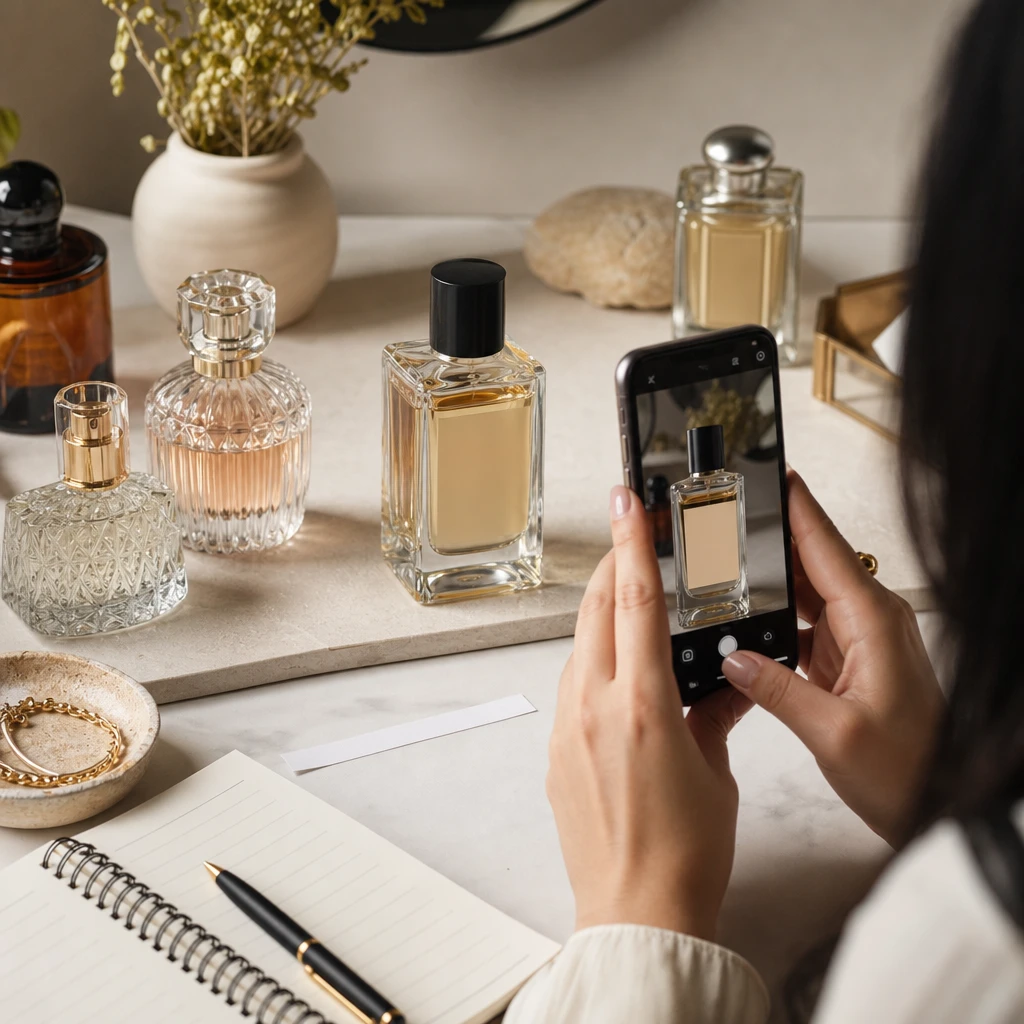
September 30, 2026
“What Perfume Is This?” How to Identify a Fragrance From a Bottle (Even When the Label Is Missing)
September 30, 2026
A surprising number of great fragrances go unidentified. Maybe the label wore off. Maybe it’s an unlabeled decant. Maybe a bottle was pulled from a relative’s dresser or spotted at a party, and all that’s left is the visual memory: a square bottle, a gold cap, a certain color of juice.
Identifying a perfume isn’t just satisfying—it’s practical. Once you know what it is, you can repurchase, find similar scents, check whether it’s discontinued, and avoid buying something that looks right but smells different. And if you’re building a collection, naming and cataloging what you own is the fastest way to stop accidental duplicates and start making smarter, more personalized discovery choices.
Before jumping to scent descriptions (which can be subjective), treat the bottle like a clue-filled object. In many cases, the answer is literally printed somewhere small.
Look for these details in good light:
If you still have the box, check the underside and side panels. Outer packaging commonly includes the full name, concentration, and sometimes a style number.
When the name isn’t visible, identification becomes a matching game—and the best matches come from clear images.
A strong photo set includes:
At N.O.S.E. Notebook, our fragrance bottle scanning & identification feature is designed for exactly this moment: turning a “what perfume is this?” bottle into a named fragrance you can actually keep track of. Once identified, it’s easy to store it in a personal Fragrance Vault so the mystery doesn’t repeat itself the next time the bottle resurfaces.
Batch codes are useful, but they’re often misunderstood.
Still, that code is worth capturing because it can:
Tip: Photograph the code rather than rewriting it. A single swapped character can derail your search.
One of the most common identification pitfalls is finding the right brand and even the right scent family, but the wrong version.
Many popular perfumes have multiple flankers (variations) and multiple concentrations:
Two bottles can look almost identical except for a subtle marking or a slightly different cap finish—and they can smell noticeably different on skin.
When you’re trying to ID a bottle, always capture any text that hints at concentration, and note the size (mL/oz). Those details often narrow the possibilities quickly.
Sometimes the mystery isn’t a bottle you own—it’s a fragrance you caught in the air at a wedding, a restaurant, or a holiday party. In that case, identification is harder because memory compresses scent.
A better approach is to record a few specific anchors while they’re fresh:
Even imperfect notes help steer recommendations away from generic guesses. With N.O.S.E. Notebook, those clues can feed into AI fragrance recommendations that prioritize what you actually respond to—so you can track down the closest match, or discover a “same energy” alternative you might like even more.
Unlabeled decants and travel atomizers are a special case: the container isn’t the clue—the liquid is.
If you received it from someone else, ask these quick questions:
If you can’t trace the origin, your best bet is to:
Not every mystery has a clean answer. If you suspect the bottle may not be legitimate, proceed carefully—especially if you’re planning to buy a “replacement” from the same source.
Common warning signs include:
Counterfeits can be convincing at a glance. If something feels off, treat identification as a verification process, not just a naming exercise.
The final step is the one most people skip: saving what you learned.
A simple Fragrance Vault habit makes a real difference:
That’s how a collection becomes a tool—not just a shelf. It also makes future discovery easier, because recommendations can be based on patterns in what you already love, not just what’s trending.
Identifying a perfume from a bottle—especially one with a missing label—is a mix of observation and smart narrowing: photograph the bottle from multiple angles, capture any batch codes or base stickers, watch for concentration/flanker clues, and document what you know before memory fades.
When you’re ready to turn a mystery bottle (or a “what was that scent?” moment) into something you can revisit, N.O.S.E. Notebook makes it simple to scan, identify, and save fragrances—then use that growing vault to power more personal, more accurate recommendations.
Find your next scent
Browse scent profiles, notes, and houses — or let the Scent Finder match you to a fragrance in four questions.

October 14, 2026
Perfume finder apps have leveled up fast: smarter AI, better bottle scans, and collection “vaults” that help you remember what you own (and what you actually love). Here’s what to look for in 2026—and how to choose the right app for your scent journey.

October 12, 2026
Finding a signature scent doesn’t have to mean buying a dozen discovery sets and hoping something clicks. Here’s a modern, realistic process—powered by a clear scent profile and smarter recommendations.

October 9, 2026
Trying to identify a perfume bottle from a photo? Here’s how perfume scanner apps work in 2026, how to scan bottles and labels for accurate matches, and how to fix the most common scan errors—especially when flankers and lookalike bottles confuse results.