
← Nose News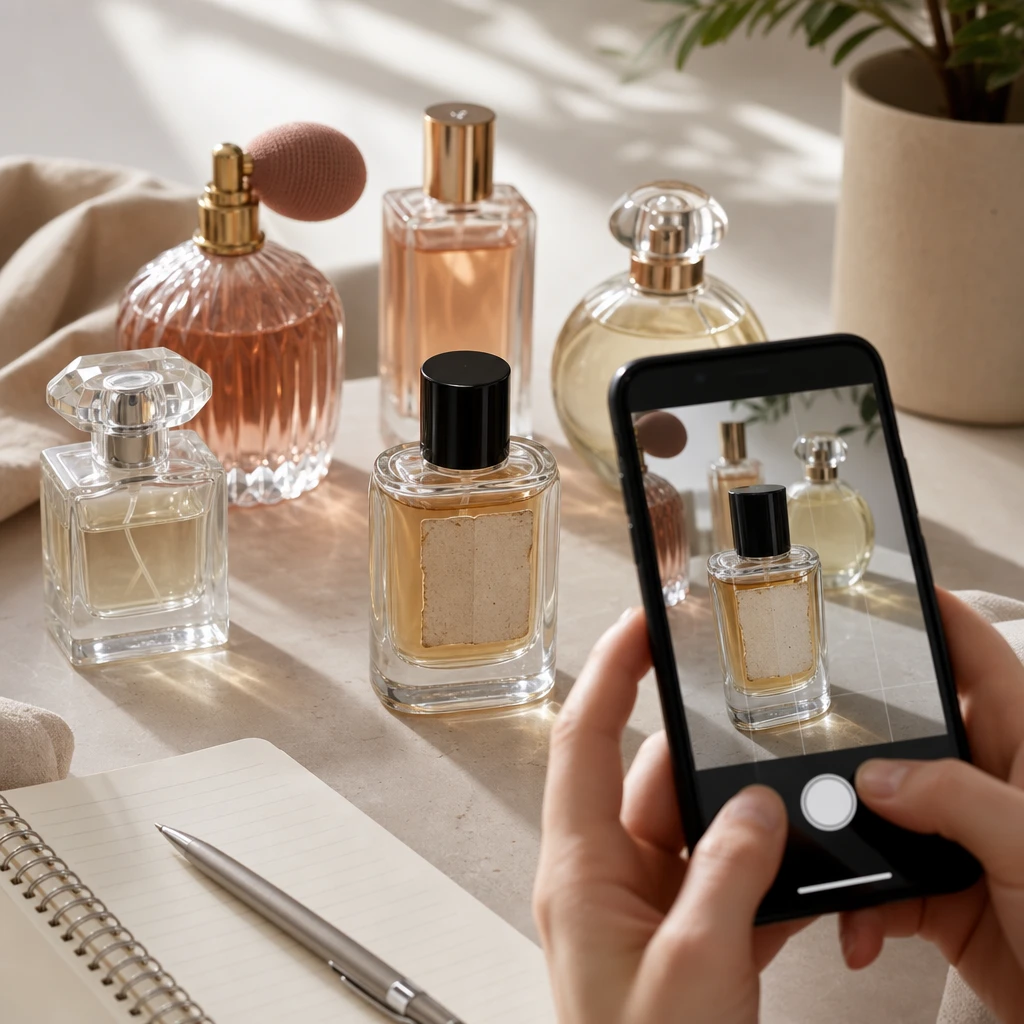
July 22, 2026
“What Perfume Is This?” How to Identify a Fragrance From a Photo (Even With a Worn Label)
July 22, 2026
Perfume bottles are designed to be memorable—but the identifying information often isn’t. Labels fade, caps get swapped, travel decants lose their stickers, and older bottles may only show a partial name. Add resale marketplaces and international imports to the mix, and it’s no surprise we hear the same question every week: “What perfume is this?”
At N.O.S.E. Notebook, we built our bottle scanning and identification tools for exactly this moment: when a photo is all you have, and you want a confident match (or a quick way to rule one out). Below is the real-world process we use for fragrance bottle identification—from the fastest visual checks to the “deep cut” clues that survive even a worn label.
A single front-facing photo often isn’t enough. For the most accurate identify perfume by photo results, capture a quick set:
Lighting tip: place the bottle near a window, avoid flash, and tilt slightly until reflections disappear. Clear, legible micro-text can be the difference between a match and a near-miss.
When the name is gone, these details usually remain:
Many fragrances share the same bottle shape across concentrations, but the base printing changes—so this is a high-signal clue.
Brands repeat motifs.
If two perfumes share a similar front label, the cap hardware often reveals which one it is.
Most authentic bottles include a batch code printed or etched on:
Batch codes aren’t always formatted the same. Some are short (3–4 characters), some longer, sometimes a mix of letters and numbers. Even if a code can’t definitively name the fragrance by itself, it can help confirm if the bottle and box belong together and whether the production style aligns with the claimed era.
Common fragments that still help:
Even partial typography can be enough. Font style and spacing can be signature to a house or a particular flanker era.
A perfume bottle scanner works best when it can compare the photo against known bottle shapes and label layouts—and then offer candidate matches. From there, it’s smart to verify with at least one additional data point: base text, size, concentration, or box info.
In N.O.S.E. Notebook, scanning is also a practical entry point for building a personal fragrance vault—so once the bottle is identified, it’s cataloged (and used to power better future recommendations).
Many designer lines share the same bottle with minor changes (color gradient, label accent, cap finish). If a scan returns multiple options, check:
A legitimate bottle can still contain the wrong liquid. Warning signs:
Minis often have different sprayers (or none at all) and simplified labels. Always include the volume in your photos.
Counterfeit fragrance is one of the biggest reasons identification matters in 2026. Even good-looking listings can hide small inconsistencies. Before purchasing, check these points:
Legitimate sellers can provide:
A listing that avoids these angles is a risk.
On authentic sets, the codes typically match or follow the brand’s expected pattern. A mismatch can indicate a swapped box, a returned item, or a counterfeit.
Counterfeits often fail in the details:
Discounts happen—especially for older releases—but extreme pricing on a “new, sealed” luxury fragrance is a common counterfeit tell.
A clear return policy and consistent seller history matter. When in doubt, prioritize reputable retailers and verified resale platforms with authentication processes.
Identification is only step one. Once the fragrance is correctly logged, it becomes a powerful input for personalization.
At N.O.S.E. Notebook, we use identified bottles to help build a scent profile based on what’s actually in the collection—so recommendations aren’t generic “top 10” lists. A few examples of how this helps:
A fragrance vault also solves the practical problem: once a bottle is identified, it’s no longer a mystery on the shelf.
Identifying a perfume from a photo is absolutely possible—even when the label is worn—when the right bottle details are captured and cross-checked. The fastest path is a clear set of photos paired with bottle-specific clues like base text, cap hardware, and batch markings, followed by a scan-based match and quick verification.
For anyone cataloging a growing collection or shopping the secondary market, bottle identification isn’t just convenient—it’s a practical way to protect purchases and build a more personal scent library. To put a mystery bottle to rest and save it to a fragrance vault for future recommendations, reach out to the N.O.S.E. Notebook team or explore our bottle scanning tools online.
Find your next scent
Browse scent profiles, notes, and houses — or let the Scent Finder match you to a fragrance in four questions.
October 14, 2026
Perfume finder apps have leveled up fast: smarter AI, better bottle scans, and collection “vaults” that help you remember what you own (and what you actually love). Here’s what to look for in 2026—and how to choose the right app for your scent journey.
October 12, 2026
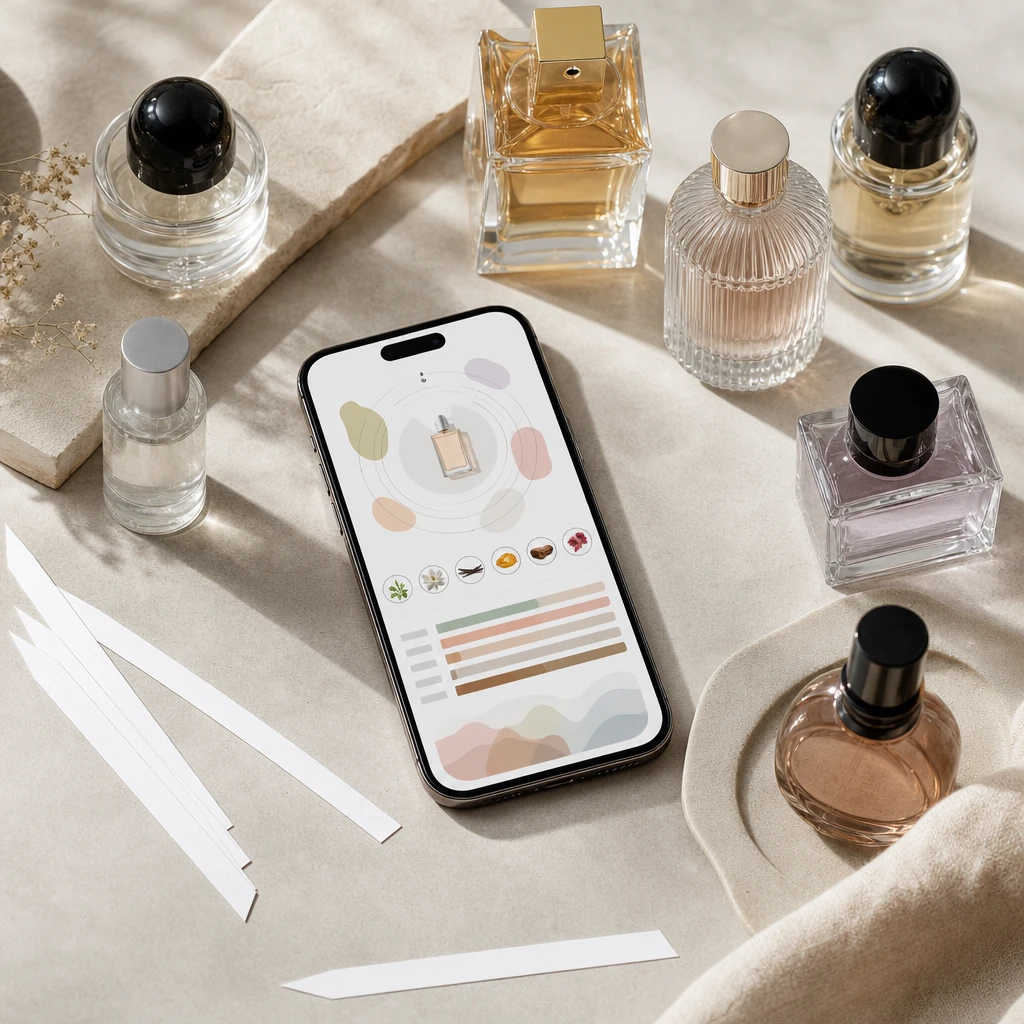
Finding a signature scent doesn’t have to mean buying a dozen discovery sets and hoping something clicks. Here’s a modern, realistic process—powered by a clear scent profile and smarter recommendations.
October 9, 2026
Trying to identify a perfume bottle from a photo? Here’s how perfume scanner apps work in 2026, how to scan bottles and labels for accurate matches, and how to fix the most common scan errors—especially when flankers and lookalike bottles confuse results.